







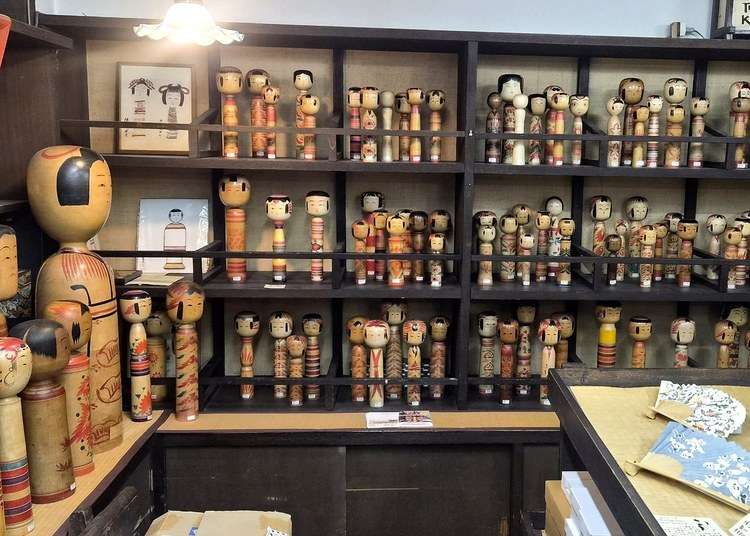
Hundreds of little wooden dolls with round heads line an entire wall, each with a different expression. This isn’t a museum. It’s the basement of a folk craft shop in Shinjuku.
Beyond its skyscrapers and neon, Shinjuku is also one of Tokyo’s historic textile-dyeing districts. About a century ago, dyers moved upstream along the Kanda and Myoshoji rivers in search of clean water. At their peak, hundreds of workshops lined the rivers, helping make Tokyo one of Japan’s three major dyeing centers alongside Kyoto and Kanazawa. Today, just two subway stops from Shinjuku, you can explore folk crafts from across Japan under one roof. Around the station, shops offer everything from small finds costing a few hundred yen to artisan pieces priced in the tens of thousands.
We’ve selected five stops, moving from a treasure trove of folk art to everyday crafts and exceptional department-store pieces. Each includes a quick guide to help you plan, followed by workshops where you can try dyeing yourself. Whatever your budget, there’s a handmade keepsake waiting to be found.
- Table of Contents
-
- An Encyclopedia of Japanese Handcrafts: Bingoya
- Japanese Life, Centered on Rice: AKOMEYA TOKYO NEWoMan Shinjuku
- 300 Years of Craft, Made for Today: Nakagawa Masashichi Shoten Lumine Shinjuku
- Washi, Incense, and Affordable Crafts: Tokyo Kyukyodo Shinjuku and Keio’s Sixth Floor
- A Showcase of Exceptional Japanese Craft: Isetan Shinjuku Main Building, Fifth Floor
- Try It Yourself: Discover Shinjuku’s Dyeing Heritage
- Tips for Shopping for Japanese Crafts
- Bring Japanese Craftsmanship into Your Everyday Life
An Encyclopedia of Japanese Handcrafts: Bingoya
At a glance: Best for exploring folk crafts from across Japan | Budget: A few hundred to tens of thousands of yen | Allow: 60–90 minutes
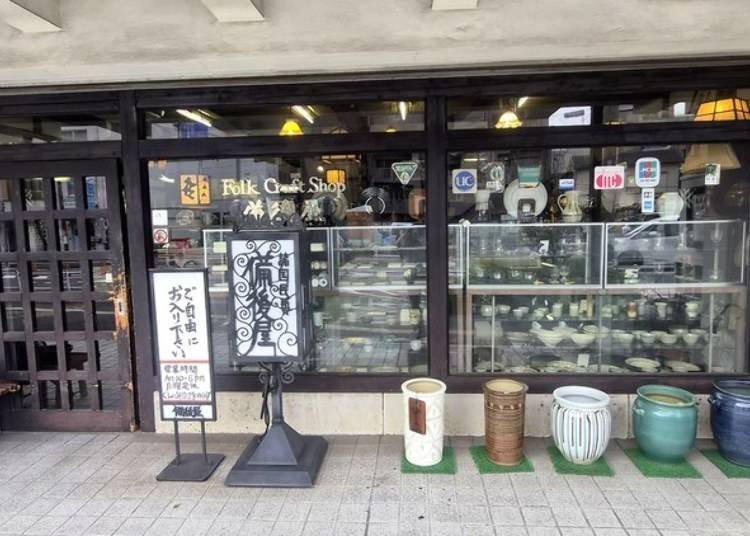
Two stops from Shinjuku-nishiguchi on the Toei Oedo Line, Bingoya stands right outside Wakamatsu-kawada Station. Established in 1961, this longstanding folk craft shop welcomes visitors with pottery jars, bamboo stools, and a sign inviting you to come inside. It attracts many overseas travelers, and plenty of items have English descriptions.
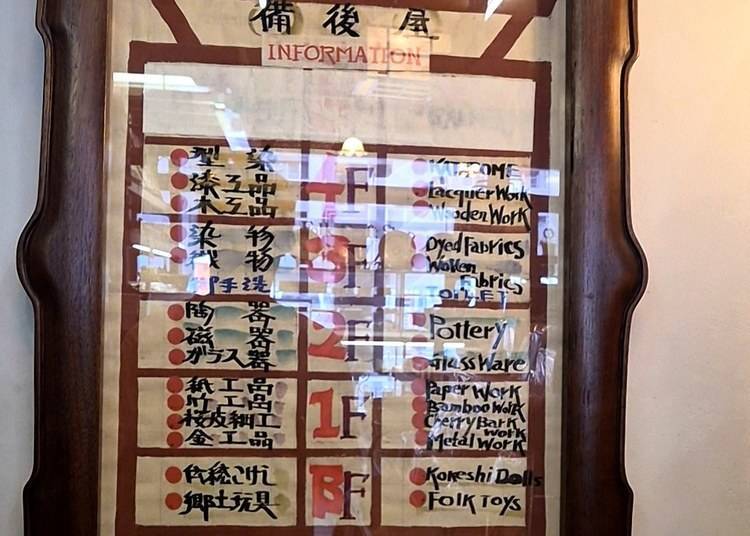
From B1 to the fourth floor, each level has its own specialty, with handwritten floor guides along the stairs.
・B1: Traditional kokeshi dolls and regional toys
・1F: Paper goods, bamboo crafts, cherry-bark crafts, and metalwork
・2F: Pottery, porcelain, and glass
・3F: Dyed and woven textiles
・4F: Stencil-dyed textiles, lacquerware, and woodwork
The biggest surprise is the wall of kokeshi dolls in the basement. These wooden dolls originated in Tohoku in the late Edo period, when woodturners in hot spring towns made them on lathes and sold them as toys and souvenirs to visitors staying for therapeutic baths. Each production area has distinctive shapes and patterns. Naruko dolls have large heads and slender bodies, with necks that squeak when turned; Tsuchiyu dolls feature red chrysanthemum patterns on their bodies; Tsugaru dolls stand out for their sharp eyes and rich colors. A classification chart on the wall helps you compare the styles, and you’ll soon start spotting the differences. Choosing a doll from somewhere you have a connection with adds to the fun.

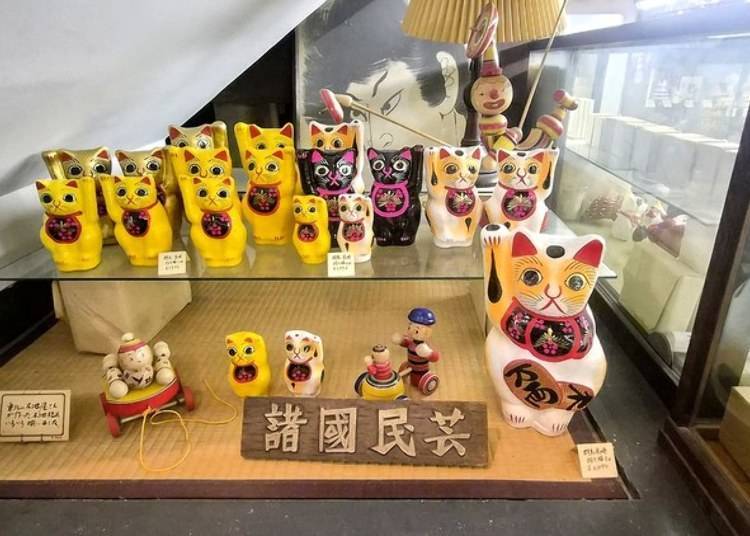
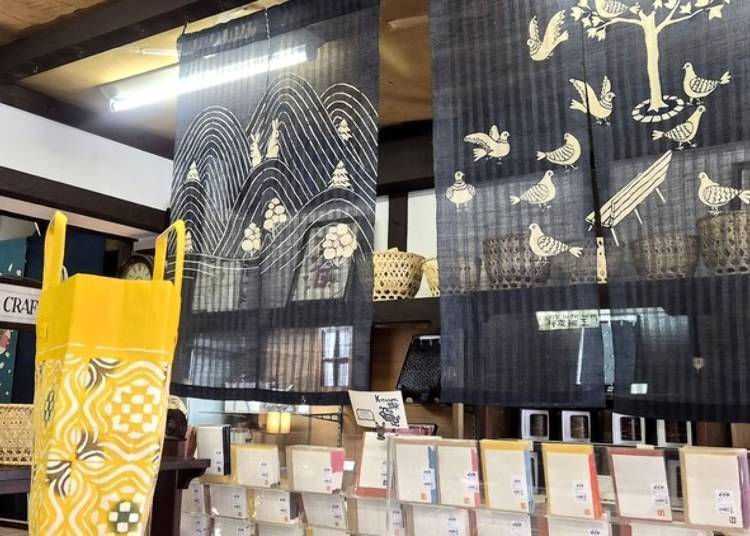
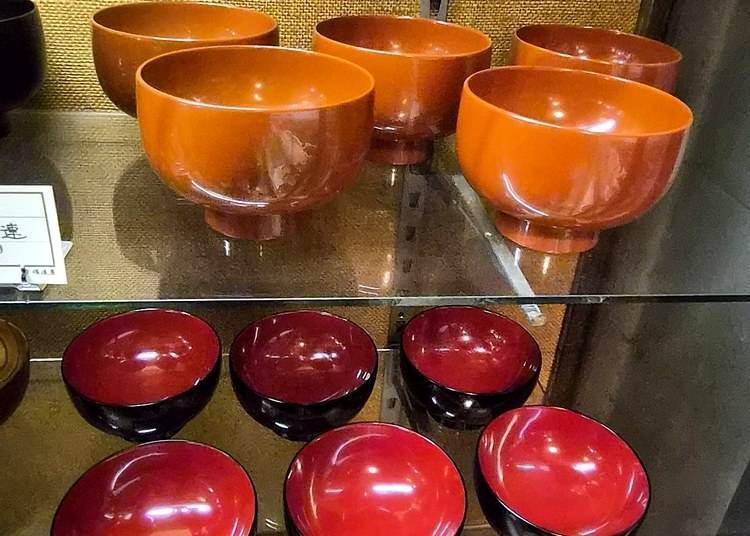
Alongside kokeshi, the basement holds papier-mâché figures, clay dolls, masks, and spinning tops. The beckoning-cat display on the first floor is another lovely photo stop. Upstairs, you’ll find indigo-dyed noren curtains on the third floor and Kawatsura lacquer soup bowls from Akita on the fourth (from 3,960 yen). If you’re looking for sake ware, you can choose flasks and cups individually, making it easy to assemble your own evening-drink set without buying a matching collection.
The staff are friendly, and photography is allowed inside. Asking before taking photos is a thoughtful touch.
Shopping tip: Bingoya has an unusual closing schedule. Besides Mondays, it closes on the third Saturday of the month and the following Sunday, except in May, August, November, and December. Check before visiting. In autumn, look for textile artist Keisuke Serizawa’s stencil-dyed calendars. They usually arrive around September and are an annual favorite among folk craft fans.
・Address: 10-6 Wakamatsucho, Shinjuku-ku, Tokyo
・Hours: 10 AM–6 PM
・Closed: Mondays; the third Saturday and following Sunday except in May, August, November, and December
・Access: Just outside Wakamatsu-kawada Station on the Toei Oedo Line, about 5 minutes by train from Shinjuku-nishiguchi Station
-
Bingoya備後屋
-
Address
10-6 Wakamatsucho, Shinjuku-ku, Tokyo
View Map -
Nearest Station
Just outside Wakamatsu-kawada Station on the Toei Oedo Line, about 5 minutes by train from Shinjuku-nishiguchi Station
-
Address
10-6 Wakamatsucho, Shinjuku-ku, Tokyo
Japanese Life, Centered on Rice: AKOMEYA TOKYO NEWoMan Shinjuku
At a glance: Best for lovers of Japanese food culture and practical tableware | Budget: 1,000–15,000 yen | Allow: 30–45 minutes
A Japanese saying holds that seven deities reside in each grain of rice. Rice is more than a staple here: it’s central to festivals, seasonal customs, and daily life. “Komeya” means rice shop, and this store feels like an entire shop built around the pleasure of a delicious bowl of rice.
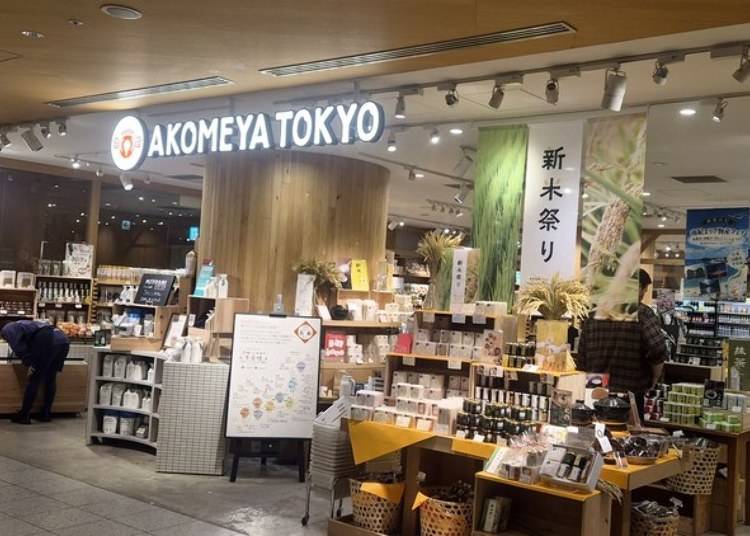
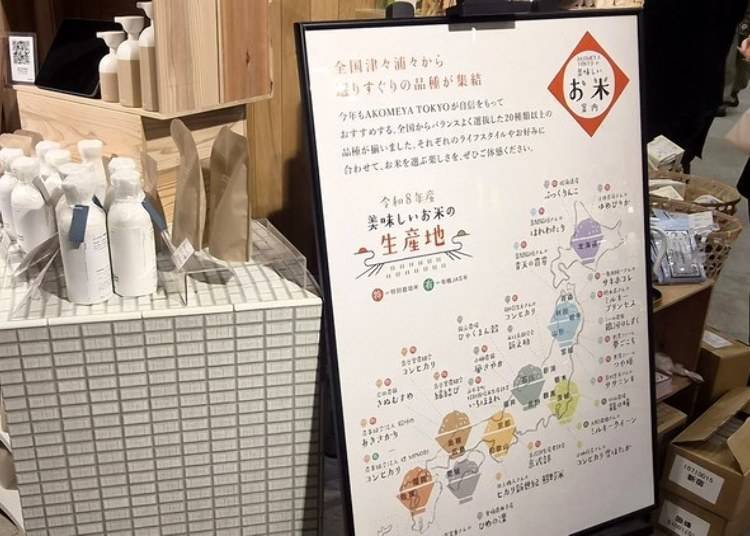
You’ll find it on the first floor of NEWoMan, near JR Shinjuku Station’s New South Exit. Rice-stalk tapestries and bundles greet you at the entrance, and autumn brings the new-rice festival. A rice guide maps more than 20 carefully selected varieties, from Hokkaido’s Yumepirika to Koshihikari grown around Japan. You can choose your rice much as you would a bottle of wine.
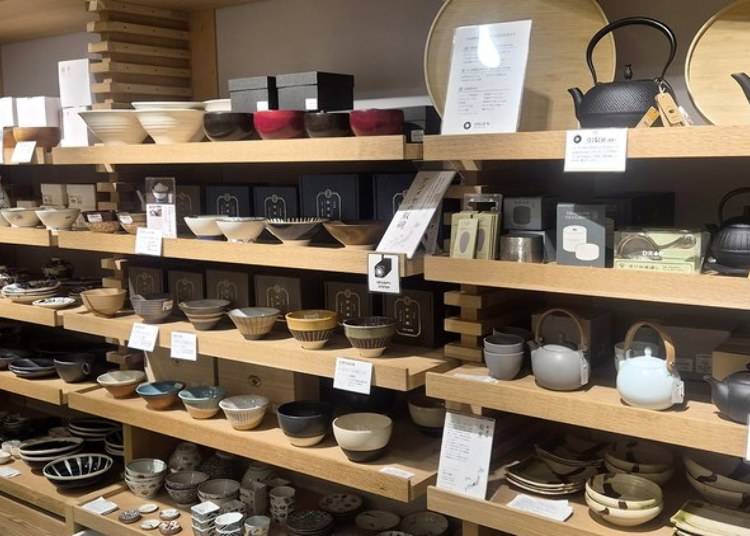
Everything revolves around enjoying rice: bowls from kilns across Japan, Nambu iron kettles from Iwate, wooden rice tubs, hinoki cypress rice paddles, chopsticks, and chopstick rests. Nambu ironware traces its history to the Morioka domain in the Edo period. Water boiled in these kettles is said to have a softer mouthfeel, and the kettles remain popular gifts. The displays bring Japanese farming culture and everyday craft together on one table, inviting you to linger.
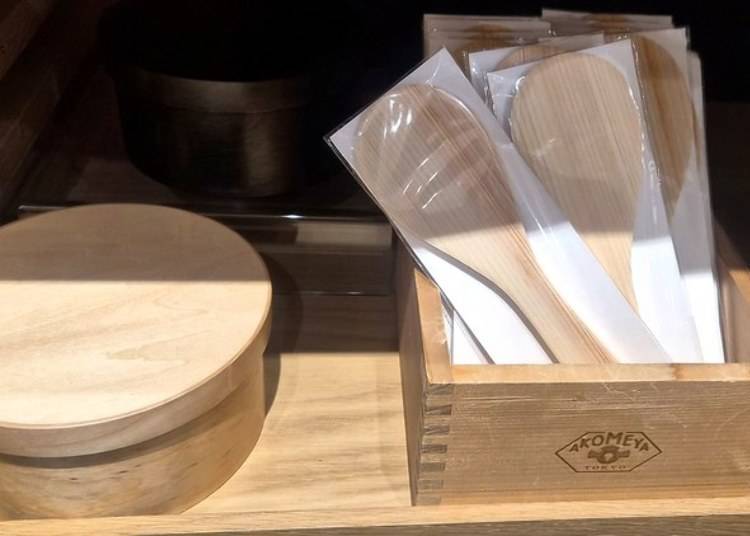
Shopping tip: If you’d like to take rice home, check your destination’s quarantine rules first. Many countries and regions restrict travelers from bringing it in. A rice bowl, rice paddle, or pair of chopsticks offers a distinctly Japanese alternative without the same rice-import concerns.
・Address: NEWoMan Shinjuku, 1F, 4-1-6 Shinjuku, Shinjuku-ku, Tokyo
・Hours: 11 AM–8:30 PM; Sundays and public holidays until 8 PM
・Access: Directly connected to JR Shinjuku Station’s Miraina Tower Gate, or about 3 minutes on foot from Exit E10 of Tokyo Metro Shinjuku-sanchome Station
-
AKOMEYA TOKYO NEWoMan ShinjukuAKOMEYA TOKYO NEWoMan新宿
-
Address
NEWoMan Shinjuku, 1F, 4-1-6 Shinjuku, Shinjuku-ku, Tokyo
View Map -
Nearest Station
Directly connected to JR Shinjuku Station’s Miraina Tower Gate, or about 3 minutes on foot from Exit E10 of Tokyo Metro Shinjuku-sanchome Station
-
Address
NEWoMan Shinjuku, 1F, 4-1-6 Shinjuku, Shinjuku-ku, Tokyo
300 Years of Craft, Made for Today: Nakagawa Masashichi Shoten Lumine Shinjuku
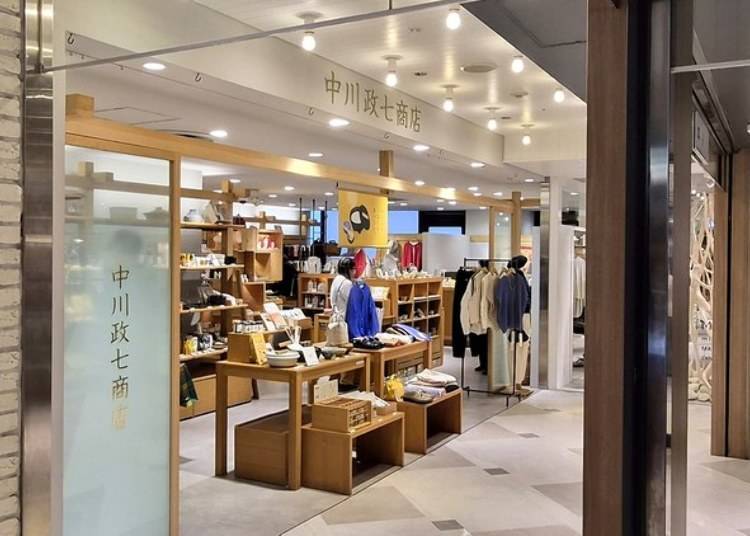
At a glance: Best for attractive, practical souvenirs | Budget: 500–5,000 yen | Allow: 20–30 minutes
Nakagawa Masashichi Shoten was founded in Nara in 1716, selling Nara sarashi, a fine, handwoven hemp fabric bleached in the sun. It was once used for samurai formal dress and monks’ robes. Three centuries later, the company brings regional crafts into everyday life through useful household goods, guided by its vision to revitalize Japanese craftsmanship.
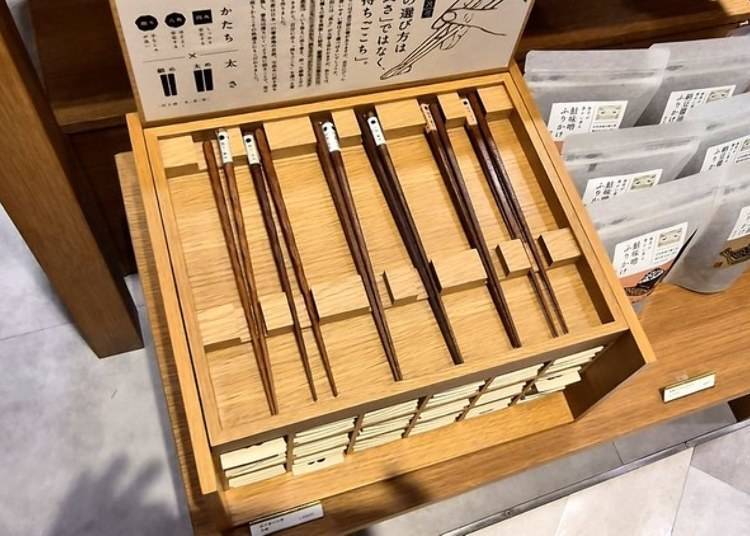
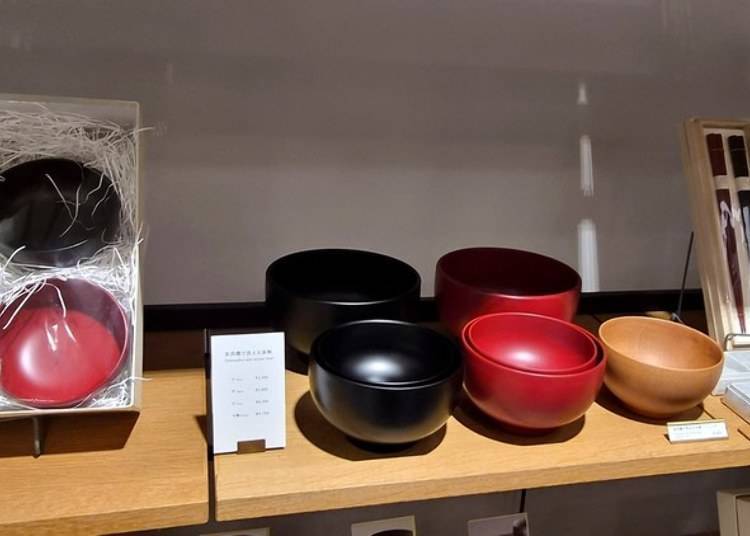
Its signature Hana Fukin cloths are a modern expression of that heritage. Made from mosquito-net fabric, the large cloths are light, absorbent, and quick-drying. They work as dishcloths, bento wraps, or placemats and have become kitchen staples in many Japanese homes. Other finds include dishwasher-safe lacquer bowls (from 4,400 yen), Kojitsu rice bowls (from 3,300 yen), and cut-glass tumblers with hemp-leaf patterns in paulownia boxes, all lovely as gifts or for your own home.
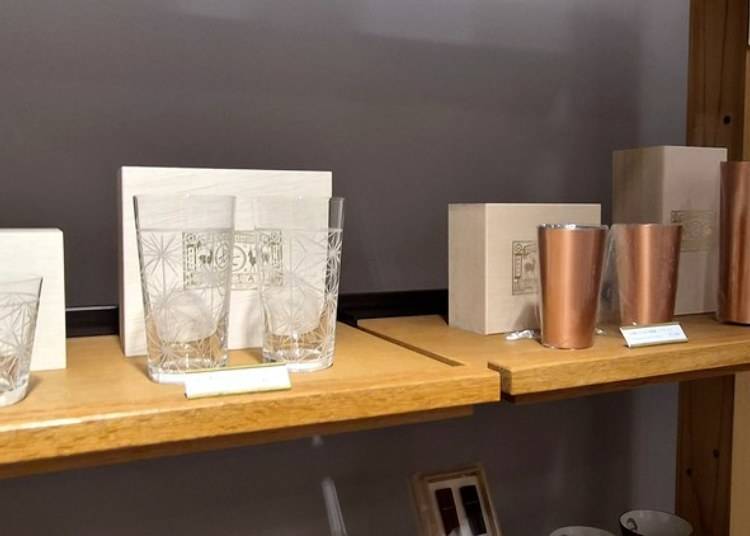
One especially engaging corner is dedicated to choosing chopsticks. A sign suggests choosing by how they feel in your hand rather than their length. You can pick up pairs in three shapes, round, octagonal, and square, and compare different thicknesses. Try a few and you may be surprised by how different they feel.
With plenty of cafés and restaurants around Lumine, it’s easy to take a break when you need one. This shop fits comfortably into a day of sightseeing.
・Address: Lumine Shinjuku, Lumine 1, 6F, 1-1-5 Nishi-Shinjuku, Shinjuku-ku, Tokyo
・Hours: 11 AM–9 PM
・Access: About 1 minute on foot from JR Shinjuku Station’s South Exit
-
Nakagawa Masashichi Shoten Lumine Shinjuku中川政七商店 ルミネ新宿店
-
Address
Lumine Shinjuku, Lumine 1, 6F, 1-1-5 Nishi-Shinjuku, Shinjuku-ku, Tokyo
View Map -
Nearest Station
About 1 minute on foot from JR Shinjuku Station’s South Exit
-
Address
Lumine Shinjuku, Lumine 1, 6F, 1-1-5 Nishi-Shinjuku, Shinjuku-ku, Tokyo
Washi, Incense, and Affordable Crafts: Tokyo Kyukyodo Shinjuku and Keio’s Sixth Floor
At a glance: Best for small, quality souvenirs on a modest budget | Budget: A few hundred to 5,000 yen | Allow: 30–40 minutes
Kyukyodo began as a medicinal-goods shop in Kyoto in 1663 before expanding into incense and stationery. Tokyo Kyukyodo opened in Ginza during the Meiji period. Its name comes from a verse in the ancient Chinese Classic of Poetry describing a dove dwelling in a magpie’s nest.
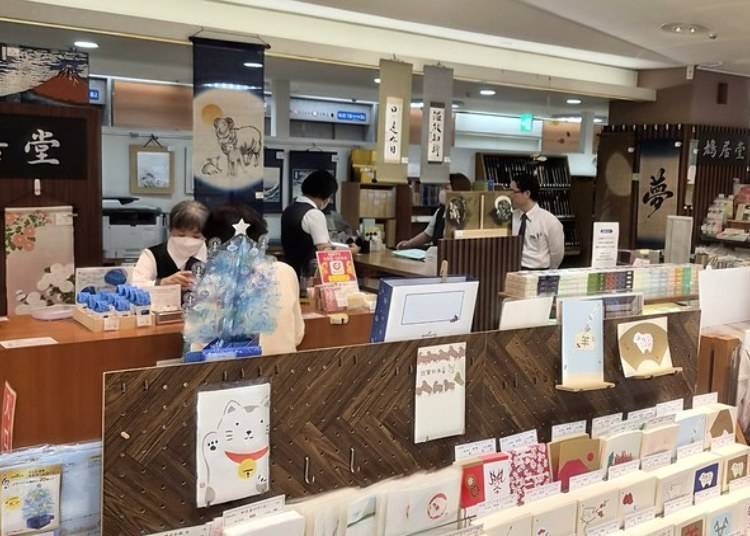
The compact Shinjuku branch, on the sixth floor of Keio Department Store, focuses on Japanese paper goods and small crafts, including washi, writing paper, postcards, incense, and small gift-money envelopes. A Hokusai-patterned tenugui tapestry hangs at the storefront, and New Year’s cards featuring the sheep, the zodiac animal for 2027, are already on display. Small incense boxes and washi writing sets start at a few hundred yen, making light, distinctly Japanese souvenirs.
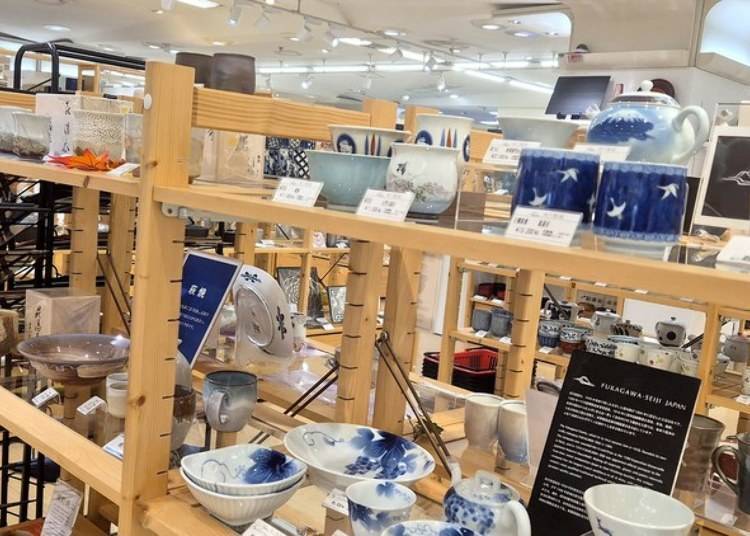
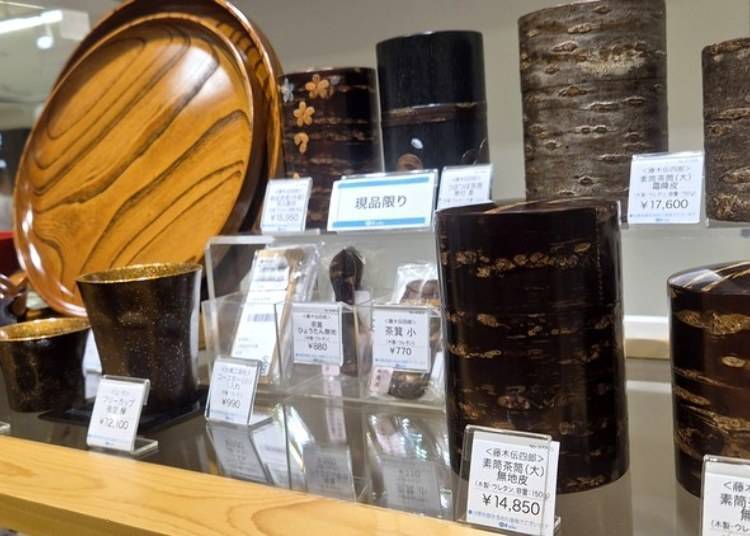
The appeal of Keio’s sixth floor goes beyond Kyukyodo: Japanese tableware and traditional craft sections share the floor, with prices generally more accessible than at Isetan. Look for magewappa bentwood containers from Odate Kougeisha in Akita, cherry-bark tea canisters from Kakunodate, Fukagawa porcelain, and Hagi ware. Small plates for everyday use start at 715 yen.
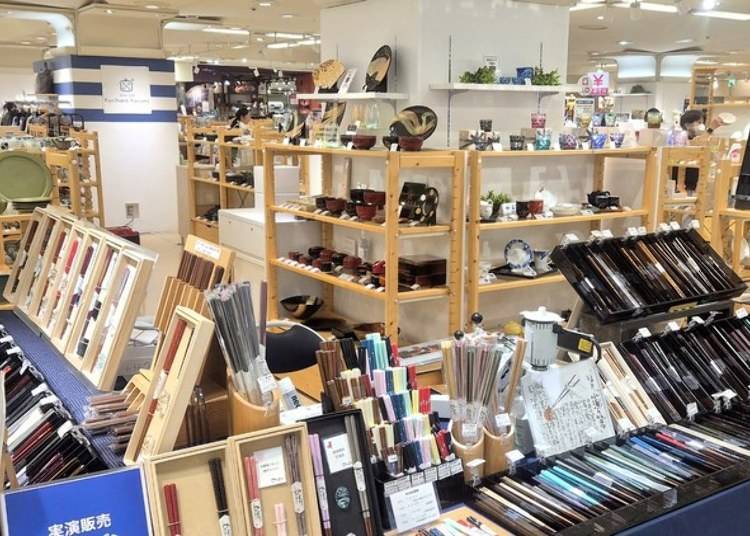
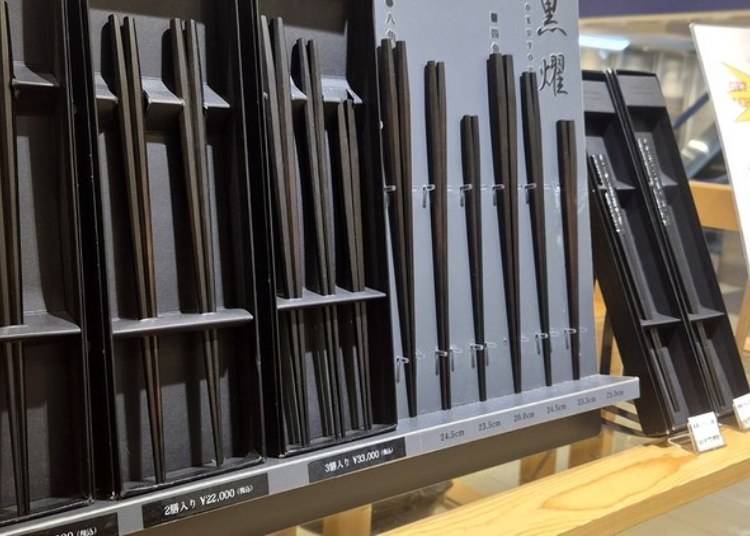
Staff at the chopstick section are happy to explain the selection. According to the sign, purchases include free name engraving in Japanese or English, turning a useful souvenir into something personal.
・Address: Keio Department Store Shinjuku, 6F, 1-1-4 Nishi-Shinjuku, Shinjuku-ku, Tokyo
・Hours: 10 AM–8 PM; follows Keio Department Store’s schedule
・Access: About 1 minute on foot from JR Shinjuku Station’s West Exit
-
Tokyo Kyukyodo Shinjuku / Keio Department Store Shinjuku 6F東京鳩居堂 新宿店/京王百貨店新宿店 6F
-
Address
Keio Department Store Shinjuku, 6F, 1-1-4 Nishi-Shinjuku, Shinjuku-ku, Tokyo
View Map -
Nearest Station
About 1 minute on foot from JR Shinjuku Station’s West Exit
-
Address
Keio Department Store Shinjuku, 6F, 1-1-4 Nishi-Shinjuku, Shinjuku-ku, Tokyo
A Showcase of Exceptional Japanese Craft: Isetan Shinjuku Main Building, Fifth Floor
At a glance: Best for exceptional craftsmanship and special gifts | Budget: 5,000 to over 100,000 yen | Allow: 40–60 minutes, even just to browse
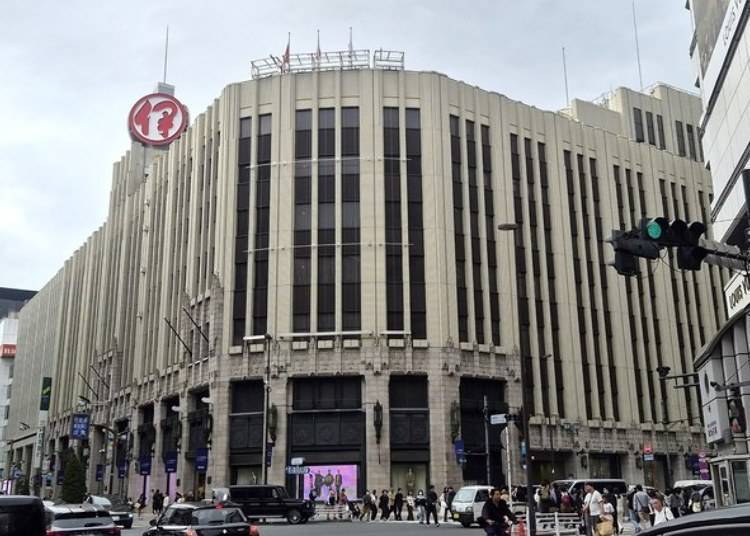
The historic building with ivory walls and strong vertical lines at the Shinjuku-sanchome intersection is Isetan Shinjuku’s Main Building. Built in 1933, it retains its Art Deco exterior, while the red circular rooftop logo with the character “I” is a Shinjuku landmark. The fifth floor houses kitchen and living goods, with the Japanese tableware section bringing together fine porcelain, lacquerware, and woodwork from across the country. Alongside traditional crafts, there’s plenty of outstanding contemporary Japanese design.
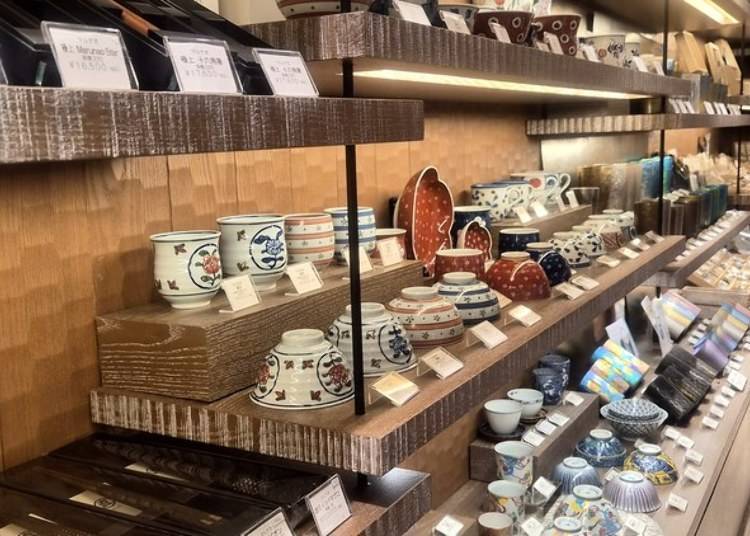
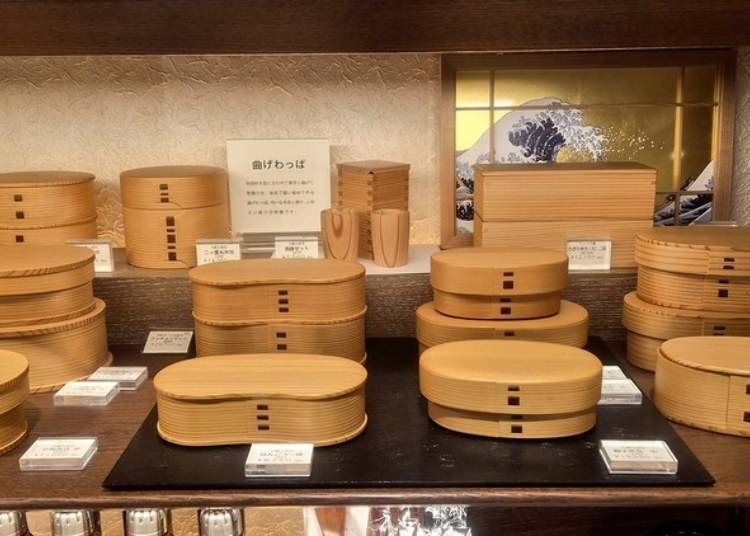
Vermilion and black soup bowls fill the lacquerware cases, beside cherry-bark tea canisters from Kakunodate and Nambu iron kettles. Magewappa bento boxes, made by bending Akita cedar and fastening it with cherry bark, carry a faint woody scent when you lean closer.
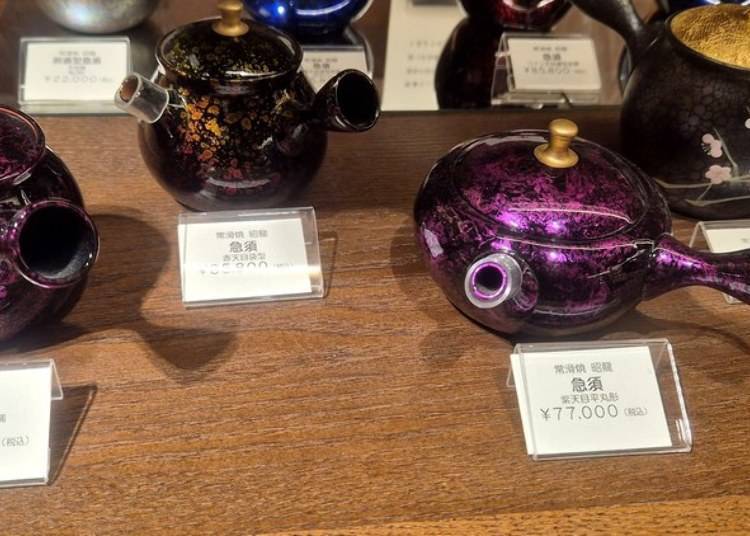
One standout is a teapot by Tokoname ceramic artist Shoryu. Its purple tenmoku glaze gleams like metal under the lights, and each costs 77,000 yen. Tokoname is one of Japan’s Six Ancient Kilns, with a pottery history stretching back almost a millennium. It’s known for teapots with precisely fitted lids and spouts. Named artisan pieces like these are made by a craftsperson from wheel-throwing through firing, and their prices reflect the difference from mass-produced ware.
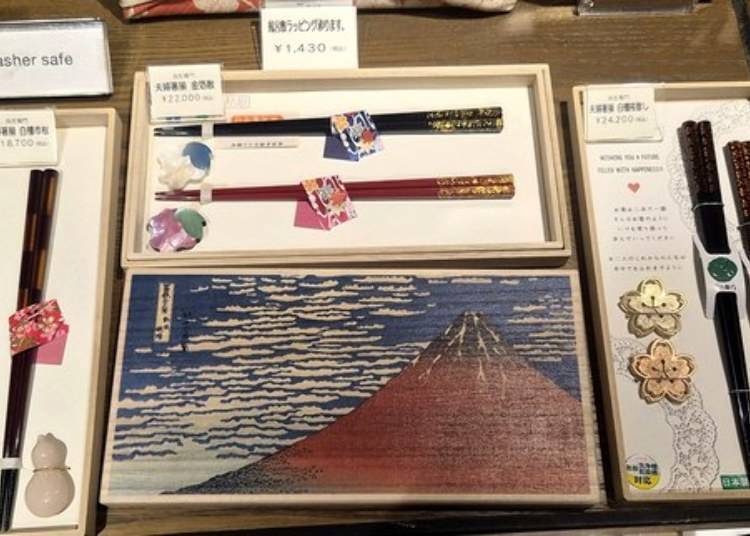
These pieces are certainly an investment, but even a browse offers a feast for the eyes and a chance to see exceptional Japanese craftsmanship in one place. For a memorable gift, consider a Hyozaemon paired chopstick set. Starting at 17,600 yen, the sets are labeled dishwasher-safe and come in paulownia boxes printed with Hokusai’s Red Fuji. Furoshiki cloth wrapping can also be added.
・Address: Isetan Shinjuku Main Building, 5F, 3-14-1 Shinjuku, Shinjuku-ku, Tokyo
・Hours: 10 AM–8 PM
・Access: Directly connected to Tokyo Metro Shinjuku-sanchome Station, or about 5 minutes on foot from JR Shinjuku Station’s East Exit
-
Isetan Shinjuku Main Building伊勢丹新宿店 本館
-
Address
Isetan Shinjuku Main Building, 5F, 3-14-1 Shinjuku, Shinjuku-ku, Tokyo
View Map -
Nearest Station
Directly connected to Tokyo Metro Shinjuku-sanchome Station, or about 5 minutes on foot from JR Shinjuku Station’s East Exit
-
Address
Isetan Shinjuku Main Building, 5F, 3-14-1 Shinjuku, Shinjuku-ku, Tokyo
Try It Yourself: Discover Shinjuku’s Dyeing Heritage
Have another half day? Head to two longstanding workshops in northern Shinjuku to see its dyeing traditions firsthand. A representative local craft is Tokyo Some Komon: patterns so fine they look like a solid color from a distance reveal intricate detail up close. Its origins are associated with the understated attention to detail in Edo-period samurai formal dress. Both workshops are a little way from Shinjuku Station, so check official opening hours and reservation procedures before visiting.
Tomita Some Kogei (Tokyo Some Monogatari Museum): Founded in Asakusa in 1882, the workshop moved to the Kanda River in Nishi-Waseda in 1914. It still dyes Edo komon and Edo sarasa textiles by hand. The adjoining museum offers workshop viewing and dyeing experiences from around 3,000 yen.
・Address: 3-6-14 Nishi-Waseda, Shinjuku-ku, Tokyo
・Hours: Monday–Friday 10 AM–noon and 1–4 PM; closed weekends and public holidays
・Access: About 2 minutes on foot from Omokagebashi stop on the Toden Arakawa Line (Tokyo Sakura Tram), or about 15 minutes from JR Takadanobaba Station
Some no Sato Ochiai Futaba-en: Founded in Kami-Ochiai in 1920, this dyeing workshop offers a look at the craft in action, plus reservation-only experiences such as stencil dyeing. Dyed goods including tenugui cloths and scarves are sold in the shop.
・Address: 2-3-6 Kami-Ochiai, Shinjuku-ku, Tokyo
・Hours: 11 AM–5 PM; closed Mondays, with occasional additional closures
・Access: About 5 minutes on foot from Nakai Station on the Seibu Shinjuku or Toei Oedo Line
Visiting Tokyo in late February? Look out for Some no Komichi in the Nakai and Ochiai area. Colorful lengths of fabric stretch across the Myoshoji River, and dyed noren hang outside shops, turning the neighborhood into an open-air textile exhibition. You can also join dyeing experiences at workshops. Dates change each year, so check official announcements.
Tips for Shopping for Japanese Crafts
・Tax-free shopping switches to a departure refund system in November 2026: Pay the tax-inclusive price at the store, then receive a consumption tax refund after customs confirmation at an airport or seaport when leaving Japan. Purchases must total at least 5,000 yen before tax at the same store on the same day, and you must leave Japan within 90 days of purchase. Keep your goods accessible for inspection. Fragile crafts are also well suited to carrying in your hand luggage.
・Chopsticks are easy souvenirs to pack: Light, sturdy, and compact, they won’t take up much luggage space. Compare how they feel at Nakagawa Masashichi Shoten, enjoy free engraving on Keio’s sixth floor, or choose an Isetan paired gift set for someone special.
・Look for the traditional craft certification label: More than 200 categories nationwide are designated by Japan’s Minister of Economy, Trade and Industry. They must be made mainly by hand using traditional techniques and materials, with production rooted in a particular area. The label identifies recognized techniques, materials, and origin.
・Understand artisan and production pieces: Named artisan works make special collectibles or gifts, while more affordable regional production ware is ideal for daily use. Both are authentic expressions of Japanese craft.
・Ask about packing: Pottery and lacquerware need careful handling. Tell the shop you’ll be taking your purchase home by plane; many will wrap it carefully.
・Check care instructions: Lacquerware shouldn’t be soaked for long periods, and iron kettles need care to prevent rust. Ask how to look after your purchase before you leave.
Bring Japanese Craftsmanship into Your Everyday Life
Beneath Shinjuku’s neon, skills passed down for more than a century are still alive. Bingoya’s wall of kokeshi, chopsticks chosen by feel at Nakagawa Masashichi Shoten, and a gleaming teapot in an Isetan display all reflect years of dedication to handcraft.
A well-made craft grows more comfortable with use and gains character over time. Next time you visit Shinjuku, set aside half a day to find a piece that will become part of your own daily life.
*Information is based on reporting in October 2026. Prices, opening hours, and products may change. Check each store’s official information before visiting.
- Area
- Category
*Prices and options mentioned are subject to change.
*Unless stated otherwise, all prices include tax.
Popular Tours & Activities
Recommended places for you
-
Goods

MUSASHI JAPAN Minami Kappabashi Knife Shop
Household Goods Stores
Asakusa
-
Goods

HAKUSAN SHOP TOKYO SHOWROOM
Household Goods Stores
Harajuku
-
Goods

Azuma Minamoto no MASAHISA
Household Goods Stores
Tsukiji
-
Goods

MUSASHI JAPAN Kappabashi Knife & Sake Shop
Household Goods Stores
Asakusa
-
Goods

MUSAHI JAPAN Asakusa Knife Shop
Household Goods Stores
Asakusa
-
Goods

Knife shop KAMATA
Household Goods Stores
Asakusa
-

Seibu Group Launches New Chichibu Adventure Tourism Experience for International Travelers in 2026
by: Guest Contributor
-
Cracked Phone Screen in Japan? Smahospital Repair Guide: Keep Your Data, Fixed in 15 Min, Multilingual Support | Up to 10,000 Yen Off with LIVE JAPAN Coupon
-
[Starting Spring 2027] Japan's Railways Evolve Further! Why Tickets Are Changing to "QR Tickets" and a Riding Guide for Foreign Visitors
by: Guest Contributor
-
Don Quijote (Donki) Tax Refund from Nov 1, 2026: No Refund Service Fee
-
5 Stationery Shops in Shinjuku: One Walking Route for Art Supplies, Suica Penguin Gifts, and More
-
Ad
Do’s and Don’ts: The Complete Guide to Sento Baths! Getting the Full Experience In Ueno’s Famous Kotobuki-yu
Inspiration for Accommodations
-
Family-Friendly Hotels with Free Shuttle to Disneyland: Convenient Access for a Magical Stay
-
Top Ranked Hakone Hotels with Mt. Fuji View: Enjoy Stunning Scenery from Your Private Space
-
Convenient Tokyo Hotels with Airport Shuttle: Ideal for Families and Heavy Luggage
-
9 Family-Friendly Hotels with Comfortable Family Rooms in Asakusa
-
10 Open-air bath Onsen Ryokans in Hakone for Ultimate Relaxation
-
16 Secrets About Mt. Fuji, the Symbol of Japan: Even Japanese People Don’t Know That?!
by: Guest Contributor
-
Exploring Tokyo Station: 11 Must-Visit Spots Around the Heart of Tokyo
-
Complete Guide to Buying Japanese Medicine in Japan: Phrases and Vocabulary You Need to Know
-

8 Best Stationery Shops in Shibuya: From World-Renowned Writing Pens to Shibuya-Exclusive Goods
-

World-class Blades with Japanese Flair: The Art of the Kitchen Knife with Tsukiji Aritsugu
-

Bring Home Traditional Japanese Kitchen Tools—Stylish & Affordable Finds at 3COINS
- #best ramen tokyo
- #what to buy in ameyoko
- #what to bring to japan
- #new years in tokyo
- #best izakaya shinjuku
- #things to do tokyo
- #japanese nail trends
- #what to do in odaiba
- #onsen tattoo friendly tokyo
- #daiso
- #best sushi ginza
- #japanese convenience store snacks
- #best yakiniku shibuya
- #japanese fashion culture
- #best japanese soft drinks