







Snow Country Without Skis: Things To Do in Nozawa Onsen and Iiyama in Winter
- Written by: Himanshi Shah
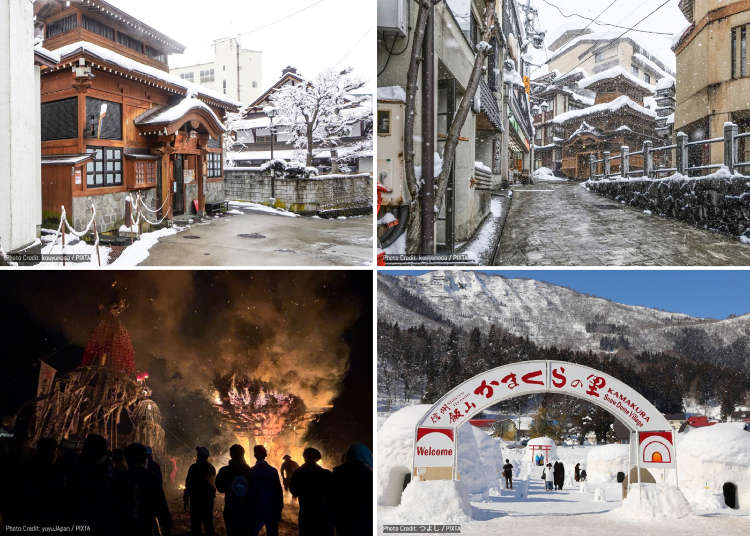
Featherlight Japow, snaking slopes, and steaming bowls of Shinshu soba to refuel — no wonder Nagano Prefecture hosted the 1998 Winter Olympics. But for those of us who would rather dine and unwind, Nozawa Onsen and its neighbor Iiyama, up in the prefecture's snowy northern reaches, make a riotously good case for leaving the skis at home.
Nozawa may have hosted the Olympic biathlon, but off the slopes it's still very much a working village. Locals cook their veggies in a boiling spring, and hopping between its 13 historic bathhouses comes with a price tag of zero. Down the road, Iiyama's snowed-in rice paddies sprout a hamlet of glowing huts serving hot pot to relish and Friday-night fireworks to marvel at. With these two highlights and more, here's how to spend a winter in Nagano's snow country with your boots firmly on the ground.
(Main image: PIXTA)
(This article may contain promotions)
- Table of Contents
-
- Bath-Hop Nozawa Onsen's 13 Free Wooden Bathhouses
- Ogama, Nozawa Onsen's Open-Air Village Kitchen
- Crunch Into Nozawana, Nagano's Favorite Pickle
- Witness the Dosojin Fire Festival, Nozawa Onsen's Night of Flames (January 15)
- Dine Inside a Snow Hut at Iiyama's Restaurant Kamakura Village (January 22 to February 28)
- Getting to Nozawa Onsen and Iiyama
- Where to Stay in Nozawa Onsen and Iiyama
- What to Pack for A Winter Trip
- A Slow Winter in Nagano
Bath-Hop Nozawa Onsen's 13 Free Wooden Bathhouses

Kept running with the help of donations, Nozawa Onsen's 13 wooden bathhouses (soto-yu) sound too good to be true. Every bathhouse is managed by its own circle of local families who keep the tubs gleaming and the spring water flowing, a tradition handed down since the Edo period.

All 13 are well worth your time, and each has its own claim to fame, from waters said to soothe skin conditions to one long believed to help heal burns. But if we had to choose one, Oyu (大湯) would be our pick. This grand sulfur bathhouse sits in the center of the village, and inside, the bath is split into a scalding hot tub and a slightly cooler one.
-
Oyu Hot Spring野沢温泉 外湯 大湯
-
Address
8765 Toyosato, Nozawaonsen, Shimotakai District, Nagano 389-2502
View Map
・Hours: Open daily 6 AM-11 PM
-
Address
8765 Toyosato, Nozawaonsen, Shimotakai District, Nagano 389-2502

Next, stroll to Kawahara-yu, a smaller wooden bathhouse loved by early birds, with skin-soothing water hot enough to jolt your bones awake. Of the remaining baths, Yokochi-no-Yu is an interesting one, sitting underground beneath a traffic light behind unusual stone walls.
Nakao-no-Yu, meanwhile, is the largest bathhouse building in the village. If you're sensitive to heat, Kumanotearai-yu is the gentlest of the lot, and it's one locals swear by for soothing burns.
Speaking of temperature, the springs that feed the baths surface at anywhere from 40 to 90°C (104 to 194°F), and most tubs sit between 45 and 49°C (113 and 120°F). That's insanely hot by most onsen standards, so ease in slowly and keep your soak short.
Akiha-no-yu is undergoing renovation and was set to reopen in November 2026. But the latest notices say opening may be pushed to December 2026.
Onsen Etiquette
Since the baths are free, there's no booth in sight, nor an attendant to welcome you in. Bathing here works like any other onsen, but with no staff around, there are a few things you need to remember. Each bathhouse has one room for men and one for women, with a tub (or two) that fits about ten people.
Start by undressing in the changing area, since swimsuits aren't worn in the bath. Rinse off properly before you get in, and if you have long hair, tie it up, then rest your towel on your head so it never touches the water.
Don't expect towels or soap, so pack a small pouch along with a few coins. A lone donation box sits by each door, and if the bath is to your liking, leaving something helps keep this incredible system running.

Tattoos
Nozawa Onsen's bathhouses generally welcome inked visitors, though nothing is posted in writing. Should a village elder ever request that you leave, take it in stride and move on to another bathhouse. From December to March, the baths are open from 6 AM to 11 PM, and evenings tend to get busy.
Pro tip
Every bathhouse has a stamp checkpoint out front, and they're part of a bigger game. Pick up the official stamp book at the Nozawa Onsen Tourist Information Center, a two-minute walk from the central bus terminal (open 9 AM to 5 PM). Collect stamps at 10 or more of the 27 stamp points dotted around the village's landmarks, and you'll earn an original bath towel designed by the artist Taro Okamoto. That's a pretty fab excuse to bath-hop, if you ask us.
-
Nozawa Onsen Tourist Information Center野沢温泉観光案内所
-
Address
9780-4 Toyosato, Nozawaonsen, Shimotakai District, Nagano 389-2502
View Map
・Hours: Open daily 9 AM - 5 PM
-
Address
9780-4 Toyosato, Nozawaonsen, Shimotakai District, Nagano 389-2502
Ogama, Nozawa Onsen's Open-Air Village Kitchen

Japan has heaps of offbeat experiences, and Ogama, Nozawa Onsen's very own village kitchen, is right up there with the quirkiest. As the hottest of the village's 30-odd springs, Ogama (麻釜) has been put to tasty use by locals, who can be seen blanching their veggies in the water or lowering baskets of eggs into the steam. Ogama translates to "hemp cauldron", a nod to the days when villagers used it to soften hemp fibers.
We know you'd love the bragging rights of eating onsen-boiled veggies, but this is a residents-only affair. Still, watching from the edge is pretty fun, we promise!
-
Ogama野沢温泉 麻釜
-
Address
8713-ro Toyosato, Nozawaonsen, Shimotakai District, Nagano 389-2502
View Map
-
Address
8713-ro Toyosato, Nozawaonsen, Shimotakai District, Nagano 389-2502

Want a taste? Walk down the lane from Ogama to Yurari, a small open terrace with a foot bath and a tub where you can boil your own onsen tamago. Buy eggs from a nearby shop, lower them in, and let the hot water do its thing. However, remember that it tends to shut shop during heavy winter snow days.
Kamitera-yu also has an egg pot right beside the men's entrance, if you'd rather pair your soak with a snack that carries a hint of sulfur.
Nozawa Onsen After Hours
Nozawa may not be as hoity-toity as Niseko, but its lantern-lit alleyways will keep your camera busy all evening. There are no clubs to party at, but a gin cocktail at Nozawa Onsen Distillery makes a perfect early nightcap. Winter hours are every day from noon to 8:30 PM (last order 8 PM).
-
Nozawa Onsen DistilleryNozawa Onsen Distillery
-
Address
9394 Toyosato, Nozawaonsen, Shimotakai District, Nagano 389-2502
View Map
・Hours: Open Monday, Thursday, Friday, and weekends from 1 PM-9 PM
・Closed: Tuesdays and Wednesdays -
Address
9394 Toyosato, Nozawaonsen, Shimotakai District, Nagano 389-2502
Crunch Into Nozawana, Nagano's Favorite Pickle

Winter in Nozawa comes with a side of bright, tangy green pickles. That's nozawana-zuke, and its story starts right here in Nozawa Onsen.
Story goes, in the mid-1700s, a priest from Kenmei-ji — the village's Zen temple — journeyed to Kyoto and returned with Tennoji turnip seeds. Planted in Nozawa's chilly mountain soil, they sprouted leaves and stems far bigger than the original, and a brand-new vegetable was born.
Naturally, it was named after the village that gave it its distinctive look. Modern DNA testing suggests the priest may have been sold different seeds altogether, but that hasn't dented the pickle's popularity one bit.
Picklephiles can even see the original strain still growing in Kenmei-ji's fields today.
Nozawana is harvested from November, after the first frosts have mellowed and sweetened the leaves. The fresh pickle is salty, crunchy, and chock-full of vitamin C. Left to ferment further, it turns into furuzuke, a tangier version with plenty of fans of its own. Try both with a bowl of rice at your ryokan, then pick up a pack to take home — it's a taste-bud-awakening souvenir!
Witness the Dosojin Fire Festival, Nozawa Onsen's Night of Flames (January 15)

Culturally curious travelers, time your visit to Nozawa Onsen for mid-January to catch a rare fusion of spectacle, history, and culture at the Dosojin Fire Festival, counted among Japan’s most famous. The village's ancient traditions and tight-knit community values are on full display across this three-day festival, with highlights packed into January 15.
Since 1863, Nozawa has gathered each winter to honor the dosojin (guardian deities) believed to keep misfortune at bay and to bless marriages and children. In some Nozawa Onsen homes, a pair of dosojin figures sits on the household altar year-round. On the 15th, families carry them to the festival grounds and trade them for another household's or gift them a pair for good fortune, a wish passed from hand to hand.

The festival doubles as a reckoning for the village's men at 25 and 42, ages long considered unlucky in Japan. On the afternoon of January 13, trees are dragged from the Hikage slope down through the village, and over the next day and a half the men raise a hulking pavilion of beech logs called shaden.
On the night of the 15th, families who welcomed a first son that year bring an elaborate lantern, the hatsu-toro, to the festival ground. Then, at around 8:30 PM, the fire starts.
Villagers charge the shrine with flaming torches while the 42-year-olds perch on top, singing and chanting, and the 25-year-olds hold the line below, beating back the flames with pine branches. For approximately two hours, the shrine is attacked and defended, until at last it is given over to the fire and burns on through the night.
In the spirit of the Japanese philosophy of mottainai, nothing goes to waste. Locals carry the embers home to light their hearths, and the next morning they return with mochi to toast over what remains.
Stay the Night to See the Flames
Anyone can watch the sacred trees being hauled through the village on the 13th, the shrine going up on the 14th, and the daytime proceedings on the 15th. The fire itself has different rules. In 2027, tickets will be available only to villagers and guests staying in the village, foreigners included, through their lodging, so ask your inn how it’s handling tickets before you book.
Once inside, remember you're a guest at someone else's ceremony. Only villagers light the fire, and drinks of any kind, alcohol included, are banned from the grounds, so save the celebration for afterward. As the organizers put it, this is a religious rite, not an event.
-
Dosojin Fire Festival道祖神祭り会場
-
Address
Toyosato, Nozawaonsen, Shimotakai District, Nagano 389-2502
View Map
-
Address
Toyosato, Nozawaonsen, Shimotakai District, Nagano 389-2502
Dine Inside a Snow Hut at Iiyama's Restaurant Kamakura Village (January 22 to February 28)
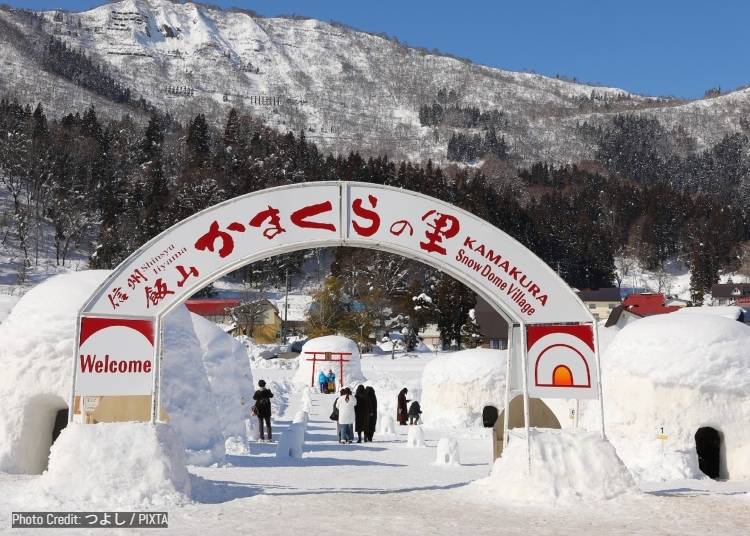
Take your storybook winter to the next level with a meal at Iiyama's Restaurant Kamakura Village. Each year, around twenty snow huts pop up in the rice fields of Shinanodaira, and come nightfall, the whole make-believe village is lit up against the snow. Surreal is an understatement.
Lunch is lovely, but dinner here is unreal. Stoop through the low doorway of your reserved hut, and you'll find a table, a bubbling pot, and thick snow walls that muffle the sounds of the outside world. It's surprisingly warm in there, but we'd still recommend dressing in layers.
That pot is noroshi nabe, an Iiyama specialty. Mushrooms and other local vegetables simmer with Miyuki pork in Shinshu miso, served with rice balls made from locally grown Koshihikari. It's an easy win for a swoon-worthy date night, though solo travelers and families will find it just as spectacular.

Every Friday at 7 PM, a 90-second burst of fireworks lights up the fields. For the full show, come for the Kamakura Festival on February 13–14, when live music, mochi pounding and snowmobile rides fill the weekend, capped by a Saturday-night display of color-changing peony and waterfall fireworks.
-
Kamakura no Satoかまくらの里
-
Address
Kotobuki, Iiyama, Nagano 389-2418
View Map
-
Address
Kotobuki, Iiyama, Nagano 389-2418
Good to know
The village is only open for five weeks a year, so book well ahead. Stay packages, bookable from November 2 through the Iiyama Tabi-Tabi site, pair dinner in a snow hut with a night in Iiyama, anywhere from a family-run minshuku or city hotel to a whole traditional house or log cabin. With no evening buses and same-day taxis near impossible in winter, a package is the least stressful way to do dinner.
Day-trippers can book online from December 14 at 10 AM Japan time. Hot pot costs 6,940 yen per adult at lunch and 7,480 yen at dinner, and a lighter snack plan with amazake or oshiruko is 2,750 yen. Cancellations within three days are charged in full. Without a booking, 500 yen gets you in to wander and sit in the single free hut out front.
The Kozakai Line bus from Iiyama Station gets you there in 20 minutes. Fireworks can be called off in bad weather, so keep your fingers crossed.
Getting to Nozawa Onsen and Iiyama

From Tokyo
You can reach Iiyama Station in less than two hours if you ride aboard the Hokuriku Shinkansen. And then, switch to the Nozawa Onsen Liner for the last leg. It leaves from bus stop 4 on the Chikuma River side of the station.
Buy your ticket at the machine beside the stop, and about 25 minutes later you will arrive in Nozawa Onsen. The fare is 600 yen one way, and the bus has proper luggage compartments, so suitcases are no problem.
Shinkansen tickets are covered under the Japan Rail Pass and JR East Pass, though the bus is not covered by either pass.
From Nagano City
A direct bus runs from Nagano Station to Nozawa Onsen in about 1 hour 15 minutes. Rail purists can also take the slow JR Iiyama Line to Togari-Nozawaonsen Station and catch a local bus for the final 20 minutes, though services in winter are sparse. For Kamakura Village, stay on at Iiyama Station and hop on the Kozakai Line bus to the Shinanodaira stop which is about 20 minutes away. Alternatively, take a quick taxi to Kamakura Village from Iiyama Station.
Where to Stay in Nozawa Onsen and Iiyama
Book ahead, way, way ahead. Nozawa is a tiny village, with the ski area, inns, and bathhouses a stone's throw from the bus terminal.
- Budget
- Oyado Nozawaya: A family-run minshuku in the heart of the village, with Japanese-style rooms and a shared hot spring bath. The bathhouses are a quick walk from the lodging.
・Book with Booking.com
- Mid-range
- Tokiwaya: A traditional ryokan a few minutes' walk from Kenmei-ji, the birthplace of nozawana, with its own hot spring bath and a quintessential Japanese breakfast. Reserve dinner when you book, as it can't be added on the day.
・Book with Booking.com
- Splurge
- Nozawa Onsen Mura no Hotel Sumiyoshiya: Super close to Oyu and Kenmei-ji, this ryokan gets hot spring water right from the source into its baths and is known for its seasonal local dishes with rice from Nozawa.
・Book with Agoda
- Iiyama
- Restaurant Kamakura Village stay packages: Bundle dinner in a snow hut with a night in Iiyama; options include family-run minshuku and city hotels, as well as traditional houses and log cabins.
・Book on Iiyama Tabi-Tabi
What to Pack for A Winter Trip
Nozawa's lanes are steep and snowy, so bring waterproof boots with excellent grip. Thermals will be your best friend during the walk between bathhouses, when you're stepping out of 45°C (113°F) water into the winter air with damp hair. Keep a small towel, soap, and shampoo in a bag, along with coins for the donation boxes, and save your thickest and warmest layers for Kamakura Village.
A Slow Winter in Nagano
The heart of Japan has so much soul, and it's best discovered when you're not squeezed into a tight ski suit. Swap it for a yukata and let Nagano's snow country work its magic.


Himanshi is a seasoned travel writer, photographer, and graphic designer. After graduating from Ecole Intuit Lab in 2015, she began designing for global brands. Drawn by Japan's landscapes and culture, she traveled extensively—from Tokyo's neon-lit streets to the peaks of Hokkaido. She's also lived in the Seto Inland Sea and volunteered in Fukushima. Through her blog, Nomadic Travelscapes, Himanshi uncovers stories rooted in authenticity instead of influencer-led experiences. Her work has been exhibited at Nox Gallery, Tokyo.
- Area
- Category
*Prices and options mentioned are subject to change.
*Unless stated otherwise, all prices include tax.
Popular Tours & Activities



-
28 Best Things to Do in Odaiba (2026 Updated): Tokyo's Entertainment Island
-
Cracked Phone Screen in Japan? Smahospital Repair Guide: Keep Your Data, Fixed in 15 Min, Multilingual Support | Up to 10,000 Yen Off with LIVE JAPAN Coupon
-
5 Japanese Craft Shops in Shinjuku: From Walls of Kokeshi Dolls to Artisan Teapots
-

BicCamera Tax Refund 2026: Refund Service Fee 0 Yen
-
[Starting Spring 2027] Japan's Railways Evolve Further! Why Tickets Are Changing to "QR Tickets" and a Riding Guide for Foreign Visitors
by: Guest Contributor
-
(Japan Travel Etiquette) Eyes Up! Why You Shouldn't Walk and Scroll in Japanese Train Stations
by: Guest Contributor
Inspiration for Accommodations
-
Family-Friendly Hotels with Free Shuttle to Disneyland: Convenient Access for a Magical Stay
-
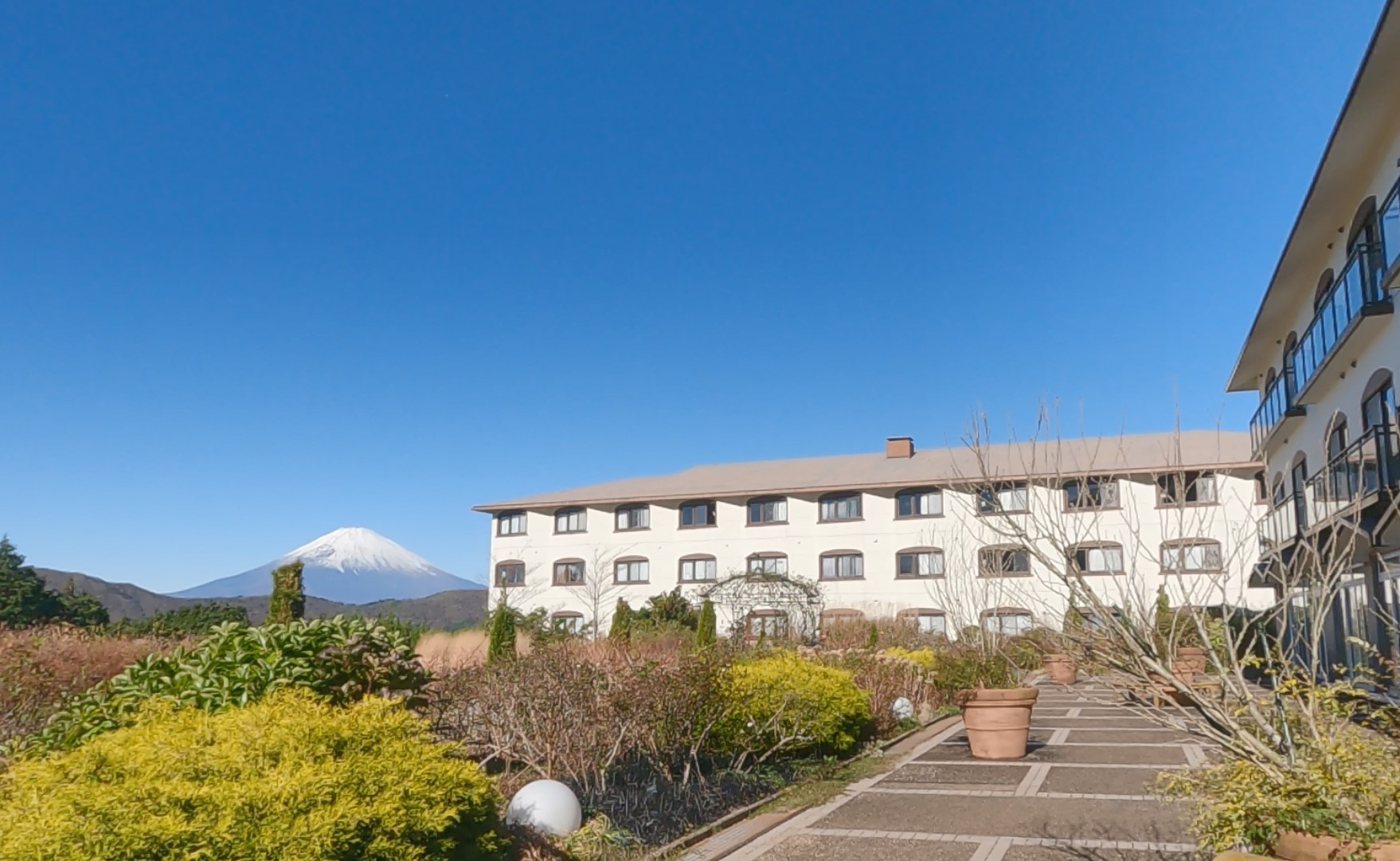
Top Ranked Hakone Hotels with Mt. Fuji View: Enjoy Stunning Scenery from Your Private Space
-
Convenient Tokyo Hotels with Airport Shuttle: Ideal for Families and Heavy Luggage
-
9 Family-Friendly Hotels with Comfortable Family Rooms in Asakusa
-
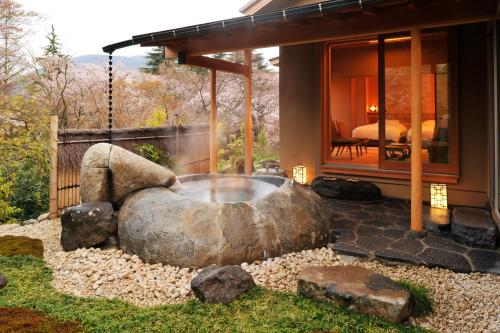
10 Open-air bath Onsen Ryokans in Hakone for Ultimate Relaxation
-

10 Reasons We Love Winter in Tokyo!
by: David McElhinney
-

6 Fun Things to Do at Tokyo's World-Famous Tsukiji Outer Market!
-

Manga Time! What Kind of Clothes Should You Wear in Tokyo’s Winter? (Dec-Feb)
-
Does it Snow in Tokyo? How to Understand Japanese Weather Forecasts & What to Do When It Snows
-

Osechi Ryori: Japan's Lucky and Traditional New Year's Feast
-

8 Unfamiliar (But Totally Normal) Customs in Japan!
- #best ramen tokyo
- #what to buy in ameyoko
- #what to bring to japan
- #new years in tokyo
- #best izakaya shinjuku
- #things to do tokyo
- #japanese nail trends
- #what to do in odaiba
- #onsen tattoo friendly tokyo
- #daiso
- #best sushi ginza
- #japanese convenience store snacks
- #best yakiniku shibuya
- #japanese fashion culture
- #best japanese soft drinks