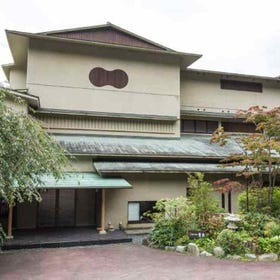
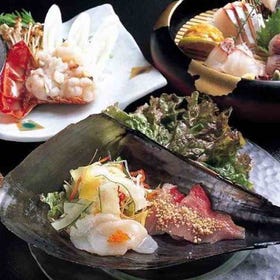
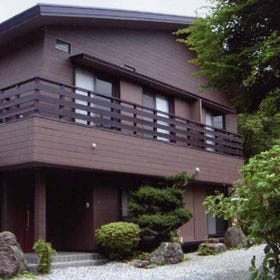
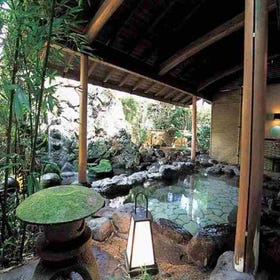
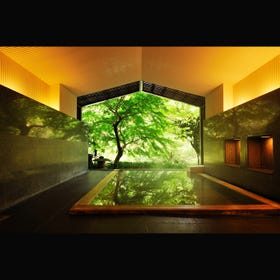
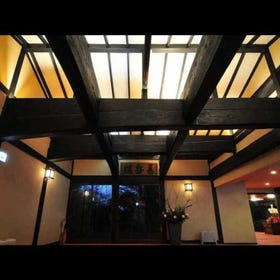
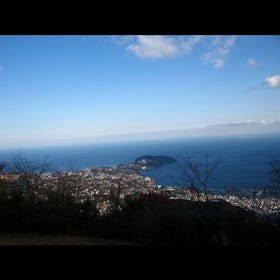
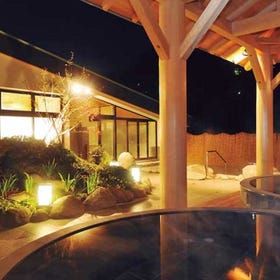
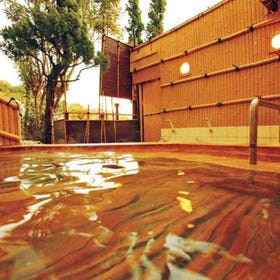
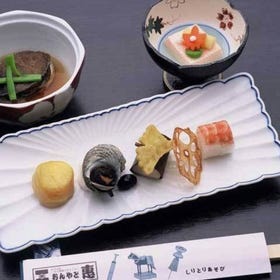
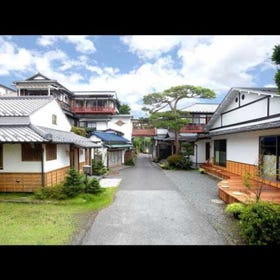
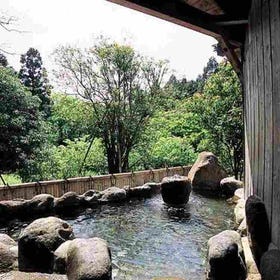
A hot spring inn which stands on a hill facing the Ashinoko Lake. They offer monthly changing meals so as to treat guests with the true seasonal taste, which makes every visit fresh. Spend some relaxing quality time and be healed by the moonlight and hot spring in the open-air bath which can be enjoyed throughout the night.
An inn run by former fishmonger. Its meals mainly cooked with seafood receive very good reputations. Two rooms are equipped with an open-air bath. Special offers are available for online booking from the website. Free one drink and choices of free souvenir are offered.
A relaxing and comfortable inn with all Japanese-style guest rooms. They have an open-air bath made of rocks with water from a natural hot spring and an indoor bath. They serve homely Japanese food both for breakfast and dinner.
A rustic hot spring inn with the sound of the streams of the Sukumo River. The private open-air bath is very popular and can be booked with a minimum of 2 persons. The monthly classical music concerts are highly recommended.
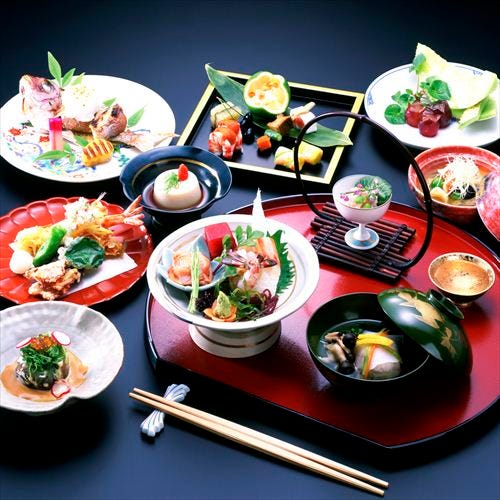
Despite its location at Yumoto Onsen, the entrance of Hakone, this hotel surrounded by trees is calm and quiet. The meals are kaiseki (Japanese course meal) cooked with seasonal ingredients from all over Japan. The view from the open-walled bath is like a painting.
The bath with plenty of hot spring water is open 24 hours a day. The guest rooms with indoor cypress baths are also available for day use. The beautiful 13200 square meter garden can be seen from the guest rooms. They also have private baths.
The hot spring source is a natural flow of slightly reddish cloudy hot water. 100% pure hot spring water from the source is luxuriously used for the indoor bath and open-air bath. The water is potable and is effective against gastrointestinal diseases. Located in an open area, the view from the rooms is fantastic.
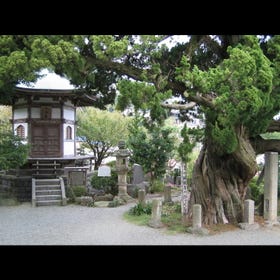
Sanehira Jiro Doi is famous for protecting Yoritomo Minamoto from Kagechika Oba’s army after he had lost the Battle of Ishibashiyama. Joganji Temple is the family temple of the Doi clan. The temple grounds contain many sights of historic interest, including Shichikido, a hall which keeps the seven wooden statues depicting Yoritomo and each of his samurai warriors who played an active part in the revival of the Minamoto family, as well as the Doi family’s burial ground (designated as a Kanagawa cultural property). A Chinese juniper tree planted by Sanehira himself (estimated to be 800 years old and designated as a national natural monument) is the largest and oldest in Kanagawa Prefecture, and its straight, vertical trunk is an impressive sight thought to be extremely rare in Japan.
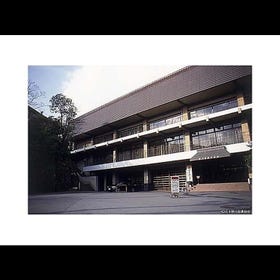
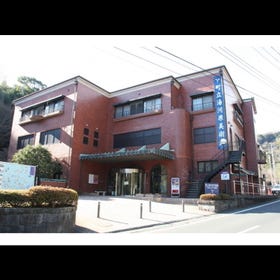
Located inside the Yugawara Tourist Hall, this museum exhibits the works and information panels of various writers and artists who have visited Yugawara since the Meiji era, such as Doppo Kunikida, Soseki Natsume , Ryunosuke Akutagawa, Akiko Yosano, Toson Shimazaki, and Junichiro Tanizaki. It also features a walking map for sights connected to Yugawara’s literary history, a brief history of modern literature in Yugawara, as well as panels of photos showing Yugawara in the past and present, and temples, shrines and stone statues. Access: From Yugawara Station, take the bus headed to Okuyugawara or Fudo-Taki for about 10 minutes We are right next to the Ochiaibashi bus stop
The hotel pays detailed attention to what female guests would like, such as the interior decor and furnishings in the building. Guests may experience an atmosphere of four seasons in an open-air bath with the concept of a Japanese-style garden, and the bath has an effect to make your skin beautiful.
[Takes around two hours 20 minutes at a regular pace (or two hours and 30 minutes if walked in the reverse direction) - suitable for regular walkers] A course where you can enjoy the view while touring historic relics dating back to the days when Yugawara was called Doi-go. You will get a feel for the close ties between Yugawara and Yoritomo Minamoto as you take in sights such as Joganji Temple, Sanehira’s family temple, the Doi castle ruins (at the peak of Mt. Shiroyama), and Shitodo Cave. The grassy meadow of the picnic area is a best place to stop and have lunch. The superb view from the top of Mt. Shiroyama enables you to look over Sagami Bay, as well as the Izu Peninsula, and even as far as Hatsushima and Oshima islands.
A new style hotel opens its large open-air bath on the roof also for day visitors. There is a famous Tamadare-no-taki (waterfall) in the garden. Its water called Enmei-no-mizu which is considered to be good for a long life. It's a popular spiritual spot.
In 1998, an old Japanese inn was renovated and opened as the Yugawara Art Museum. We exhibit works by artists with a connection to Yugawara, such as Seiho Takeuchi, Sotaro Yasui, and Kokki Miyake. In the Reiji Hiramatsu Hall, Reiji Hiramatsu, one of Japan's leading artists, is currently creating an exhibition provisionally titled ”Ten Scenes of Yugawara.” In addition to viewing his works, the atelier where he creates his works is also open to the public. In the Japanese garden connected to the museum you can view seasonal flowers and ”Monet’s water lilies,” which were grown from water lily bulbs given to Reiji Hiramatsu by the Fondation Claude Monet. In the museum's cafe ”And Garden,” you can relax with food and tea while enjoying a fine view of the garden. Please enjoy appreciating great art in our peaceful, soothing museum. Access: From Yugawara Station, take the bus headed to Okuyugawara or Fudo-Taki for about 12 minutes We are right next to the Bijutsukan-Mae bus stop.
A fully equipped onsen ryokan just two minutes on foot from the station, with a natural hot spring, radon hot spring, a sauna, a waterfall hot spring and a cypress open air bath with a view. Offers shuttle services to the beach in the summer. The onsen baths are open for day visitors as well.
An inn with a concept of Edo atmosphere. You can enjoy homemade Kaiseki course meal cooked with seasonal ingredients and seafood. Toilets for wheelchair users and electronic stair-chair lifts are equipped for a comfortable stay.
A Japanese style inn appreciated for its subtle considerations. The mountains of Hakone and the garden can be seen from the guest rooms. The open-air bath and salon have an outstanding view as well. It is a hidden inn which prides itself on its simple kaiseki (traditional Japanese course) meal made from the best local ingredients.
The Yugawara bathing beach is shallow and very popular with children. Size: 500m x 150m Family huts: about 20 Entry fee: Adults - 1,000 JPY, children - 600 JPY *Does not include parking fees Access: From Yugawara Station, take the bus headed to Manazuru Station for about 5 minutes We are next to the Yoshihama Koban-Mae bus stop
A traditional wooden building inn which became a registered tangible cultural property in 2007. You can slowly relax with the free-flowing turbid hot spring stone bath and wooden bath, and the heartfelt hand-made meals.
A quiet hot spring inn which stands in a gorge of Okuyugawara. All of the rooms have an indoor bath with hot spring water. The private open-air bath with rustic beauty can be used freely until the next morning without the need for an advanced reservation. It is an inn loved by many writers, including Tsutomu Minakami.