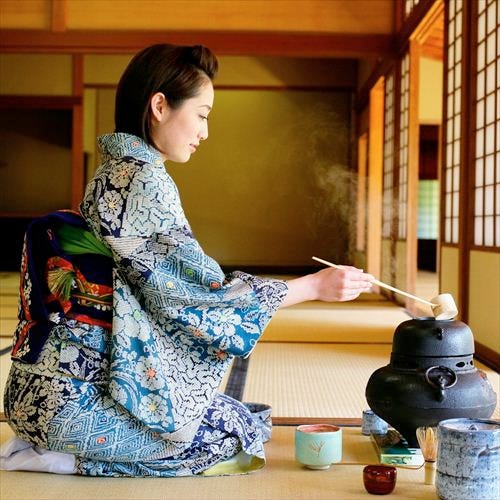
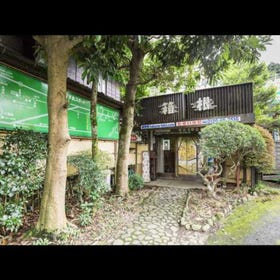
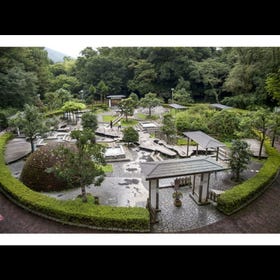
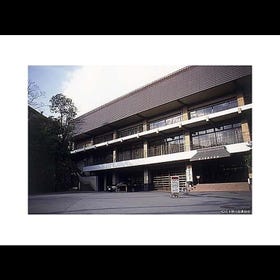
This art museum has the longest history in the Hakone area. On the premises, there is a tea ceremony room from which you can enjoy the landscape of each season.
A unique art museum displaying future works and commanding a magnificent view of Lake Ashino-ko in Hakone.
Embraced by nature, this studio has produced numerous public art works.
A traditional Japanese ryokan in the area where a famous historical figure, Hideyoshi Toyotomi visited. Even the elevator is decorated in Japanese style with tatami mat on floor. About 10 different unique baths including a large bath, an open-air bath, a pot bathtub and a cave bath are available.
An inn located in an area away from the hustle and bustle of Gora Station. It has nine guestrooms designed with the combination of Japanese and Western styles, each of which has an open-air bath. There are also indoor baths for each gender. It is an ideal hidden inn for adults.
A secluded ryokan for grownups located near a beautiful river. Its hot spring water supplied directly from a source is smooth like face lotion and soft on your skin. Its specialty, Yui Original Sea & Mountain Cuisine cooked mainly with seasonal ingredients is served for meal.
The open-air ”flying stone bath” is made from a large stone that has been hollowed out and has a great location with a panoramic view of Mount Kintokiyama and Mount Sounzan. The ”rolling stone bath” in the annex surrounded by trees is also popular. Western style home cooking can be enjoyed at dinner.
Start your Odawara and Hakone trip here! Explore the castle town's history and enjoy driving mountain roads in Hakone with Nippon Rent-A-Car!
This is a unique botanical garden that mainly displays wetland plants and is located in Sengokuhara in the town of Hakone. You can observe pretty and wild plants in spring, summer, and fall.
Owakudani is filled with clouds of volcanic smoke and a sulfurous smell. Tasting the famous black eggs is a must.
Various marsh plants grow in the marsh plant community in the Sengokuhara area. It was designated as a National Natural Treasure because its value in phytogeography was recognized.
Why not have a moving experience meeting, interacting, and learning with international travelers in Japan?
The Hakone Ropeway operates for about 4km from Tougendai station, facing Lake Ashi via Ubako and Owakudani stations, to Sounzan station. Opened in 1959, currently over 2 million people ride it each year. On the route going through Hakone mountains, you can view the nature which changes by seasons, such as cherry blossoms, azaleas, hydrangeas, and red and yellow leaves, as well as allowing you to view Mount Fuji in the distance on a sunny day. From Sounzan Station, the terminal station, you can change trains to Hakone Tozan cable cars and go to Gora Onsen (hot springs) and further down to the Hakone Open-Air Museum by Hakone Tozan Railway.
Pola Museum of Art, built in the forests of Hakone, is a glass-encased space where you can enjoy art and nature together.
A healing hotel available only to three groups of guests a day so guests are not crowded next to each other. A small hotel reminiscent of home in the countryside with each room equipped with electric massagers, laptops and video games.
Manyo Park has been selected as one of the 100 Best Historical Parks in Japan, as it is the only hot spring mentioned in ancient Manyoshu collection of poetry, and has been visited by many notable writers and artists. Inside the park you can see many of the flowers and plants mentioned in the Manyoshu, and take a leisurely stroll while listening to the murmur of the waterfalls and streams. You can rest your feet in any of the nine different foot baths at Doppo-no-yu, or enjoy matcha green tea and sweets at Manyotei. Each year, a ”firefly party” is held in the ”Hanakien” section of the park from early to mid-June, enabling you to enjoy the sight of Luciola fireflies flitting around the park, as well as enjoy stalls set up in the evenings in front of the nearby Tourist Hall. Access: From Yugawara Station, take the bus headed to Okuyugawara or Fudo-Taki for about 12 minutes We are located right next to the Koen Iriguchi bus stop
Located inside the Yugawara Tourist Hall, this museum exhibits the works and information panels of various writers and artists who have visited Yugawara since the Meiji era, such as Doppo Kunikida, Soseki Natsume , Ryunosuke Akutagawa, Akiko Yosano, Toson Shimazaki, and Junichiro Tanizaki. It also features a walking map for sights connected to Yugawara’s literary history, a brief history of modern literature in Yugawara, as well as panels of photos showing Yugawara in the past and present, and temples, shrines and stone statues. Access: From Yugawara Station, take the bus headed to Okuyugawara or Fudo-Taki for about 10 minutes We are right next to the Ochiaibashi bus stop
The inn has a panoramic view of the Yugawara mountain range. Offers an array of onsen hot springs including large communal baths with open-air baths and private reserved baths. At dinner, traditional Japanese food focusing on seafood can be enjoyed.
One of the facilities providing accommodation inside Hakone-en. There are two kinds of cottages. You can enjoy a barbecue for dinner. There is a roofed open-air hot spring bath with a feeling of spaciouness near the center cottage.
All ten rooms have an open-air bath overlooking Daimonji Yaki. This inn is perfect for adults who love dogs because they can stay with their dogs. It has substantial facilities such as equipment for dogs, dog run and gensen kakenagashi-style (continuous flow from source) hot spring baths for dogs.