



Earthquake in Kyoto? Typhoon? What To Do If Disaster Strikes During Your Stay
- Written by: LIVE JAPAN Editor
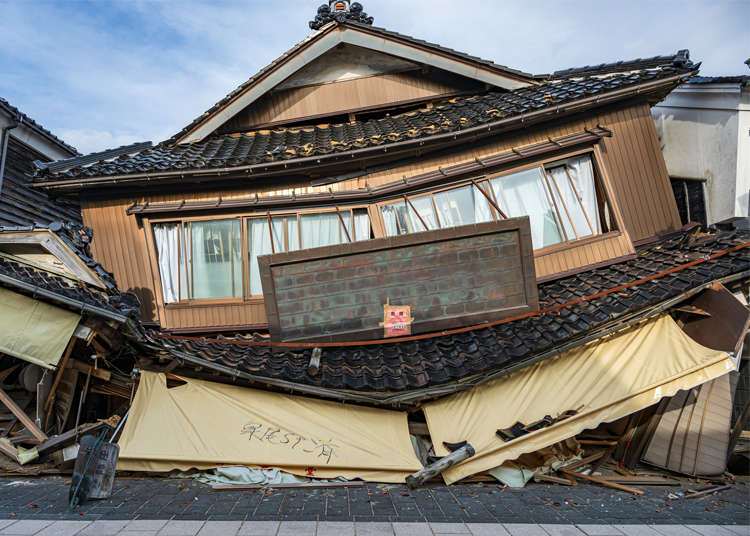
Japan is no stranger to natural disasters such as typhoons and earthquakes. There is always the possibility of an earthquake occurring during your travel to Kyoto.
August through October sees the addition of frequent typhoons, so you may witness heavy rainstorms and flooding.
In the event that you do encounter such phenomena, this article will introduce the main things you should know about each type of natural disaster so that you can respond calmly and without panicking.
main image courtesy of PIXTA
Earthquake in Kyoto
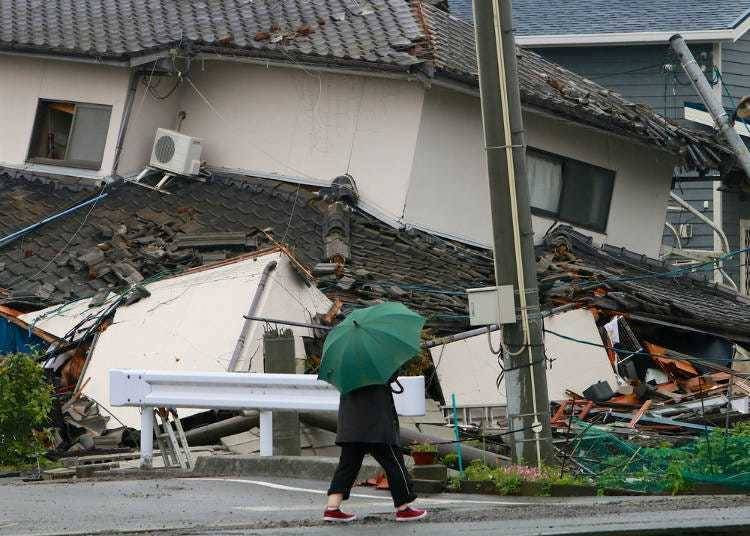
When there's an earthquake in Kyoto, you may be confused and unsure of what to do and end up in a panic. No matter where you are, the most important thing to remember is to "stay calm and not panic."
Here are lists of things to know ahead of time to stay safe and not panic and action strategies depending on where you are at the time the earthquake occurs.
Key points to know in advance
During an Earthquake in Kyoto
You may receive an emergency earthquake warning on your smartphone several seconds before strong shaking from an earthquake occurs. Stay calm and make sure to protect yourself first.
1) Try to get somewhere where objects can't "drop, fall over, or shift" and hurt you. If you're inside, take cover somewhere such as underneath a table, and if you're walking outside, move into the open such as the middle of the street.
2) Once you're in a safe spot, remain there without moving until the shaking has completely stopped.
3) Gates, walls, and fences run the danger of collapsing, so try to stay away from them.
After an Earthquake Occurs
4) There may be fallen items of furniture or shards of shattered glass, so without panicking or rushing, check the floor as you move around.
5) Don't forget that along the coast, there may be tsunami waves, and in crowded downtown areas, fires may break out.
6) You may be unable to use the internet or phone lines due to overcrowding. Don't panic - simply wait for the lines to be restored.
7) Even if you may want to move quickly, sometimes traffic and public transport may be stopped. Get the latest updates on the transit situation first, instead of making any reckless moves.
Safety Concerns Following a Major Earthquake in Kyoto
8) Leaked gas can catch fire, so don't use any heating utensils or lighters.
9) Due to the risk of fires and explosions, don't touch any electrical switches.
10) Due to the risk of being trapped, don't use any elevators.
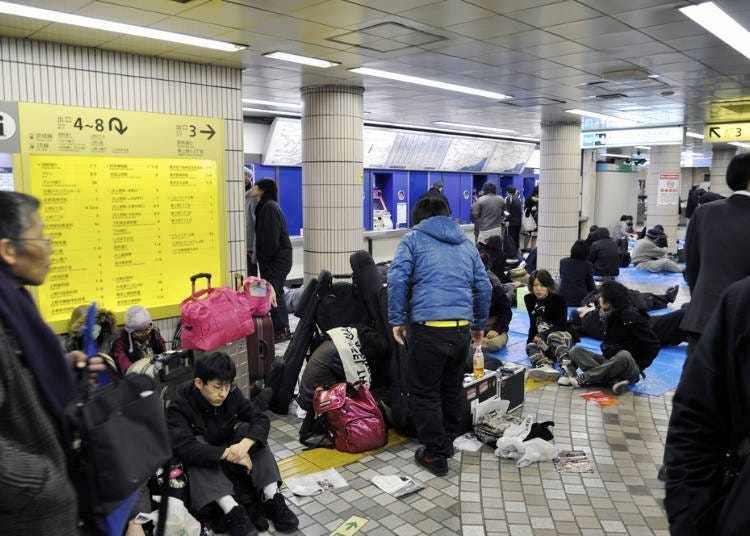
Response Strategies by Situation
If you're in a downtown area:
Dangerous objects such as window panes, billboards, and neon signs may fall from tall buildings, so cover your head with a bag or other personal item, stay away from buildings, and get to a park, plaza, or other open space. Especially in a crowded area, panic can erupt as people crowd around exits, so it's essential to remain calm.
If you're inside a building:
If you are inside a tall building, you may feel drastic swaying, and the movement may last longer than on the ground. If you feel a swaying motion, move to somewhere such as an elevator hall. Once the swaying stops, although you may want to take the elevator down to the ground floor, elevators are sometimes stopped because of electric outages. Avoid using elevators and use the stairs instead to get to safety.
If you're inside an elevator:
Press the stop buttons for every floor and get off wherever the elevator stops. In case the lift stops working, and you are trapped inside, press the emergency button.
If you're in a supermarket or convenience store:
Items may fall from the store shelves. Protect your head with a bag or shopping cart and stay away from objects that are likely to fall over.
If you're underground:
Even if there's a blackout, it is safest to stay in one place and wait calmly until the emergency lights come on. In underground areas, by law, there are emergency exits situated every 60 meters. Once the emergency lights come on, follow along the wall, and find an emergency exit.
If you're on the train, subway, or bus:
If an earthquake occurs while the train is running, the cars will sense the vibration and come to an emergency stop. If you are standing, grab onto a handrail or hanging handgrip, and if you are sitting, remain in a low position.
If you're in a hotel room:
There is a possibility of bedside tables and other furniture falling over. Protect your head with a pillow or blanket, and once the shaking stops, open the door and make sure of the path to exit the hotel. It is also essential to check the location of emergency exits ahead of time as soon as you check into your room.
If you're near the ocean:
There is a danger of tsunamis forming, so get to higher ground. If there is no higher elevation area around, then move to the upper floor of a reinforced concrete structure or other sturdy building.
Evacuation sites and shelters in Kyoto to know before an unexpected earthquake
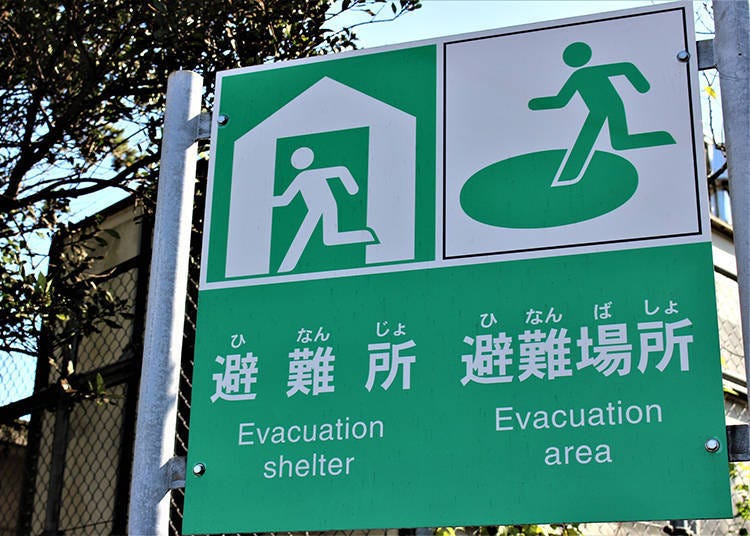
When you’re living or traveling in Kyoto, there’s no way to know if an earthquake will hit, how hard it might hit, or if you’ll be directly affected. And when you’re traveling, there’s a limit to the amount of supplies you can carry. All the more reason to at least know about Kyoto’s evacuation sites and shelters.
・Evacuation Shelters
Evacuation shelters, or “temporary shelter facilities,” are places where people who are out and about, whether they be sightseeing, shopping, or unable to get home, can stay temporarily and await further safety instructions.
The city of Kyoto has agreed to use over 120 facilities in emergencies. You can confirm which facilities are open on the following site in the event of a natural disaster. If no information is displayed during major disasters, it means that preparations are not complete, so please head to your nearest evacuation site (emergency evacuation plaza)
・Evacuation Sites (Emergency Evacuation Plazas)
These locations are chosen to protect citizens from the aftereffects of natural disasters like fire. They include parks, river terraces, housing complexes, schools, and other wide-open areas.Emergency evacuation plazas serve the same purpose as evacuation sites; ensuring safety of visitors, providing temporary shelter, and sharing disaster information.
・Other Facilities
Still other facilities for evacuating after a natural disaster may be called “evacuation spots,” “temporary gathering areas,” or similar. Evacuation spots are, as you might expect, similar to evacuation sites: places to go after a disaster hits. They should have the equipment necessary to take refuge if the disaster has robbed you of a place to stay. Temporary gathering areas are spots where local citizens might first gather before heading to an evacuation site in order to gather information and move as groups. Schools, school yards, and parks are some of the wide-open areas chosen for gathering.Travelers should first head for evacuation shelters, temporary gathering areas, or evacuation shelters.
Find locations of evacuation shelters and sites on LIVE JAPAN’s “Useful Map”
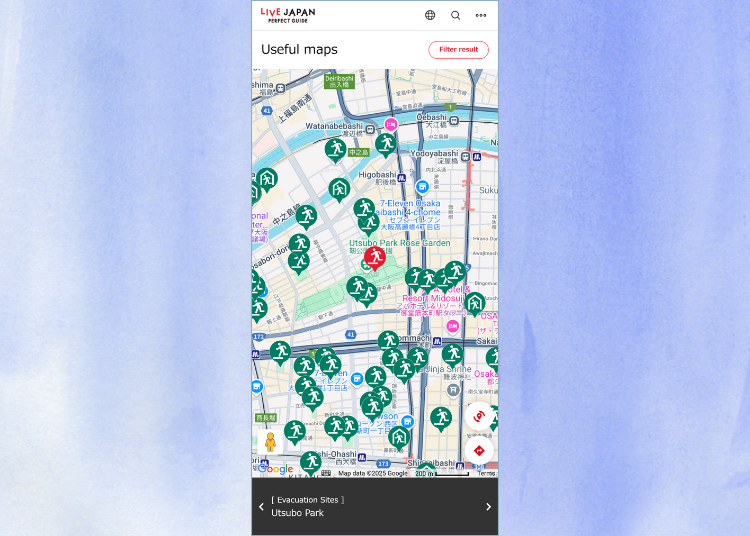
LIVE JAPAN publishes a “Useful Map” that identifies evacuation shelters and sites.
▶https://livejapan.com/en/handymap/
From this page, you can find evacuation shelters and sites near you. It currently supports only Tokyo, Osaka, and Kyoto, but it should serve you well if that’s where you are.
For Kyoto, you can check “Evacuation Sites” and “Disaster Base Hospitals.” You can check evacuation shelters via the Kyoto City Returning Home Support Website mentioned above.
Stay informed in emergencies and disasters with LIVE JAPAN’s “Disaster Info Site”
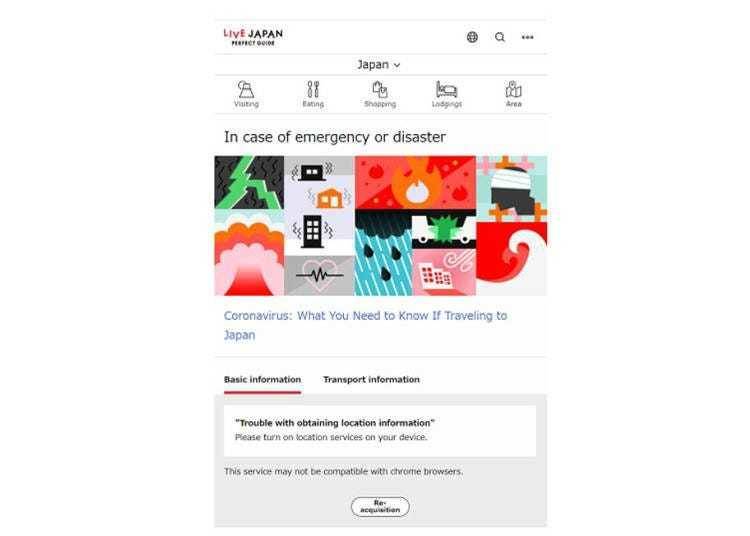
LIVE JAPAN also has a webpage for centralized access to helpful information during emergencies and disasters.
In addition to supplying you with locally relevant information, it also has valuable links for embassies, reports from the tourist bureau for international travelers, multilingual hospitals and clinics, and emergency contact information matched to the situation. We recommend keeping this page bookmarked so you can check back at a moment’s notice.
▶https://livejapan.com/en/emergency/
Typhoon in Kyoto
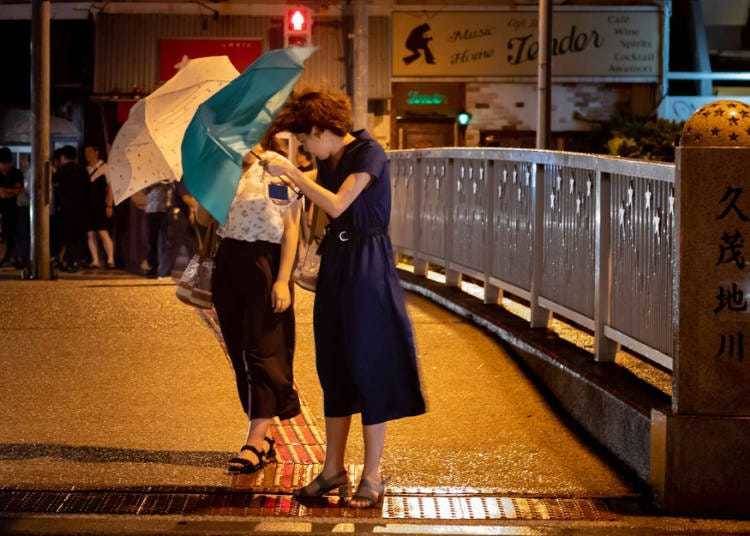
During August through October, typhoons often cross paths with the Japanese archipelago, and the Kansai area can experience strong winds, flooding, and landslides. Recently, in August 2018, Typhoon Jebi hit western Japan and caused torrential rainfall, which led to Kansai International Airport flooding and suffering severe damage. Many foreign tourists who don't speak Japanese have reported not even knowing that a typhoon was coming and that it was troublesome, not knowing any information about the status of public transportation. Here are some main points you should know about typhoons to help avoid facing the same issues.
Basic Points to Know in the Event of a Typhoon in Kyoto
1) The path and magnitude of a typhoon change daily. Once a typhoon warning is announced, check the weather forecast every day utilizing resources such as services at your hotel or inn front desk, tourist information centers, or the English news program "NHK World."
NHK WORLD: https://www3.nhk.or.jp/nhkworld/
2) When a typhoon hits, trains, airplanes, and other modes of transportation may suffer delays or cancellations, starting from before the typhoon reaches land. Don't make any reckless moves in location, and instead gather information on the transport situation before deciding to travel.
Transfer information (available in foreign languages):
3)Once a typhoon is close, signboards and roof tiles can be thrown by the wind, so stay indoors as much as possible.
4) Landslides, rising water levels in rivers, and other flood damage are easy to occur, so try to stay away from waterways.
Heavy Snowfall in Kyoto
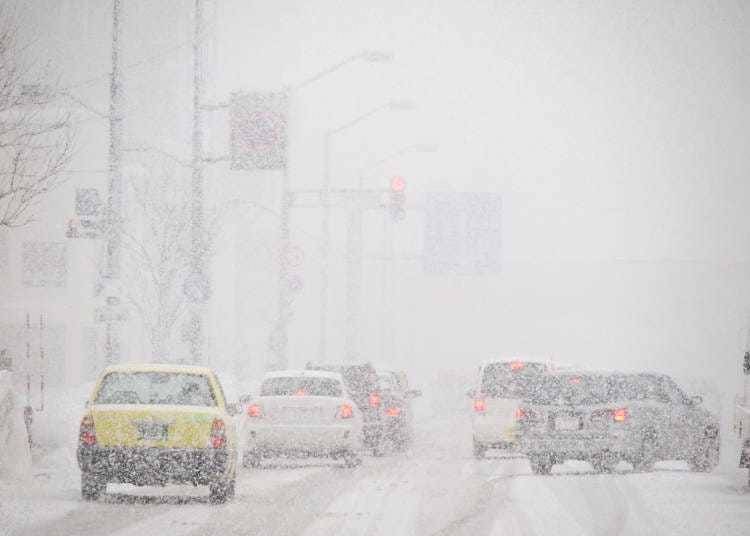
It is rare to witness snowstorms in the Kansai area, but when it does snow, there can be disruptions to public transit and secondary disasters. This is especially pertinent information for those who live in countries without snowfall.
Basics to Know in the Event of Heavy Snowfall in Kyoto
1) As with typhoons, once snowfall is forecasted, check the weather forecast every day.
2) Trains, airplanes, and other methods of transportation may suffer delays or cancellations. Don't rush and make any moves after checking train and other transportation status ahead of time.
3) If you aren't used to walking in the snow, you could fall and suffer severe injury. Tips to walking on snow are to raise your leg vertically and then immediately step back into the snow. Depending on your location, snow may harden and become slippery, so be cautious.
4) Large chunks of snow can sometimes fall from roofs. When you're walking outside, watch not only your feet but overhead as well.
Safety for your pleasant trip "Safety tips"app

"Safety tips" is a free app supervised by the Japan Tourism Agency. It was developed to ensure that international visitors can travel safely and with peace of mind in Japan, a country prone to natural disasters. By installing the app, users will receive push notifications for earthquake early warnings, tsunami warnings, and special weather warnings within Japan. Additionally, the app provides useful resources for emergencies, such as response flowcharts, communication cards, and a collection of links to essential information. The app supports 15 languages. For a safe and secure trip, we highly recommend downloading "Safety tips" before or during your travels in Japan.
*Prices and options mentioned are subject to change.
*Unless stated otherwise, all prices include tax.

Popular Tours & Activities
-
June Events in Kansai: Fun Festivals, Food, and Things to Do in Kyoto & Osaka
-

This October, Japan's Bullet Train Is Launching an Ultra-Luxurious New 'Supreme Class' Shinkansen
by: Wemmy Chau
-
(Summer Exclusive) Kyoto's Kamogawa & Osaka's Kitahama Terraces: 5 Budget-Friendly "Kawadoko" Cafes & Restaurants to Beat the Heat in Style!
by: Guest Contributor
-

Osaka After Dark: The Ultimate Rooftop & Riverside Beer Garden Guide
by: Guest Contributor
-
July Events in Kansai: Fun Festivals, Food, and Things to Do in Kyoto & Osaka
-

5 Glamping Spots Near Osaka: Enjoy Ocean Views, BBQ & Hot Springs - Just 1 Hour from the City! (Perfect for Couples & Families)
by: Guest Contributor
Inspiration for Accommodations
-
The Best of Japan: 11 Major Cities Every Traveler Should Visit
-
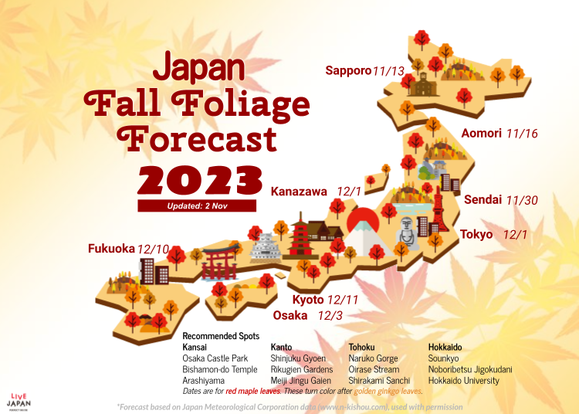
Autumn in Japan 2026: Fall Foliage Forecast & Where to Enjoy the Colorful Leaves (+Tour Info)
-
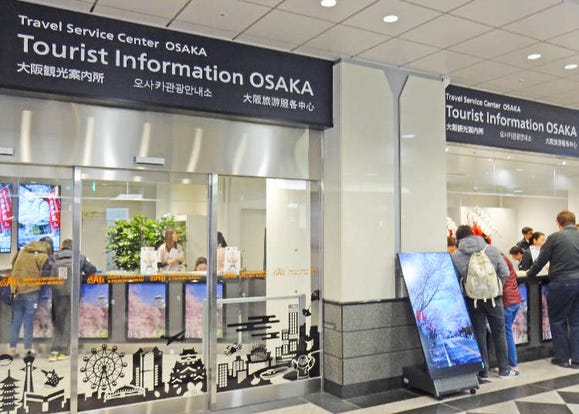
Osaka Travel Service Center: So Many Incredibly Convenient Services - in English!
by: WESTPLAN
-
Ad

Looking For Hotels in Kyoto? Choose Comfort! Local-Meisters Offer Insights on 3 Unique Brands
-
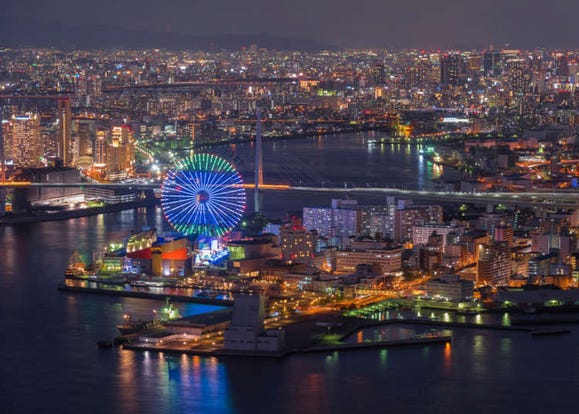
Osaka After Dark: 10 Spots for Dazzling Night Views
-
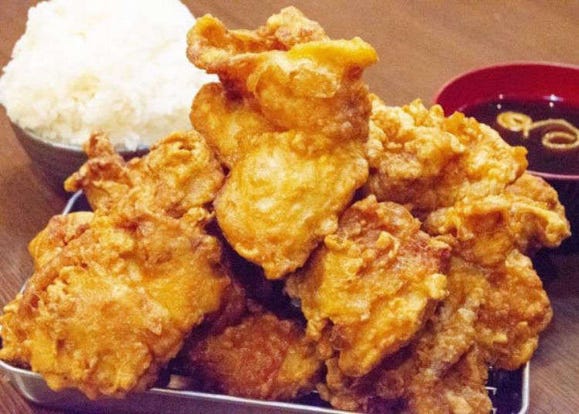
All-you-can-eat Restaurants in Osaka: Top 3 Spots for Great Dinner Deals! (Under $25)
- #best gourmet Osaka
- #things to do Osaka
- #what to do in kyoto
- #what to bring to japan
- #best gourmet Kyoto
- #new years in Osaka
- #what to buy in nanba
- #Visiting Osaka
- #onsen tattoo friendly arima
- #daiso
- #Visiting Kyoto
- #best japanese soft drinks
- #japanese fashion culture
- #japanese convenience store snacks
- #japanese nail trends