




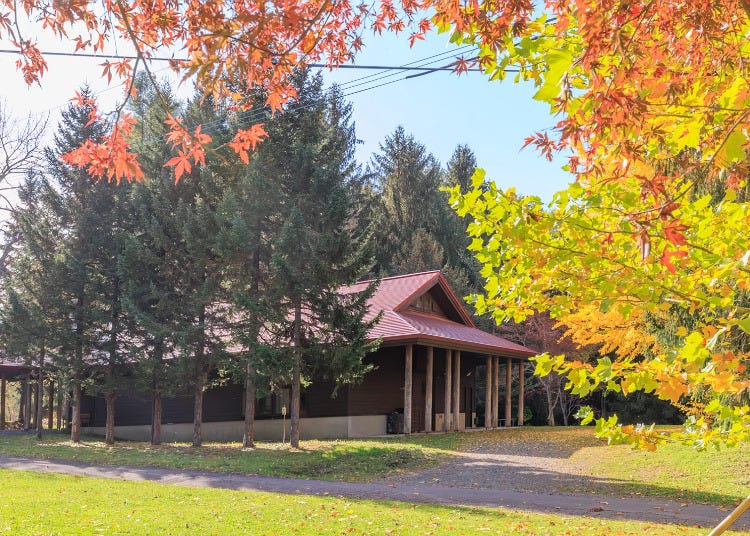
Arte Piazza Bibai, formally the Kan Yasuda Sculpture Museum, showcases works by internationally acclaimed sculptor Kan Yasuda, who was born in Bibai, Hokkaido, and is now based in Italy.
The museum also hosts a hugely popular workshop that draws participants from across Japan. Called “Carving the Heart,” it invites participants to work directly with white marble and other stone, gradually giving form to something within themselves. I joined the workshop to find out what the experience is really like.
*Information in this article is current as of November 2024. Please check the official website for the latest details before visiting.
*All prices include tax.
- Table of Contents
Giving shape to what’s inside
Workshop Day 1
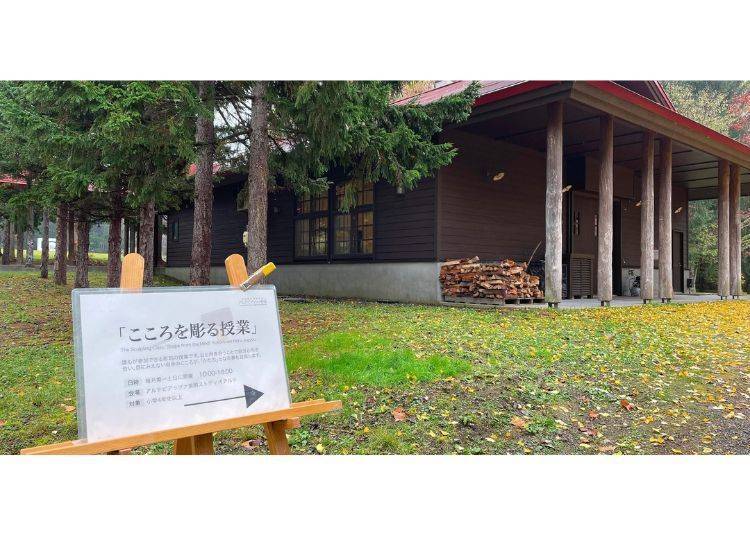
On November 2, about a week after my first visit for interviews and photography, I returned to Arte Piazza Bibai. This time, I was there to take part in the museum’s “Carving the Heart” workshop.
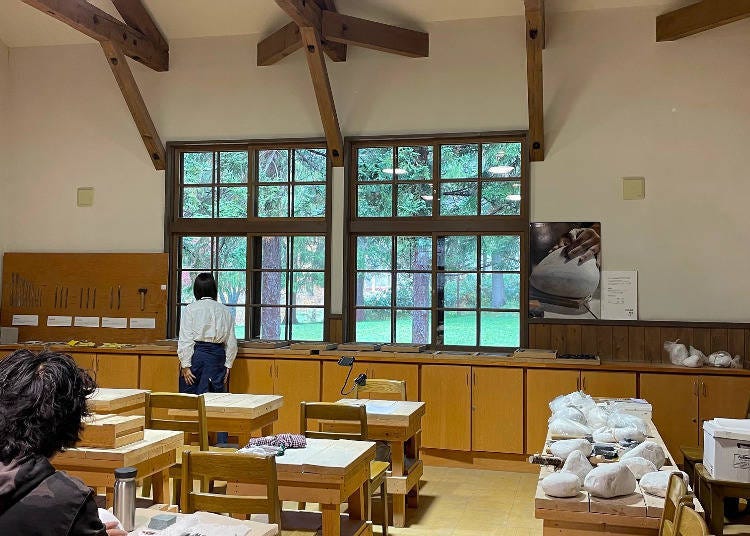
“Carving the Heart” is a hands-on sculpture workshop where participants work with materials including white marble from Carrara, Italy, the same renowned stone used by Kan Yasuda and many other sculptors.
The idea of giving “shape” to what was inside me sounded intriguing. But would I be fine with absolutely no sculpting experience? What if I knew next to nothing about art? With equal parts nerves and anticipation, I stepped into the studio.
About 30 minutes before the workshop began, participants gradually started arriving. There were around 20 people that day, most of whom had attended several times before. That day, only two of us were first-timers: T., who had come from Iwamizawa, and me.
T. had long been a fan of Arte Piazza Bibai and often visited on days off. The “Carving the Heart” workshop had also been on T.’s wish list for some time, so finally being able to join was something of a long-awaited opportunity.
At 10 AM, the workshop began. For us beginners, the first task was choosing a stone.
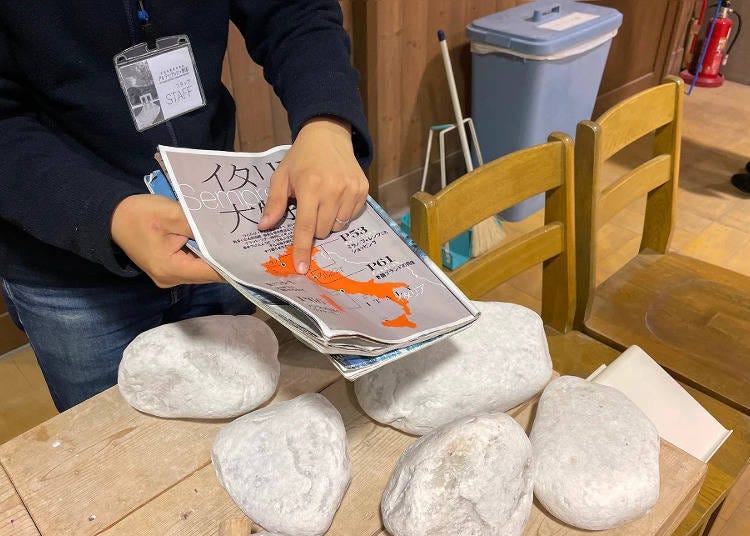
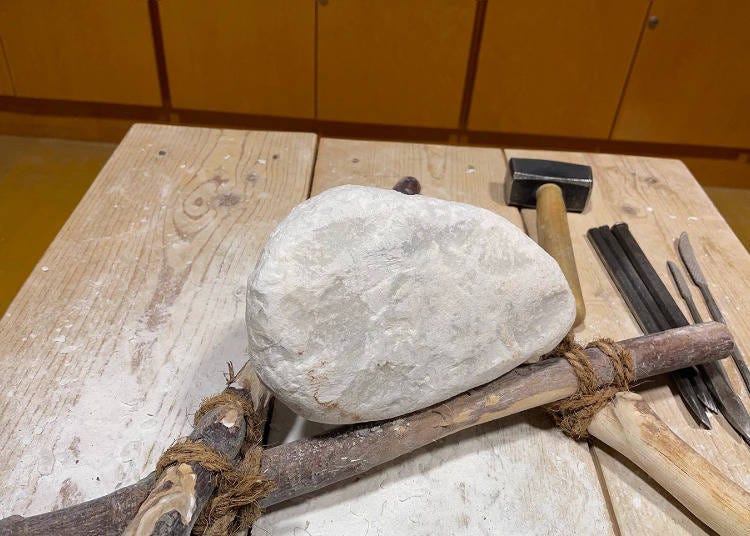
Participants can choose either white marble or soft stone. I decided to go with Carrara marble from Italy, the material associated not only with Kan Yasuda but also with Michelangelo.
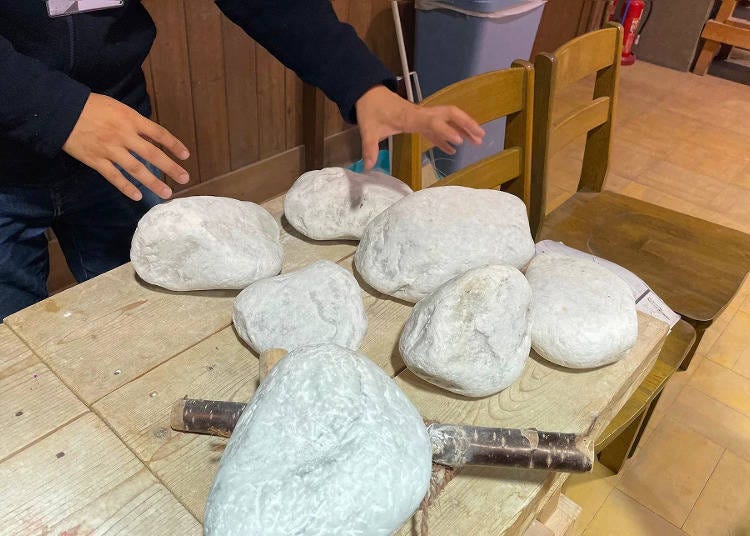
The pieces came in all shapes and sizes. I didn’t overthink it and simply chose one that caught my eye. You can just as easily pick them up, feel their weight and texture, and take your time finding one that feels right.
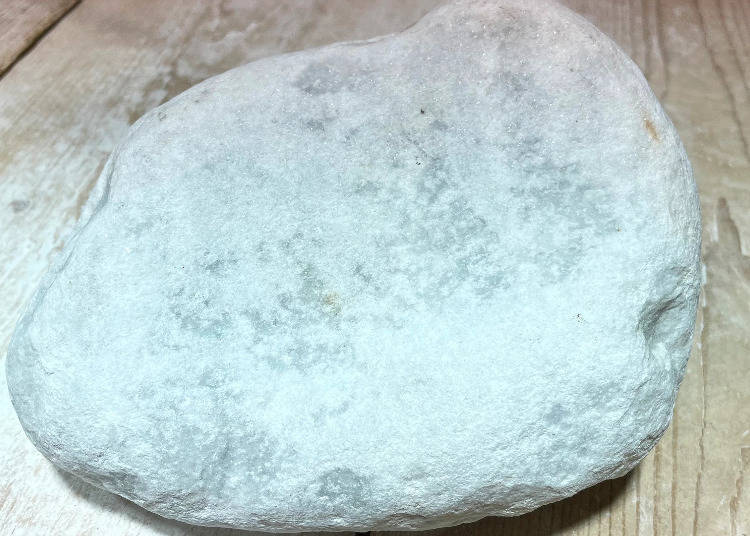
And this was the one I chose. I couldn’t explain why I was drawn to it. Perhaps, I thought, the answer would come later.
Next came a lesson in how to use the tools.
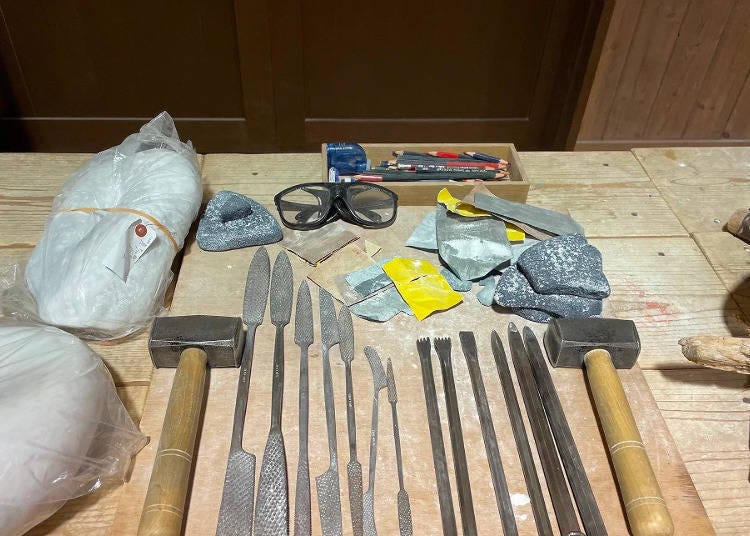
Chisels, hammers, files, and other tools were lined up before us. Many were handmade in Italy by skilled craftspeople and are the same kinds of tools used by professional sculptors.
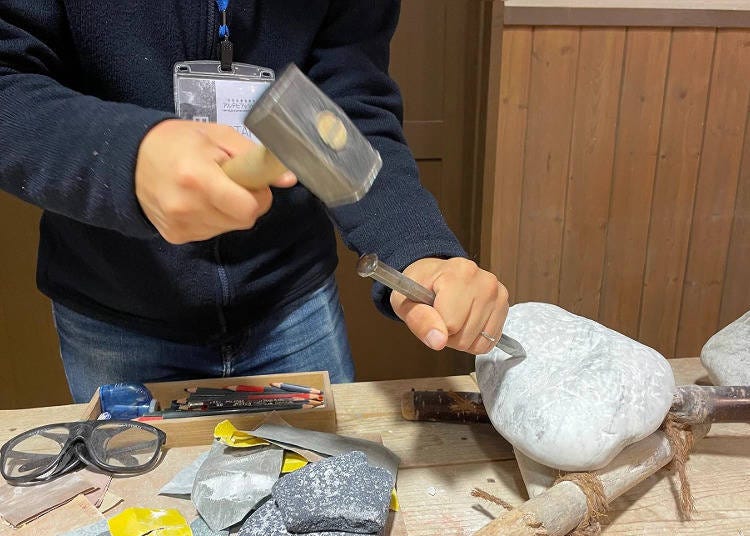
We were shown how to hold the chisel at the right angle, how to strike it with the hammer, and how to polish the stone if we wanted a smoother finish.
And that was about it for instruction. Rather than getting bogged down in technique, the workshop encourages you to learn by doing. That may well be the essence of “Carving the Heart.”
You feel your way forward, experimenting and making mistakes until the form you’re looking for gradually begins to emerge. At that point, standing uncertainly in front of my stone and tools, I had no idea just how absorbed I was about to become.
Facing the stone, facing yourself
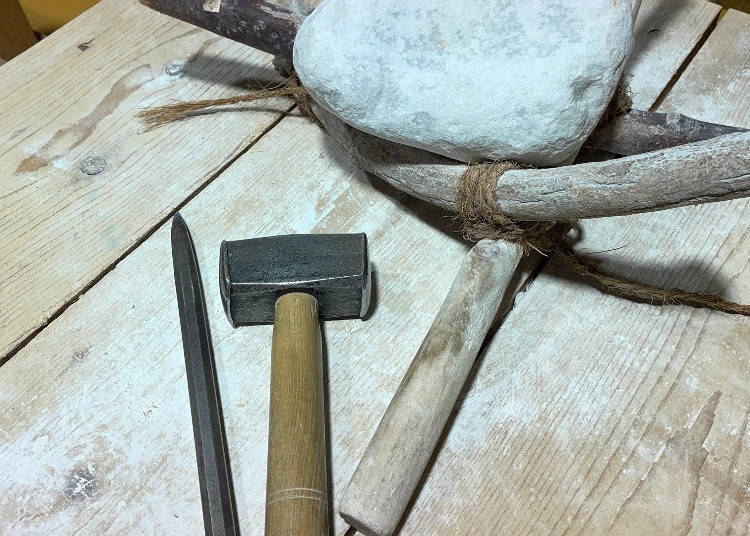
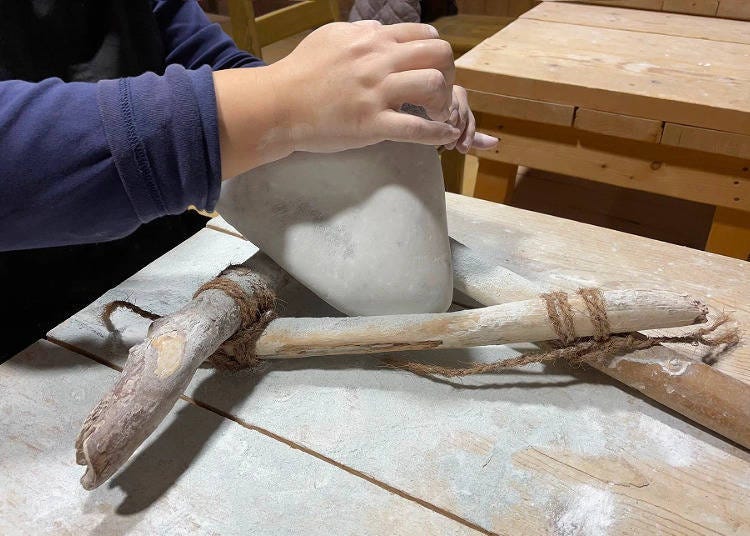
I picked up my tools, and it was finally time to start carving.
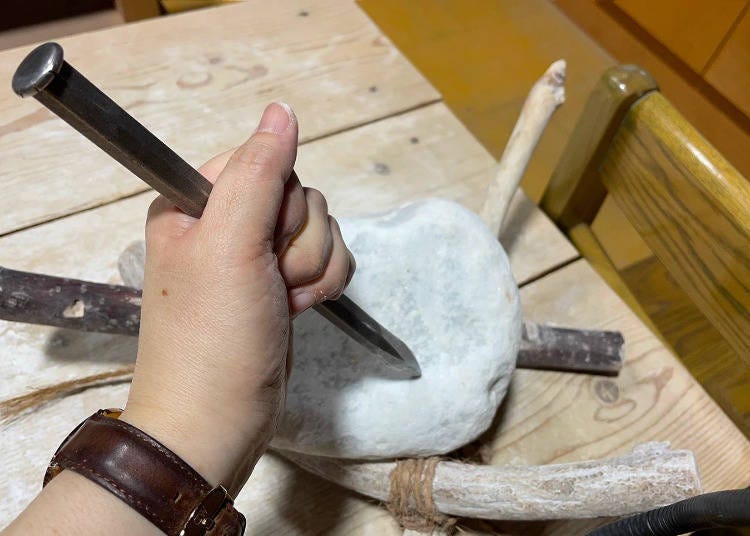
Not really knowing what I was doing, I carved.
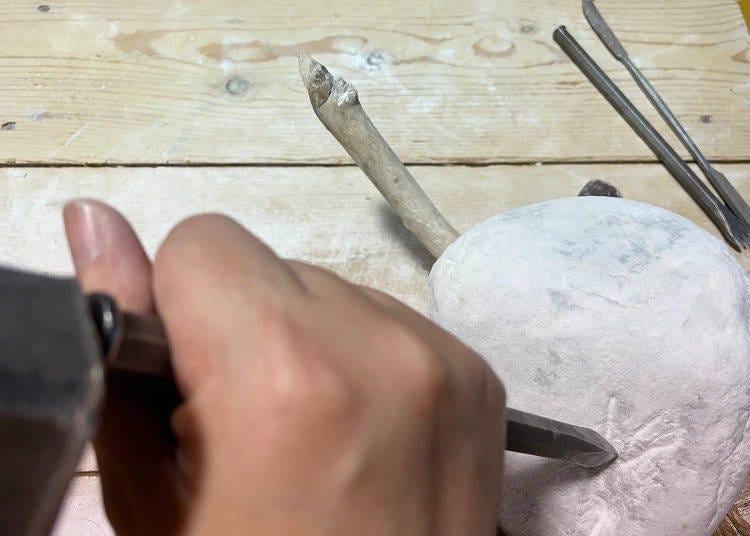
And carved.
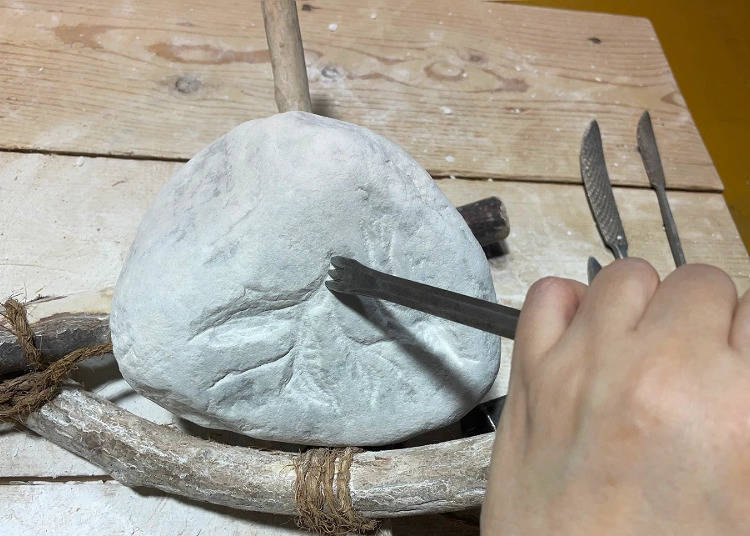
I simply kept carving.
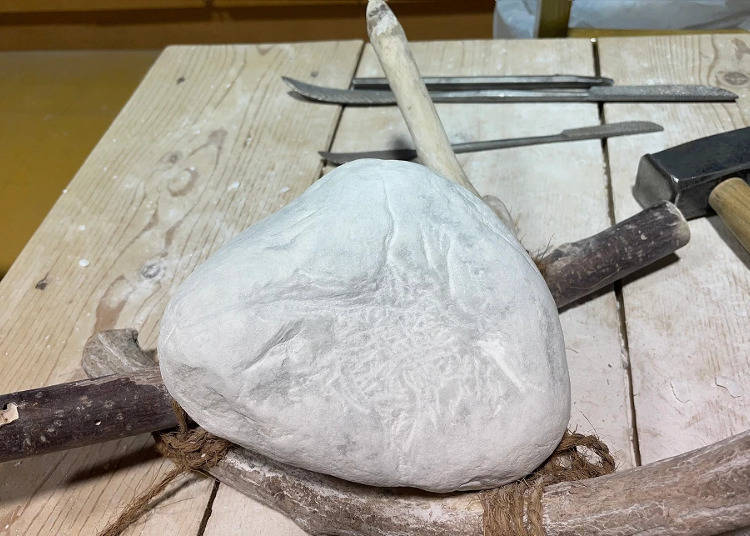
My ideas went round and round without settling anywhere, and by the end of the day, all I had really done was leave marks across the stone’s surface. Still, the hours had disappeared before I knew it, and the first day of the workshop was over.
Workshop Day 2
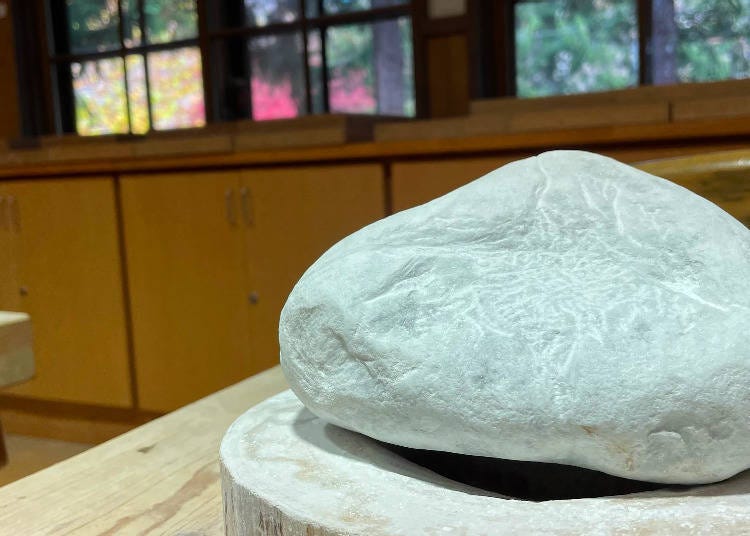
November 3 brought the second day of the workshop. Now that I was more familiar with the feel of the stone and the tools, I found myself more able to simply face what was in front of me, whether that was the stone or perhaps myself.
After working indoors for a while, I decided to take advantage of the beautiful weather and move outside for a change of scenery.
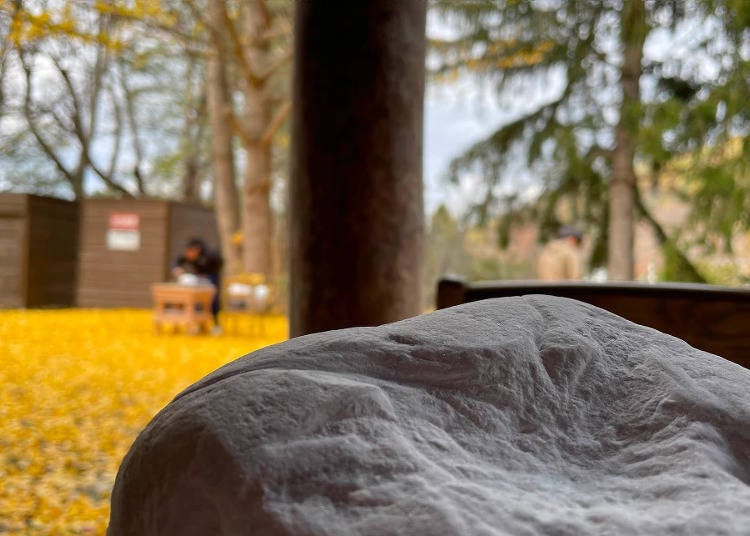
There was a crisp chill in the air, hinting at the winter soon to come. All around me, the rhythmic tapping of chisels echoed through the open space. It was surprisingly soothing.
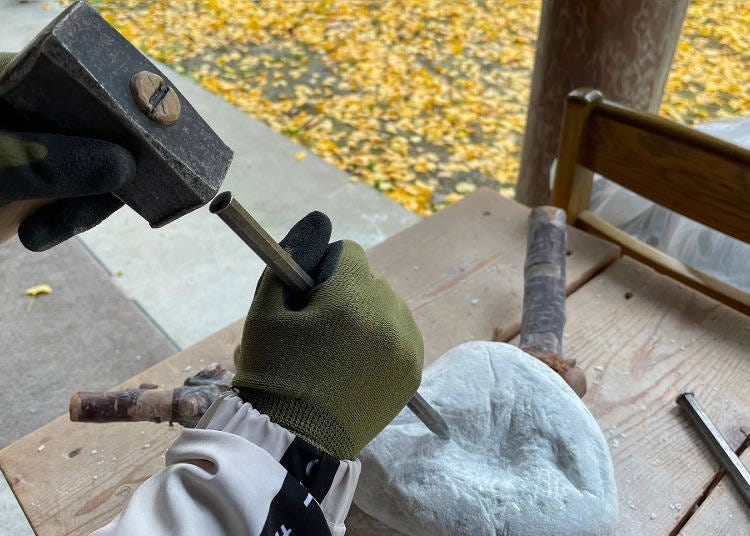
Listening to that steady rhythm, I stopped thinking so much and simply worked. Before I knew it, I had begun carving repeatedly into a single point, almost unconsciously, as though the deeper I went into the stone, the deeper I was turning inward myself.
Then I hit my first real obstacle. Beyond a certain point, I simply couldn’t carve any deeper.
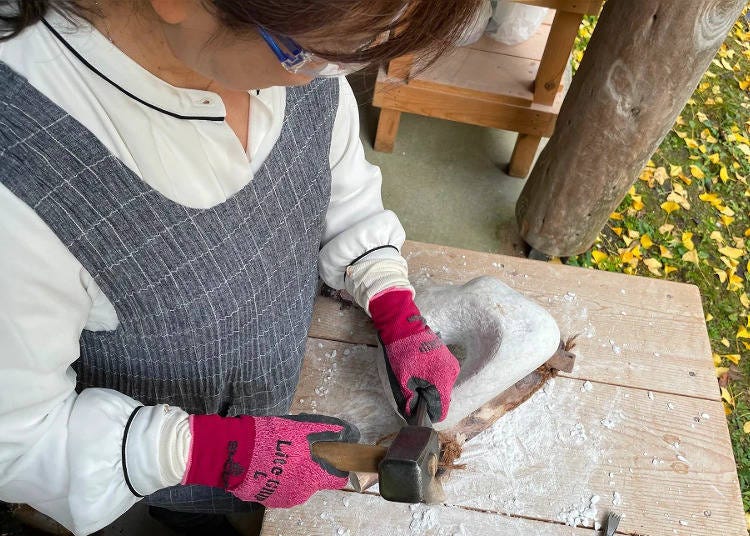
O., who was working beside me, noticed what was happening and offered some advice.
I tried following it, and...
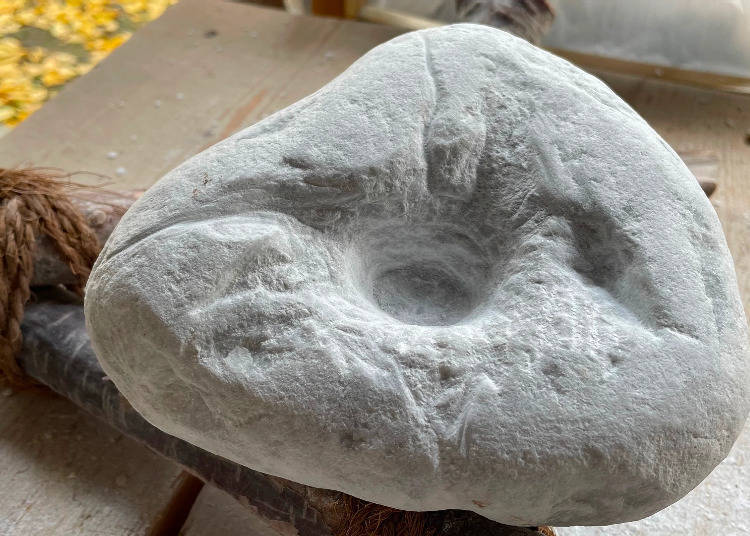
Suddenly, I was able to carve much deeper.
That was the moment stone carving really began to click for me. At the same time, I found myself growing unexpectedly attached to the piece in front of me. Just as that feeling of satisfaction began to settle in, Day 2 came to an end.
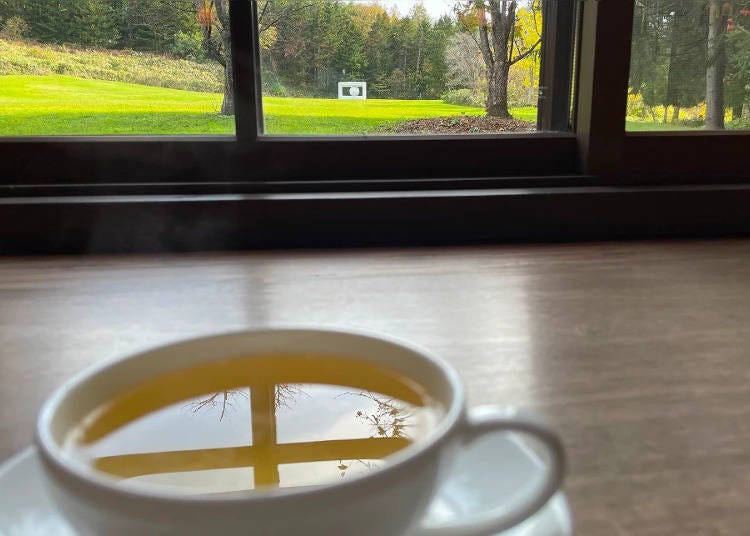
You can choose to stop after the workshop, but anyone who wants to continue working on their sculpture can join future “Carving the Heart” sessions from 1,200 yen per day or use Studio Arte independently for 110 yen per person per hour. An additional heating fee applies during winter or whenever heating is required.
As for me, I intend to keep going. I’m curious to see not only how the stone changes, but what I might discover about myself along the way.
Everyone’s “Carving the Heart” experience
People of all ages, professions, and backgrounds take part in the “Carving the Heart” workshop.
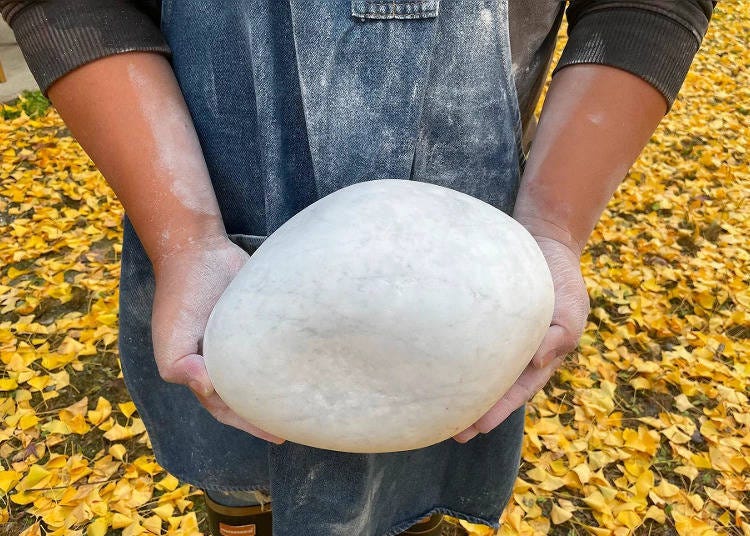
Another first-time participant this time around was T. from Tomakomai. T. plans to keep returning, eventually creating a piece with a smooth, tactile finish that feels good to touch.
One longtime participant has even had Kan Yasuda himself comment on their work. Seeing how happily they recalled that encounter made it clear how memorable the experience had been.
T. from Ishikari has been attending “Carving the Heart” for exactly 10 years and now comes together with his mother.
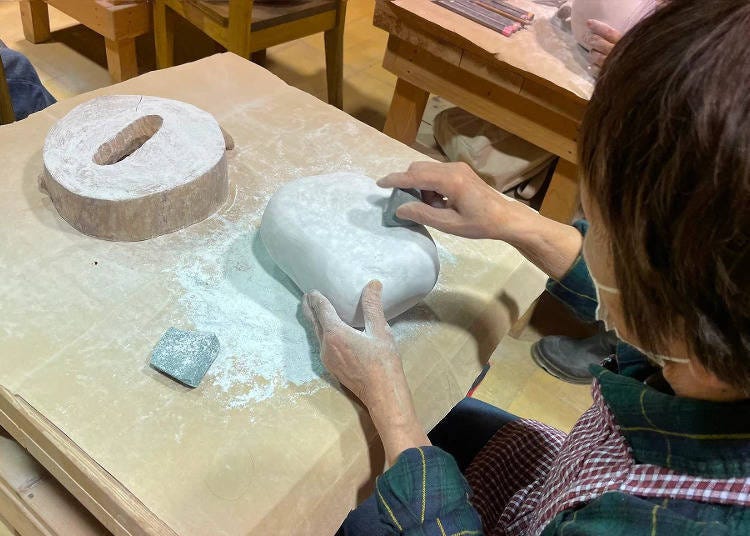
“I thought it might be nice for my mother and me to share a hobby, so I invited her along. She said, ‘I’d love to try it!’ and we’ve been coming together ever since. We’ve both become completely hooked on sculpture. We’ve even imported tools from Italy and have a workbench for each of us at home so we can keep working there,” T. explains.
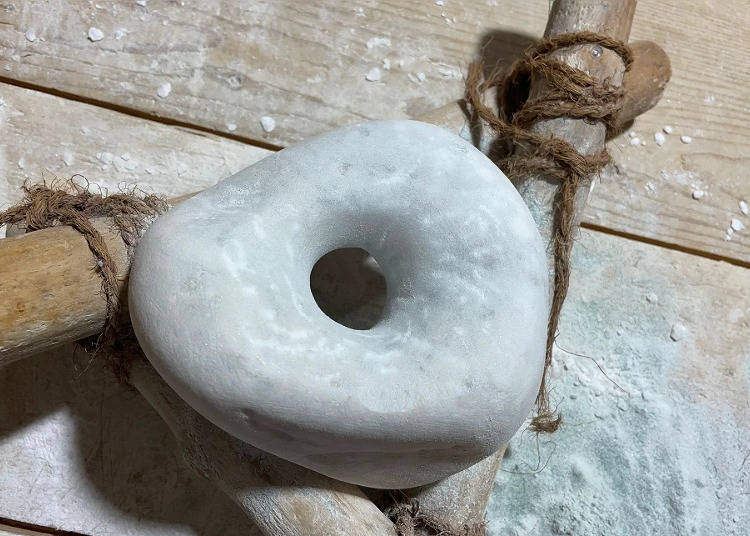
H., meanwhile, quietly polished away at a piece throughout the session. There was something about H.’s calm, gentle manner that seemed reflected in the sculpture itself. H. travels from Sapporo by train and bus to attend and appears to enjoy the journey almost as much as the workshop.
“Carving the Heart” brings together people drawn to Kan Yasuda’s sculptures, to working with stone, or simply to the process itself.
Return often enough, and you may find someone familiar waiting there even without making plans. You exchange a smile and a greeting, sit down to work, and gradually become part of a loose, gentle community. For some, Arte Piazza Bibai may become another place where they simply feel at home.
-
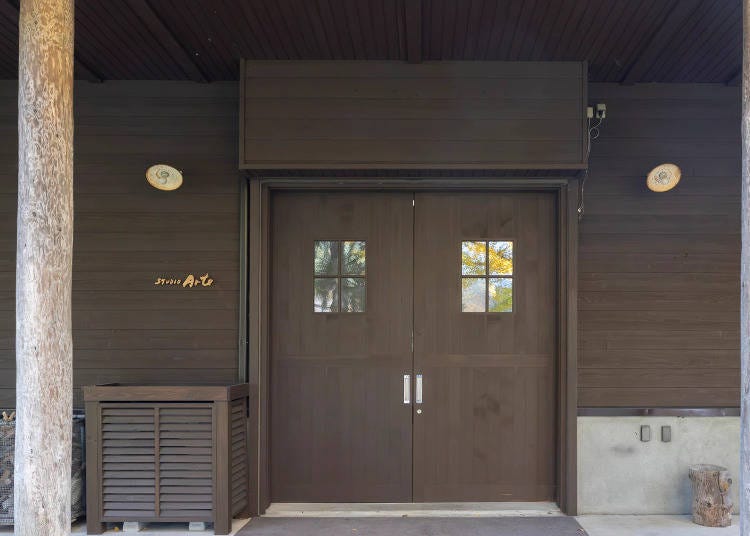
Kan Yasuda Sculpture Museum Arte Piazza Bibai安田侃彫刻美術館 アルテピアッツァ美唄
-
Address
Sakaemachi, Ochiai-cho, Bibai, Hokkaido
View Map - Phone Number 0126-63-3137
Opening Hours: Museum 9:00 AM–5:00 PM, Cafe Arte 10:00 AM–5:00 PM *Weekdays from mid-November to mid-March of the following year: 10:00 AM–4:00 PM
Closed: Tuesdays, the day after public holidays (excluding Sundays), Year-end and New Year holidays
Admission: Free (Voluntary donations are accepted, such as Arte Citizen Popolo [annual fee 3,000 yen]), “Carving the Heart” workshop: White Marble 15,000 yen / Soft Stone 10,000 yen (both include the cost of the stone) *Lunch fee is separate (reservation required)
*During winter, outdoor sculptures are covered with protective sheets to shield them from Hokkaido’s severe cold. White marble sculptures, along with some bronze works, are generally covered from early November until around late April. -
Address
Sakaemachi, Ochiai-cho, Bibai, Hokkaido
[Source & Cooperation]
This article has been reprinted with permission from "DO Tabi," the official travel information website operated by AIRDO, the wings of Hokkaido.
In Cooperation with: AIRDO Co., Ltd.
Founded on the core philosophy of "Revitalizing Hokkaido's Economy," AIRDO is headquartered in Sapporo, Hokkaido. Operating as the "Wings of Hokkaido," the airline connects Hokkaido with Honshu and Fukuoka across 11 routes.
Under its brand vision, "Bringing air travel closer, with higher quality, to enrich people's hearts," AIRDO is dedicated to delivering an accessible yet premium travel experience, centered around "warm hospitality" tailored to each and every passenger.

"DO Tabi" is a travel curation media platform operated by AIRDO, the wings of Hokkaido.
As an airline that knows the local region inside out, we deliver travel inspiration to transform your desire to visit into a memory you are truly glad you made.
It is packed with content that will resonate deeply—not only with those currently planning a trip to Hokkaido, but also with anyone thinking, "I want to go somewhere, but I haven't decided where yet."

- Area
- Category
*Prices and options mentioned are subject to change.
*Unless stated otherwise, all prices include tax.
Popular Tours & Activities
Recommended places for you
-
Niseko Village Ski Resort
Skiing & Snowboarding
Niseko / Rusutsu
-
Appealing
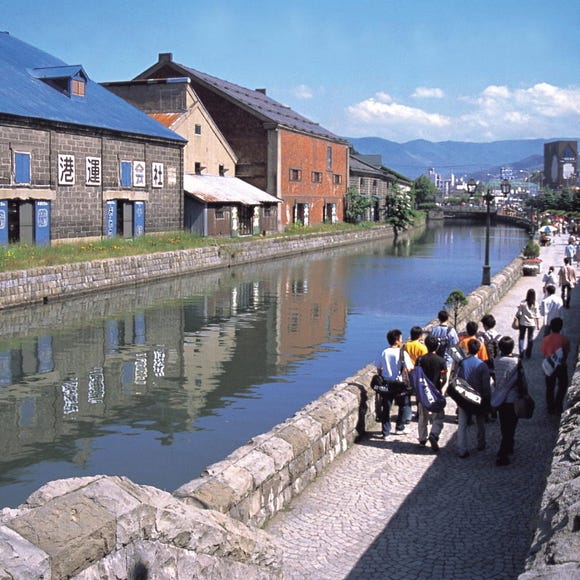
Otaru Canal
Rivers, Lakes & Canyons
Otaru
-
Appealing
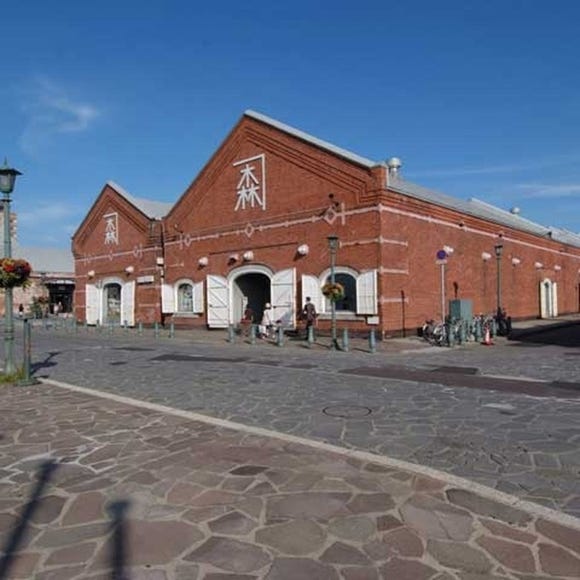
Kanemori Red Brick Warehouse
Shopping Malls
Hakodate
-
Appealing
Rukku and Uohei
Izakaya
Sapporo / Chitose
-
Appealing
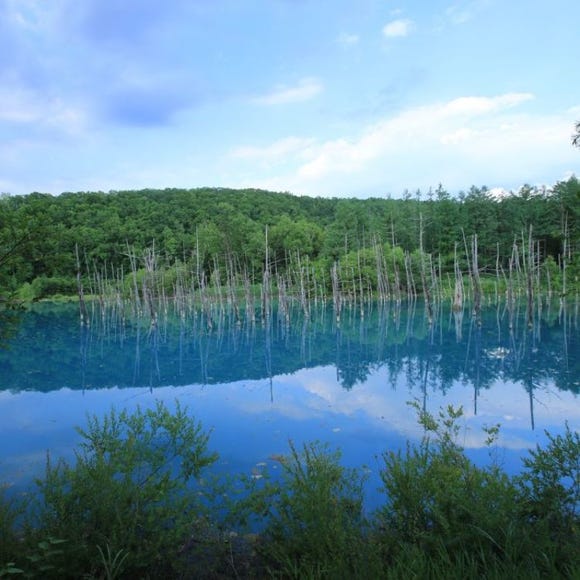
Shirogane Blue Pond (Aoiike)
Rivers, Lakes & Canyons
Furano / Biei / Sounkyo
-
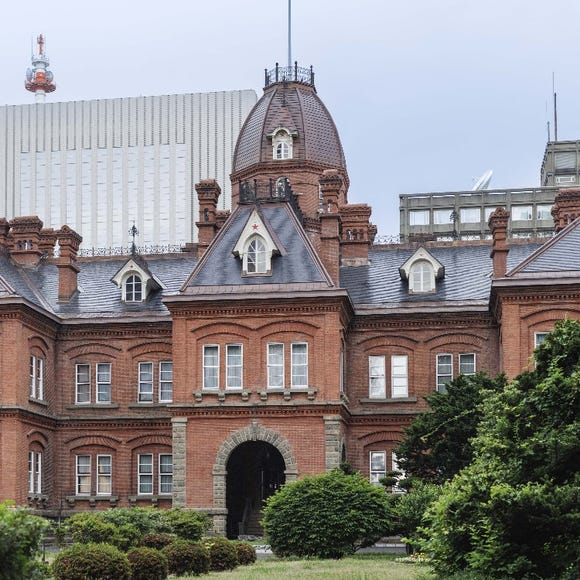
Former Hokkaido Government Office Building (Red Brick Office)
Other Historic Sites
Sapporo / Chitose
-
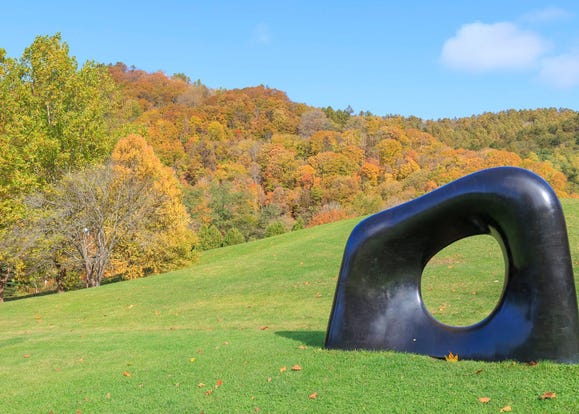
Inside Arte Piazza Bibai: Kan Yasuda’s Sculptures in a Former Hokkaido School
-

Okashi Kissa Miura - The Charming Hokkaido Cafe Serves French-Inspired Sweets in the Beautiful Countryside
by: Guest Contributor
-
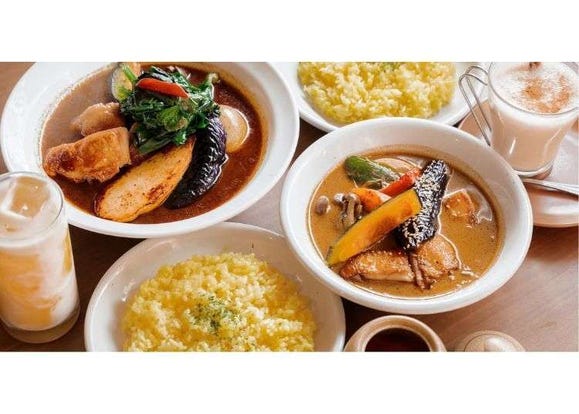
Curry Leaves: Sapporo Soup Curry with Crispy-Skin Chicken and a Rich Broth Built on Onions Sautéed for 10 Hours
-
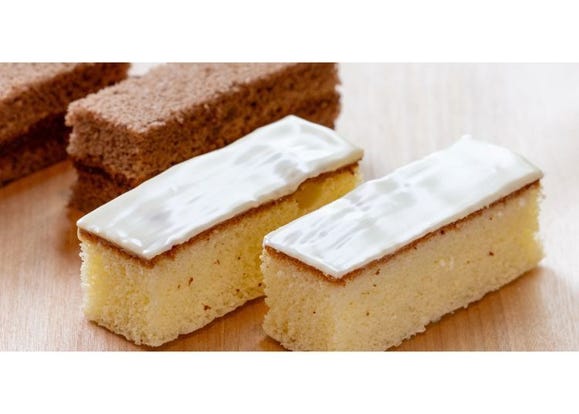
Obihiro's Beloved 90-Year-Old Sweet Shop and the 'Milk Road' Treat Fans Keep Coming Back For
by: Guest Contributor
-
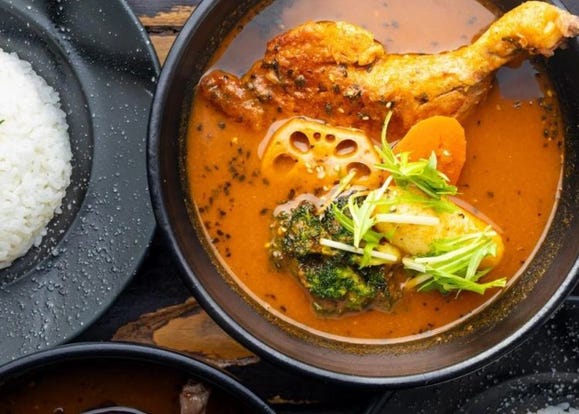
Just 2 Minutes from JR Sapporo Station! Sapporo’s Must-Visit Soup Curry Gem: Hirihiri No. 2, a Longtime Local Favorite
by: Guest Contributor
-

Hokkaido's Best 10 Budget Onsen Stays (Ryokan & Hotels From 20,000 Yen a Night)
-
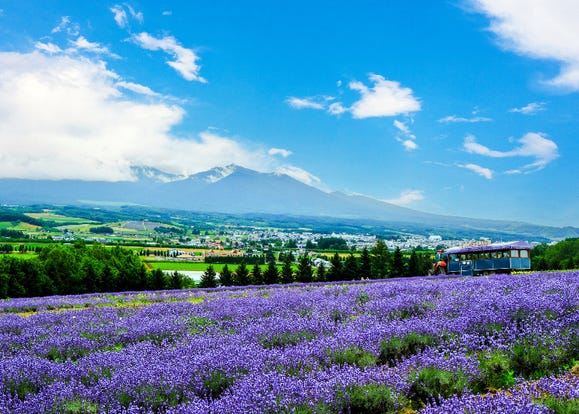
Hokkaido Travel Guide: Everything You Need to Know Before You Go (Transportation, Food, Souvenirs & Hidden Gems)
-

Otaru Travel Guide: Inside Hokkaido's Leading Destination (Sightseeing, Food, and Shopping Tips)
-
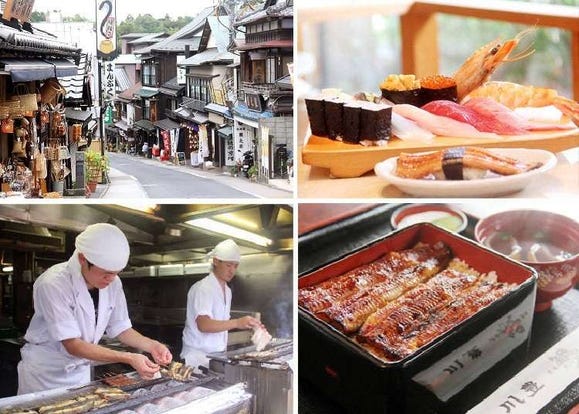
(Video) Walking Tour along Narita Omotesando - Quaint Historical Village near Narita Airport!
by: Victor Gonzalez
-
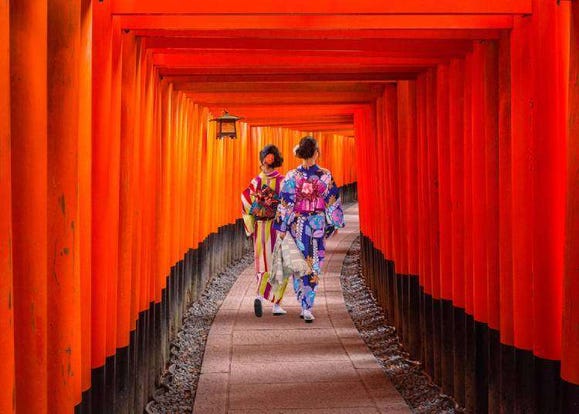
Japan Travel Guide: The Top 10 Cities You Have to Visit! Where Should You Go in Japan?
-
Hakodate 2-Day Itinerary for Exploring Japan's Foodie North!
-
Sapporo New Chitose Airport (CTS): Complete Guide to Restaurants, Souvenirs, Shopping & More!
- #best sushi hokkaido
- #things to do hokkaido
- #best ramen sapporo
- #what to bring to japan
- #new years in tokyo
- #what to buy in ameyoko
- #japanese nail trends
- #what to do in odaiba
- #onsen tattoo friendly tokyo
- #daiso
- #best sweets otaru
- #japanese fashion culture
- #best nature furano
- #japanese convenience store snacks
- #best japanese soft drinks