



Japan Travel Essentials: Carry-On vs Checked Baggage Rules Explained (Power Banks, Liquids, and Prohibited Items Made Simple)
- Written by: LIVE JAPAN Editor
Packing for a trip to Japan and not sure what you can bring on board? Questions like “Can power banks go in checked luggage?” or “Is a hair straightener allowed on the plane?” are common, and getting it wrong can mean having items confiscated at the airport or, in serious cases, being denied boarding.
This guide breaks down the latest general regulations issued by Japan’s Ministry of Land, Infrastructure, Transport and Tourism, along with policies used by major airlines such as Japan Airlines, All Nippon Airways, Peach Aviation, and HK Express. With this overview, you can pack confidently and avoid last-minute surprises at the airport.
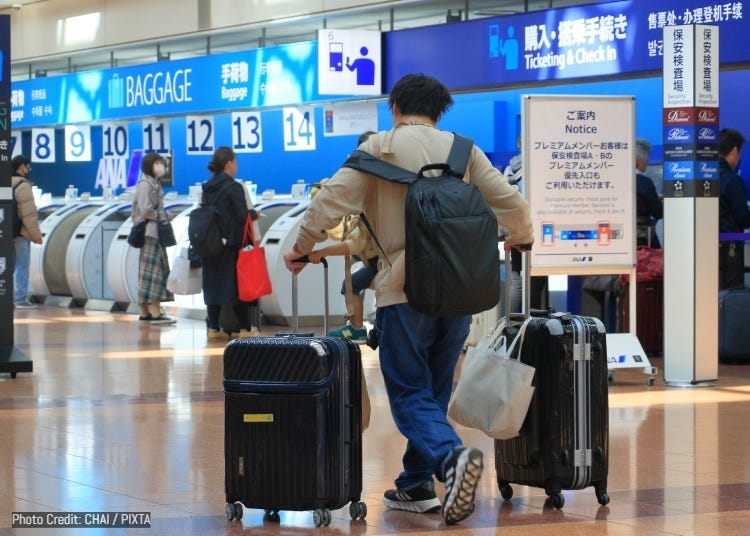
Main image source: PIXTA
This article contains affiliate links
What’s the Difference Between Checked Baggage and Carry-On Luggage?
When you check in at the airport, your belongings are usually divided into two categories: checked baggage and carry-on luggage. Each has its own rules for size, weight, and prohibited items, and the differences are important.
Before heading to the airport, it is essential to confirm which items belong in which category. Doing this in advance helps you avoid confusion or last-minute repacking at the check-in counter or security screening.
Checked Baggage
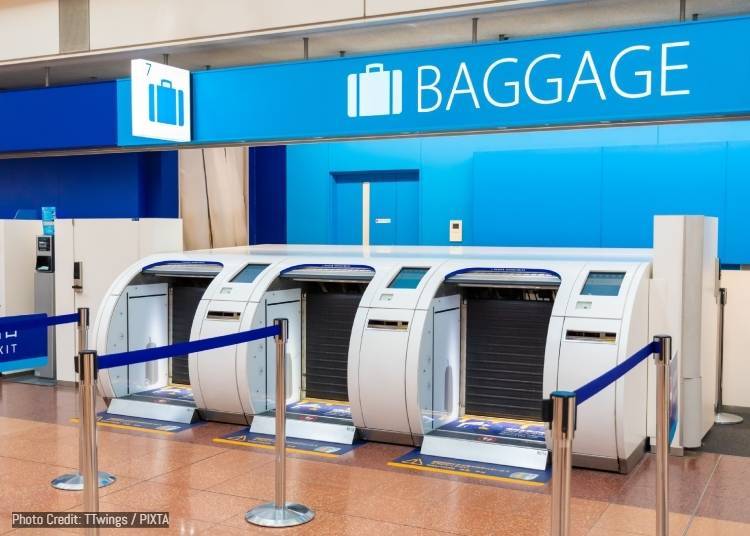
Checked baggage is the luggage you hand over to airline staff at the check-in counter and collect at the baggage carousel after you arrive. (In Japanese, this is referred to as 预け入れ手荷物 or 受託手荷物.) Baggage rules vary by airline, so it is important to check the official website before your flight.
Even if your ticket includes a free allowance of 20 kg or 23 kg, most airlines and airports set a maximum limit of 32 kg per bag for safety reasons. If a single piece exceeds this limit, it may be refused even if you are willing to pay an overweight fee, and you may need to repack at the airport.
Since checked bags are handled and stacked during transit, a hard-shell suitcase is recommended. Checking paper shopping bags filled with souvenirs is risky, as they can tear or result in lost items. For fragile purchases, pack them securely inside a suitcase or place them in a well-sealed cardboard box before checking them in.
Carry-On Luggage
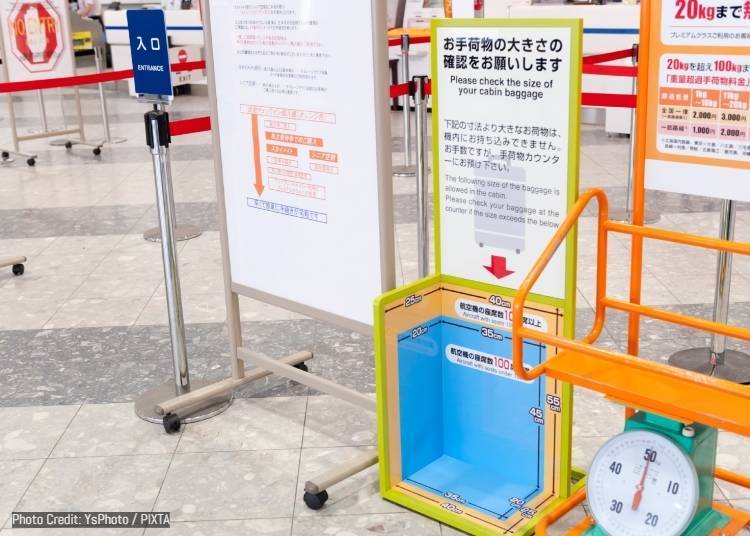
Carry-on luggage (機内持ち込み手荷物) refers to the items you bring into the aircraft cabin yourself and store in the overhead bin or under the seat in front of you. Most airlines allow two carry-on items per passenger: one small personal item such as a handbag or camera bag, plus one cabin-size suitcase that meets the airline’s size requirements. On aircraft with 100 seats or more, this is commonly defined as a total of 115 cm for length + width + height.
The most important point to watch is the weight limit, which has been enforced more strictly in recent years. Low-cost carriers usually cap the combined weight of both items at 7 kg, while full-service airlines such as Japan Airlines and All Nippon Airways often allow up to 10 kg. If your bag is found to be overweight at the boarding gate, staff may require you to check it and charge a high gate-check fee. To avoid this, leave some weight allowance when packing your carry-on.
Before You Fly: Four Types of Baggage Rules You Should Know
Many items are classified as dangerous goods and are prohibited from being transported on international flights. Japan’s Ministry of Land, Infrastructure, Transport and Tourism publishes a detailed list of restricted items, and attempting to check in or carry prohibited goods on board is not allowed. In serious cases, violations can result in fines of up to 500,000 yen, so it is essential to review the rules carefully before packing.
To make these regulations easier to understand, we have grouped commonly questioned items into four clear categories below.
(Source: Japan Ministry of Land, Infrastructure, Transport and Tourism)
Prohibited in Both Checked and Carry-On Baggage

Under aviation safety regulations, items that pose a risk of explosion, fire, toxicity, or harm to passengers are strictly prohibited on aircraft. This means they cannot be placed in checked baggage or brought on board as carry-on luggage. If you arrive at the airport with any of these items, your only options are to have a companion take them home or discard them in the security disposal bins.
- Fireworks and firecrackers, including all gunpowder-based products
- Industrial aerosol sprays such as insecticides, lubricants, paints, and camping gas canisters (cosmetic and medical sprays are excluded)
- Bleach and instant cooling sprays, which fall under oxidizing or corrosive substances
- Certain lighters, including blue-flame windproof lighters or oil-filled lighters without absorbent material, due to leakage and fire risk
- Self-heating bento boxes that warm up by pulling a string, as the heating agent is classified as a dangerous material
- Cordless hair straighteners or curling irons with non-removable batteries (if the lithium battery cannot be removed, the item is completely prohibited)
Not Allowed as Carry-On, but Permitted in Checked Baggage
Items in this category are typically considered potential weapons or liquids exceeding cabin limits. They cannot be brought on board as carry-on luggage, but they are allowed if packed inside a suitcase and checked in at the airline counter.
- Bladed or sharp items, such as scissors, box cutters, large knives other than nail clippers, and tools like screwdrivers
- Sports equipment that could be used as a weapon, including golf clubs, baseball bats, and bamboo swords
- Liquids and gel-like items over 100 ml. On international flights, any single container exceeding 100 ml (or 100 g) must be checked. This includes drinks, pudding, jelly, toothpaste, lotion, and shampoo. To carry liquids on board, they must be transferred into containers of 100 ml or less and placed together in one transparent, resealable 1-liter plastic bag.
Allowed on Board, but Not in Checked Baggage (Most Common Mistakes!)
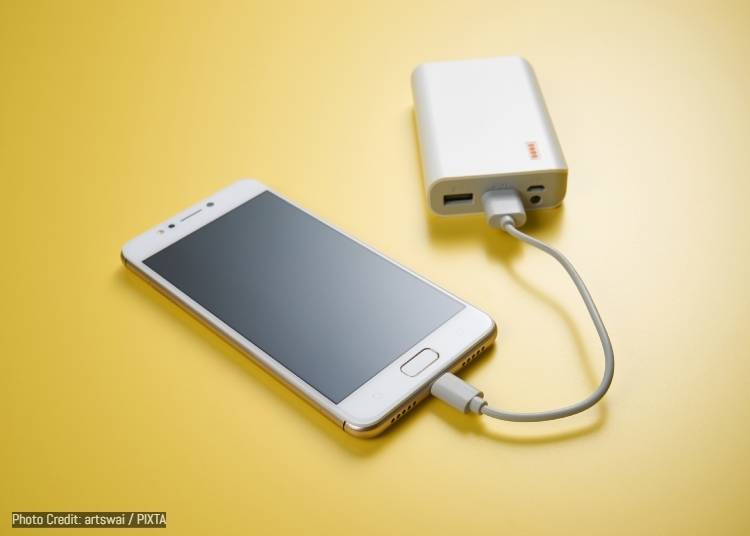
This is one of the most common problem areas for modern travelers. Any item that could ignite due to pressure changes or impact, especially battery-powered products, is strictly prohibited in checked baggage and must be carried on board. This allows cabin crew to respond immediately if an issue occurs during the flight.
- Power banks and spare lithium batteries. Capacity rules apply: batteries under 100 Wh are allowed without approval; 100–160 Wh require airline approval and are usually limited to two units; anything over 160 Wh is completely prohibited. Most phone power banks are under 100 Wh.
- Electronic cigarettes and heated tobacco products. Checked baggage is not allowed, and charging or using them on board is prohibited.
- Standard lighters and matches. Limited to one per person, carried on your person.
- Cordless hair straighteners or curling irons with batteries. The key condition is that the lithium battery must be removable. The removed battery must be carried on, while the device itself may be checked or carried on. If the battery cannot be removed, the item is not allowed at all.
- Smart luggage. If your suitcase has charging or motor functions, the lithium battery must be removed and carried on for the suitcase to be checked. If the battery cannot be removed, the suitcase is not permitted on the aircraft.
Allowed in Both Carry-On and Checked Baggage

The following items may contain cords or liquids, but as long as certain conditions are met, you can choose whether to carry them on board or place them in checked baggage.
- Plug-in hair styling tools and hair dryers. These require an outlet to operate and are not battery-powered.
- Electric shavers and electric toothbrushes. Models with built-in nickel-metal hydride batteries are generally allowed in checked baggage, but airline rules may vary. Lithium battery models are recommended for carry-on.
- Nail clippers and tweezers. These are considered grooming tools, not weapons.
- Phone chargers, meaning plug adapters and USB cables. This does not include power banks.
- Cosmetic and medical aerosol sprays such as hair spray, sunscreen spray, and deodorant. Conditions apply: each container must be 0.5 liters (kg) or less, with a total allowance of no more than 2 liters (kg) per person, and the nozzle must be protected with a cap.
Check with Your Airline First! Items with Easily Confused Carry Rules
As outlined above, many everyday items come with unexpected restrictions when flying. While packing, it is common to pause and wonder, “Can I bring this on board?” To help clear things up, we have compiled a list of commonly confusing items and their typical handling rules.
These guidelines reflect current general standards, but regulations can vary by airline, especially among low-cost carriers (LCCs). Be sure to double-check the official airline website before departure.
Pudding, jelly, ice cream, yogurt
・These desserts are classified as liquids during airport security screening.
・If a single item exceeds 100 ml (g), it must be placed in checked baggage and cannot be carried on.
・If you want to eat them on the plane, they must be purchased after passing security, such as at duty-free shops or airport lounges.
Partially used toner (container over 100 ml)
・Not allowed in carry-on luggage. Security checks are based on the container’s labeled capacity, not the remaining amount inside.
・Even if only a small amount is left, any container marked over 100 ml must be checked. To carry it on, transfer it to a container of 100 ml or less.
Sheet masks with serum
・Although they contain liquid, most commercially sold sheet masks are treated as solid or wipe-type items and are generally allowed in carry-on luggage without special restrictions.
Eyebrow scissors, nose hair scissors
・While domestic flights in Japan may allow scissors with blades under 6 cm, international rules are stricter and vary by airport.
・To avoid issues at security or having items confiscated, it is strongly recommended to place all scissors in checked baggage.
Glue (stationery)
・Glue is considered a liquid or gel and is therefore subject to the 100 ml liquid restriction.
Bouquets and plants
・Carry-on is usually allowed with no strict size limit, as long as the item is not too large.
・The key issue is quarantine. On international flights, fresh plants, fruit, or seeds without proper certification are often prohibited from entry into the destination country. It is best to enjoy them locally and not attempt to take them home.
Camera tripods and selfie sticks
・Current guidelines generally allow carry-on if the folded length is 60 cm or less.
・If the folded length exceeds 60 cm, the item must be checked.
・Some thick or unusually shaped professional tripods may be treated as potential weapons and required to be checked regardless of length.
Umbrellas
・Foldable umbrellas can be carried on.
・Long umbrellas depend on airport security rules. Some airports consider them potential weapons or too long for overhead bins and may require them to be checked. A foldable umbrella is the safest choice.
Prescription medication
・Tablets and powders are generally unrestricted.
・Liquid medication over 100 ml requires a doctor’s prescription or medical certificate and must be declared at security. Once verified, it may be carried on as an exception.
Summary Reminder
Among these items, the most common mistakes involve liquids. Remember one simple rule when packing: “If it can flow and is over 100 ml, put it in checked baggage. If it has a battery, keep it with you.” Follow this, and you will pass security smoothly.
These Can’t Be Taken Home! Items You Cannot Bring Back from Japan
Many travelers enjoy shopping for electronics at BicCamera or Yodobashi Camera while in Japan. However, not every appliance can legally travel home with you by plane.
Even if an item is brand new, it may be stopped during X-ray screening if its internal structure includes materials classified as aviation dangerous goods. Below are two popular types of electronics that are most commonly refused for checked baggage by airport staff. Think carefully before purchasing them.
Dehumidifiers and Portable Air Conditioners (Compressor Type)
・The key issue is the refrigerant. Most compressor-type dehumidifiers contain refrigerant gas stored under pressure.
・Security rules: if the refrigerant is classified as flammable or hazardous, the item is completely prohibited in both checked and carry-on baggage.
・Practical advice: some airlines may accept units that use non-flammable, non-toxic refrigerants, but this usually requires official manufacturer documentation and involves time-consuming inspections. For peace of mind, consider a desiccant-type dehumidifier (no compressor, no refrigerant), which is generally allowed as checked baggage.
Kerosene Heaters
・Strictly prohibited: not allowed in either checked or carry-on baggage.
・Brand new is still not OK. This is a common misunderstanding. Even unused heaters are often rejected because security staff assume trace kerosene residue may remain from factory testing.
・Used items are absolutely prohibited. Do not attempt to bring them to the airport.
Other Common Electronics Pitfalls
・Cordless vacuum cleaners (such as Dyson models): check whether the battery is removable. If removable, carry the battery on board and check the main unit. If the battery is built-in and non-removable, confirm the watt-hour (Wh) rating, as it may exceed allowed limits.
・Gas stoves and cassette burners: if a gas canister is included, they are strictly prohibited. The stove unit itself may be checked if it has been thoroughly cleaned and shows no gas residue, but confirming with the airline in advance is strongly recommended.
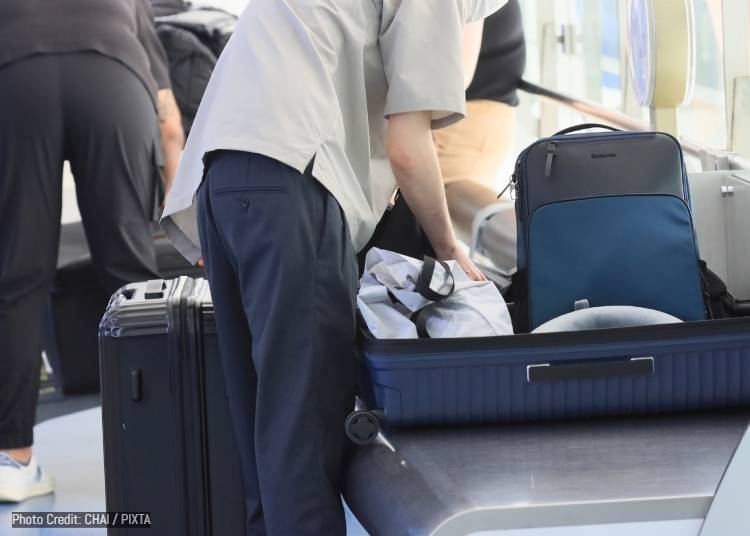
Many items that seem harmless in everyday life can become serious hazards at 30,000 feet. To avoid last-minute stress at the airport or being forced to discard expensive purchases on your way home, keep these core principles in mind when packing:
1. Batteries vs. liquids: items with lithium batteries should be kept with you, while liquids should go in checked baggage.
2. Check appliance specifications: before buying large electronics, confirm whether they contain a compressor, refrigerant, or built-in battery.
3. Arrive early at the airport: if you are unsure whether an item is allowed, speak with airline staff early. This gives you time to repack or make alternative arrangements if needed.
Finally, remember that this article summarizes general aviation safety rules. Actual enforcement may vary slightly by airline, with low-cost carriers often being stricter, and by departure airport. When in doubt, checking the airline’s official website before your trip is always the safest option.

▼ Travel Services You May Want to Book ▼

The LIVE JAPAN editorial team is a multinational group made up of native editors who have lived in Japan for over five years and Japanese editors who love to travel. Together, we share the best of Japan, offering cultural insights, historical context, event updates, and travel-friendly deals, to support your journey every step of the way.
*Prices and options mentioned are subject to change.
*Unless stated otherwise, all prices include tax.
Popular Tours & Activitiess
Recommended places for you
-
ISHIDAYA Hanare
Yakiniku
Kobe, Sannomiya, Kitano
-
Jukuseiniku-to Namamottsuarera Nikubaru Italian Nikutaria Sannomiya
Izakaya
Kobe, Sannomiya, Kitano
-
Goods
Yoshida Gennojo-Roho Kyoto Buddhist Altars
Gift Shops
Nijo Castle, Kyoto Imperial Palace
-
Kambei Sannomiyahonten
Yakiniku
Kobe, Sannomiya, Kitano
-
Kanzenkoshitsuyakinikutabehodai Gyugyu Paradise Sannomiya
Yakiniku
Kobe, Sannomiya, Kitano
-
Appealing
Rukku and Uohei
Izakaya
Sapporo / Chitose
-
Ad
Discover the "Miraculous Forest" in the Heart of Tokyo: The Institute for Nature Study (9 Minutes from JR Meguro Station)
-
Ad

Complete Guide to Ueno's National Museum of Nature and Science, the Perfect Place to Visit on Rainy Days or With Children
-
Jujutsu Kaisen Takes Over JR East With a Wrapped Shinkansen This Winter
by: Guest Contributor
-
Japan’s Shinkansen Is About to Change Travel in an Unexpected Way
by: Guest Contributor
-
Make Your Japan Trip Unforgettable! Explore "OSHI MAP" – Now Free and Unlimited
by: Guest Contributor
-

New in Ginza! Air BicCamera Ginza Opens with a Faster, More Convenient Shopping Experience
by: Guest Contributor
-
Near Nippon Budokan: Must-Visit Sightseeing Spots, Must-Try Foods, and a Must-Stay Hotel in the Imperial Palace and Ginza Area
-
Ikebukuro Station Area Guide: Top 15 Spots When You Escape the Station's Maze!
-
50% Off Shinkansen Tickets?! 'Osakini Tokudane Special' Has Been Extended – Now for Gran Class Too!
-
Spending Wonderful Time Alone in Shibuya - Free Cosmetics and a Hundred-Yen Bus!
-

Secrets to Shopping in Japan: Guide to Annual Sales in Japan & Where to Shop
by: Miyu Shimada
-
Daimaru Sapporo: Best Souvenir Food Picks at Hokkaido's Famous Department Store!
- #best sushi japan
- #what to do in odaiba
- #what to bring to japan
- #new years in tokyo
- #best ramen japan
- #what to buy in ameyoko
- #japanese nail trends
- #things to do japan
- #onsen tattoo friendly tokyo
- #daiso
- #best coffee japan
- #best japanese soft drinks
- #best yakiniku japan
- #japanese fashion culture
- #japanese convenience store snacks