Check out an Ageya (elegant-restaurant) of the red-light district from the Edo period
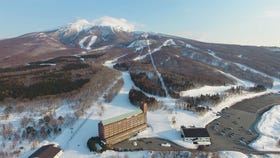
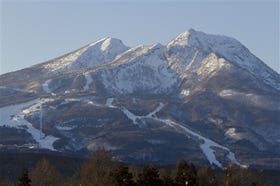
Overlooking majestic Mt. Komagatake and Onuma Pond, the snow park offers glade courses that maximize the natural terrain with beautiful rime-covered trees.
Roam the streets of Edo reborn and get your pictures taken with ninjas or Oiran courtesans
Ginza is where fashion, gourmet food, and culture originates. At GINZA SIX you can spend quality time savoring that which can only be found here.
Located inside the Yugawara Tourist Hall, this museum exhibits the works and information panels of various writers and artists who have visited Yugawara since the Meiji era, such as Doppo Kunikida, Soseki Natsume , Ryunosuke Akutagawa, Akiko Yosano, Toson Shimazaki, and Junichiro Tanizaki. It also features a walking map for sights connected to Yugawara’s literary history, a brief history of modern literature in Yugawara, as well as panels of photos showing Yugawara in the past and present, and temples, shrines and stone statues. Access: From Yugawara Station, take the bus headed to Okuyugawara or Fudo-Taki for about 10 minutes We are right next to the Ochiaibashi bus stop
One of Japan's famous ancient temples, quietly nestled in Ikaruga
Loved by bird watchers, a spot to photograph Japanese cranes
A museum exhibiting works of art under the theme of pumpkins, with a focus on the work of world-famous artist Yayoi Kusama. The museum also has a cafe. [Yayoi Kusama] A painter, avant-garde sculptor and novelist born in Nagano. She began painting pictures based on hallucinations she had in her early childhood. She went to the USA in 1957 and stayed in New York for 18 years, and has also represented Japan at Venice Biennial in 1993. After her retrospective exhibition tour around the US, she held a large-scale, one-woman exhibition at the National Museum of Modern Art, Tokyo, in 1999. In 2001, she won the Asahi Prize. Her work has appeared at the Yokohama Triennale. Access: From Yugawara Station, take the bus headed to Okuyugawara or Fudo-Taki for about 5 minutes We are five minutes' walk from the Shogakko-Mae bus stop
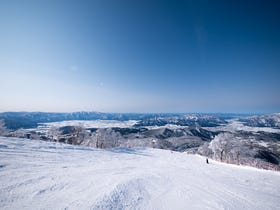
North side slopes with a panorama view of Japan's Sea are fantastic. 4km long course is perfect for families and enjoyable for beginners.
Nara’s Great Buddha is seated here
Manyo Park has been selected as one of the 100 Best Historical Parks in Japan, as it is the only hot spring mentioned in ancient Manyoshu collection of poetry, and has been visited by many notable writers and artists. Inside the park you can see many of the flowers and plants mentioned in the Manyoshu, and take a leisurely stroll while listening to the murmur of the waterfalls and streams. You can rest your feet in any of the nine different foot baths at Doppo-no-yu, or enjoy matcha green tea and sweets at Manyotei. Each year, a ”firefly party” is held in the ”Hanakien” section of the park from early to mid-June, enabling you to enjoy the sight of Luciola fireflies flitting around the park, as well as enjoy stalls set up in the evenings in front of the nearby Tourist Hall. Access: From Yugawara Station, take the bus headed to Okuyugawara or Fudo-Taki for about 12 minutes We are located right next to the Koen Iriguchi bus stop
With ancient living and meditation quarters
A three-tiered pagoda and world heritage site, 1200 years old
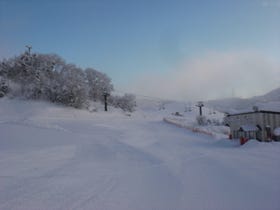
Good accessibility at only 20 minutes from Nihonmatsu IC by car♪This is the ski resort where everyone from kids to adults enjoy slopes and an Onsen hot spring.
Superb access!! A ski area close to the Takasu interchange. The efficient trail layout is designed to provide fulfilling skiing and snow boarding for all levels of experience.
Attractive and enjoyable. Powder snow of TAKAHATA!
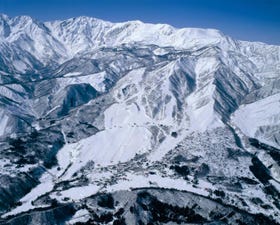
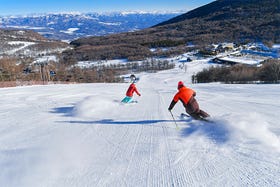
Just three hours from the Tokyo metropolitan area, boasts the size of the course area 175ha. Enjoy the finest powder at highland landscape reminiscent of Switzerland!
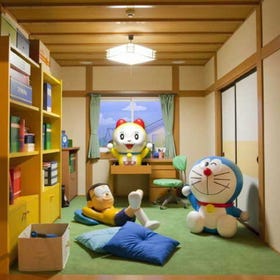
A fun spot for both kids and adults inside New Chitose Airport
Be healed by the wabi-sabi of this Muromachi-period elegant garden that transcends space and time
This is a museum where visitors can trace the changes in Chinese kanji characters and their shapes from the pre-Christian time to the present through its collection of valuable cultural properties.