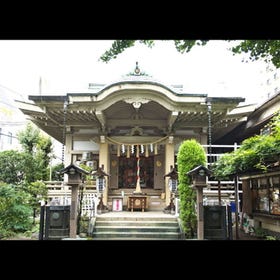
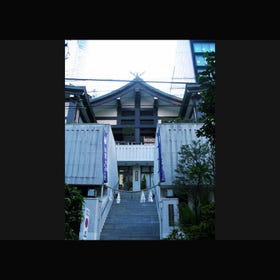
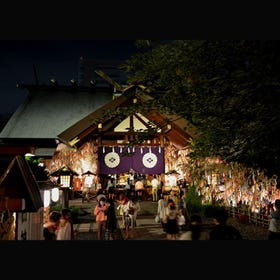
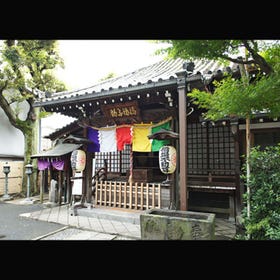
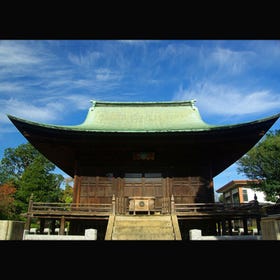
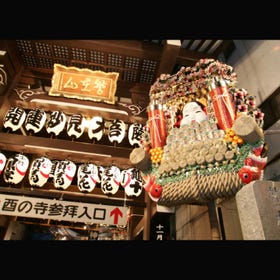
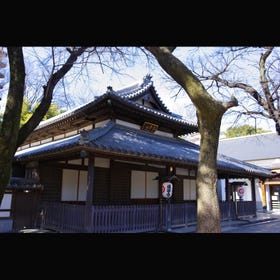
Tokugawa Iemitsu, the third shogun of the Tokugawa family in the Edo period, established Sanjusangen-do for the peace in the country, national security, and tempering martial arts. The hall built after the manner of ones in Kyoto became the beginning of Yasaki-inari. The name Yasaki also came from ”yumi” (a bow) and ”ya” (an arrow). Fukurokuju (god of happiness, wealth, and long life) of the seven deities is placed at the right side of the worship hall in front of the main building.
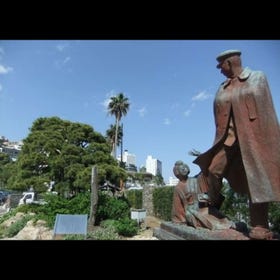
The place along the beach where Omiya-no Matsu (pine tree of Omiya) and a statue of Kanichi and Omiya are situated is the most photographed place in Atami. The bronze statue is based on the novel, Konjiki Yasha (The Golden Demon), written by Koyo Ozaki, which gained popularity in the Meiji period (1868-1912). The novel greatly helped make the name of Atami known throughout Japan.
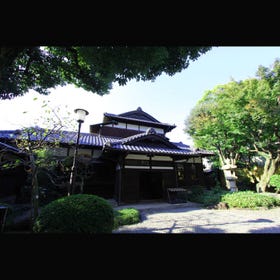
Kyu Asakura House, or the former residence of the Asakura family, is a Taisho-roman style house, which stands in the middle of the metropolis. (Taisho-roman is the cultural style of the Taisho period from1912 to 1926.) You will also enjoy the seasonal view in the garden, which features azaleas and maples.
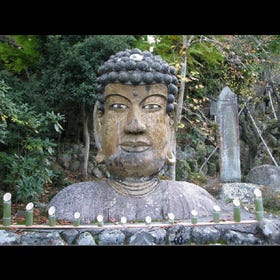
Originally, the ceramic statue of the Buddha was placed in Nagoya Castle, and after the war, it was dedicated to Fukusenji Temple. Mitsutomo Tokugawa, a former lord of Nagoya Castle, is said to have created the statue in honor of his deceased mother. It is thought that a complete statue was created in Nagoya, including the parts from the neck down, so now where has the body gone? Access: From Yugawara Station, take the bus headed to Okuyugawara or Fudo-Taki for about 5 minutes The statue is a five-minute walk from the Izumi Iriguchi bus stop
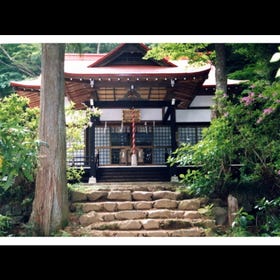
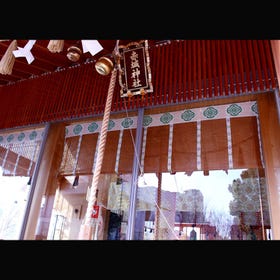
Tenshozan Shrine was founded in 1931. It honors the Japanese gods Ameterasu, Sarutahiko, and Taisei, and people from all over Japan come for the festival held each year on May 22, briefly creating a lively atmosphere. Located deep within the forest, the shrine comes alive in each season with flowers and foliage. Access: From Yugawara Station, take the bus headed to Motohakone for about 40 minutes The shrine is a 30-minute walk from the Shitodo-no-Iwaya Iriguchi bus stop