






Events
-
 Limited time
Korean Ceramics Until 28 June 2026
View Event Description & Conditions- Dates 10 February 2026, 9:30AM - 28 June 2026, 5:00PM
-
Event Details
Asian Gallery (Toyokan) Room 10
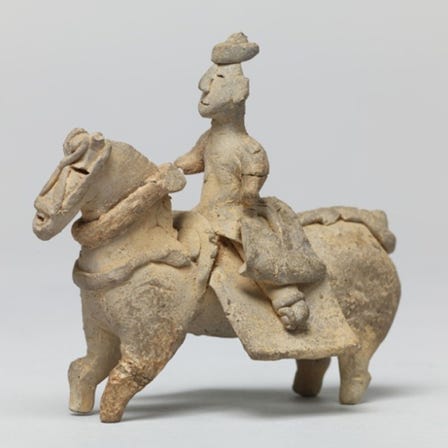
This gallery introduces Korean ceramics from the Proto-Three Kingdoms period (ca. 1st century BC–3rd century AD) to the Joseon dynasty (1392–1910). The development of Korean ceramics during the Proto–Three Kingdoms period was influenced by the Lelang Commandery, an outpost established by China’s Han dynasty in the northern part of the Korean Peninsula. Rulers of powerful states struggled for supremacy during this period, resulting in a rich variety of distinct ceramic aesthetics in each region. Under Chinese influence, a blue-green glaze called celadon began to be produced in Korea during the Goryeo dynasty (935–1392). Over time, celadon wares took on a distinct gray-green coloring that came to be known as Goryeo celadon. The production of pottery then diversified during the Joseon dynasty to include white porcelain and Buncheong ware, a type of stoneware often featuring designs in white slip and iron pigment.
2 result(s)
-
 Limited time
Sculptures from India and Gandhara Until 28 June 2026
View Event Description & Conditions- Dates 10 February 2026, 9:30AM - 28 June 2026, 5:00PM
-
Event Details
Asian Gallery (Toyokan) Room 3
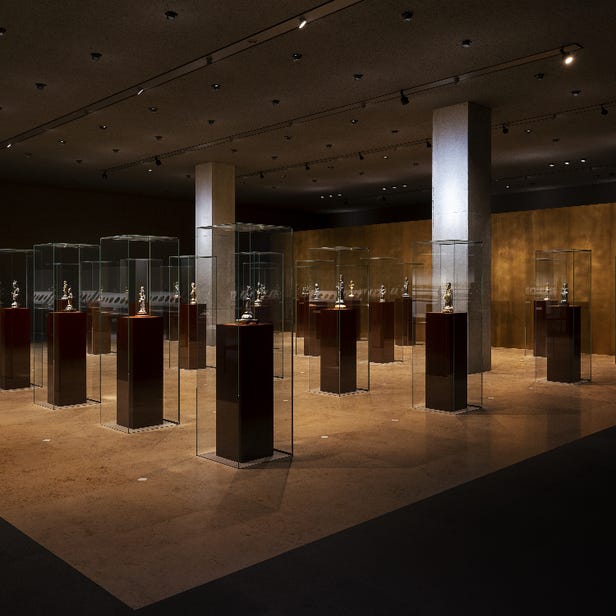
This gallery introduces Buddhist and Hindu sculptures from India and Gandhara. Buddhist art flourished in northern India during the Kushan dynasty (1st–3rd century). The production of Buddhist statues began in Gandhara (northwestern Pakistan) and Mathura (northern and central India) around the 1st century, with a particular emphasis on sculptures depicting the life of Gautama Buddha in Gandhara.
-
Limited time
Korean Ceramics Until 28 June 2026
View Event Description & Conditions- Dates 10 February 2026, 9:30AM - 28 June 2026, 5:00PM
-
Event Details
Asian Gallery (Toyokan) Room 10
This gallery introduces Korean ceramics from the Proto-Three Kingdoms period (ca. 1st century BC–3rd century AD) to the Joseon dynasty (1392–1910). The development of Korean ceramics during the Proto–Three Kingdoms period was influenced by the Lelang Commandery, an outpost established by China’s Han dynasty in the northern part of the Korean Peninsula. Rulers of powerful states struggled for supremacy during this period, resulting in a rich variety of distinct ceramic aesthetics in each region. Under Chinese influence, a blue-green glaze called celadon began to be produced in Korea during the Goryeo dynasty (935–1392). Over time, celadon wares took on a distinct gray-green coloring that came to be known as Goryeo celadon. The production of pottery then diversified during the Joseon dynasty to include white porcelain and Buncheong ware, a type of stoneware often featuring designs in white slip and iron pigment.
※ The above information was correct at the time of updating, but there may be changes to actual prices. Please confirm the current prices when visiting.