





![How to Eat Tsukemen Like a Pro! A Guide to Savoring Japan's Favorite Dipping Noodles [Menya Musashi Bukotsu Souden Edition]](https://rimage.gnst.jp/livejapan.com/public/article/detail/a/00/03/a0003009/img/basic/a0003009_main.jpg?20200309091748&q=80)
How to Eat Tsukemen Like a Pro! A Guide to Savoring Japan's Favorite Dipping Noodles [Menya Musashi Bukotsu Souden Edition]
- Written by: Miyu Shimada
Ramen needs no introduction when it comes to Japan's most beloved dishes among international visitors. But lately, "tsukemen" (dipping noodles) has been rising through the ranks right alongside it. The thing is, many people assume tsukemen is just another form of ramen. Spoiler alert: it's not!
In this guide, we're here to clear up that misconception once and for all. What exactly is tsukemen? How did it come about? And how do you eat it the right way? We break it all down, and even got insider tips from the pros at "Menya Musashi Bukotsu Souden," a wildly popular tsukemen specialty shop in Ueno's Ameyoko district.
"Menya Musashi Bukotsu Souden" - The Tsukemen Hotspot in Ueno
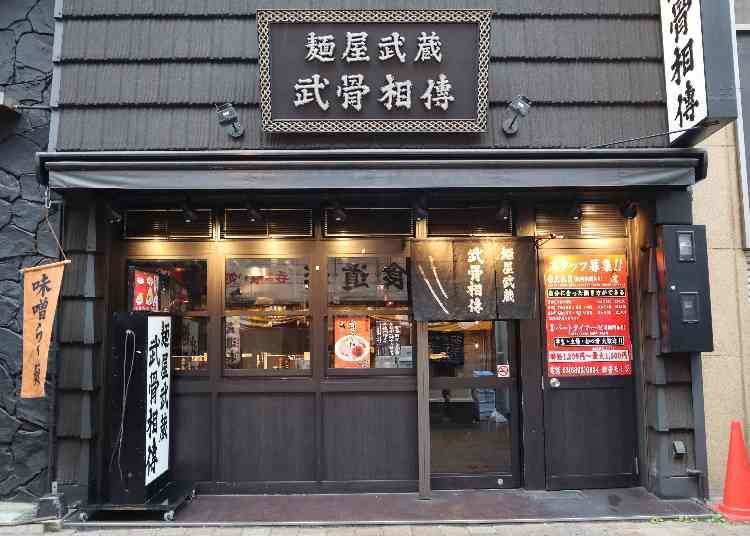
We paid a visit to "Menya Musashi Bukotsu Souden," a renowned tsukemen specialty restaurant located in Ueno, one of Tokyo's most popular neighborhoods among international visitors.
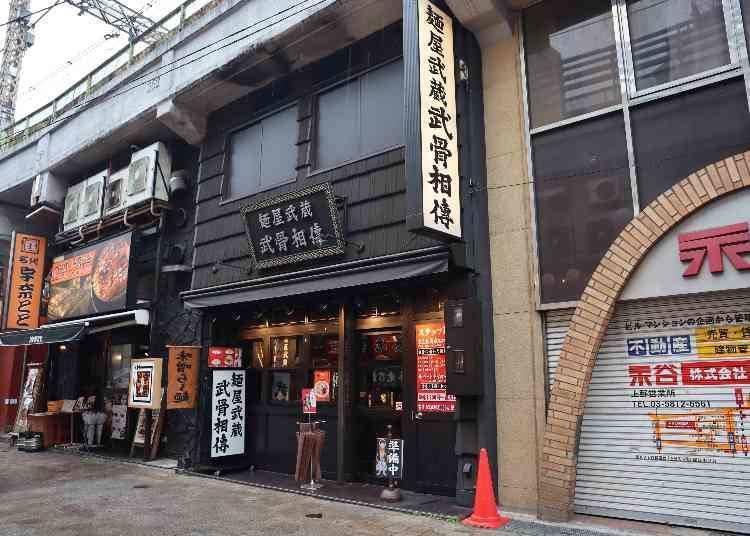
Just a one-minute walk from JR Ueno Station's Shinobazu Exit, this restaurant sits on the street just one block from the lively Ameyoko shopping strip. Known as "Menya Musashi Bukotsu Souden" (麺屋武蔵 武骨相傳), it carries on the legacy of the iconic "Menya Musashi" chain, celebrated for its double-soup style combining animal-based broth (chicken and pork) with a seafood-based broth (niboshi and bonito). This tsukemen specialist is the direct heir to that beloved tradition.
So, Where Did Tsukemen Come From?
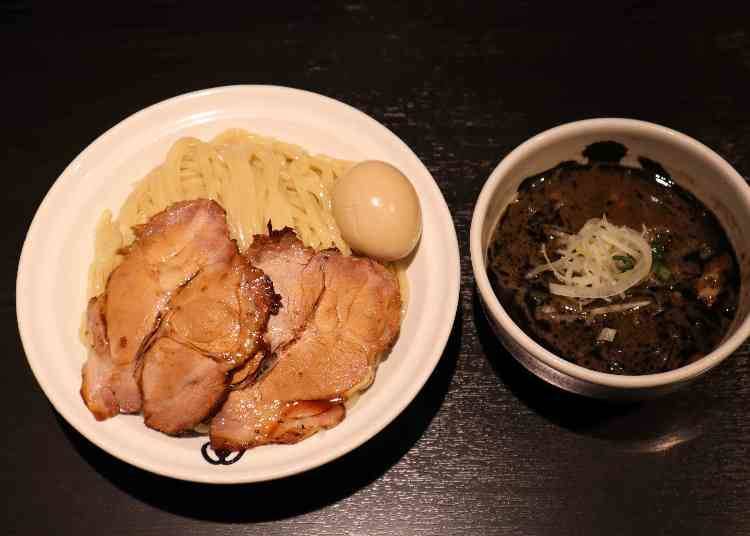
With ramen, the noodles, broth, and toppings all come together in one bowl. Tsukemen, on the other hand, serves the noodles and the dipping broth (tsukeji) separately. You dip the noodles into the rich broth as you eat, much like the Japanese soba dish "zaru soba." The noodle thickness, style, soup flavor, and toppings vary from shop to shop, making every experience unique.
◎ How Did Tsukemen Come About?
While accounts differ, the most widely accepted origin story traces back to 1955, when a Tokyo noodle shop called "Nakano Taishoken" started serving a dish called "tokusei morisoba" (special mori soba). Originally it was a staff meal, but it caught on with customers. At the time it wasn't called "tsukemen" just yet; it was later, as the chain restaurant "Ganso Chuka Tsukemen Daio" expanded nationwide, that the name "tsukemen" truly entered the public lexicon.
What's the Difference Between Tsukemen and Ramen?
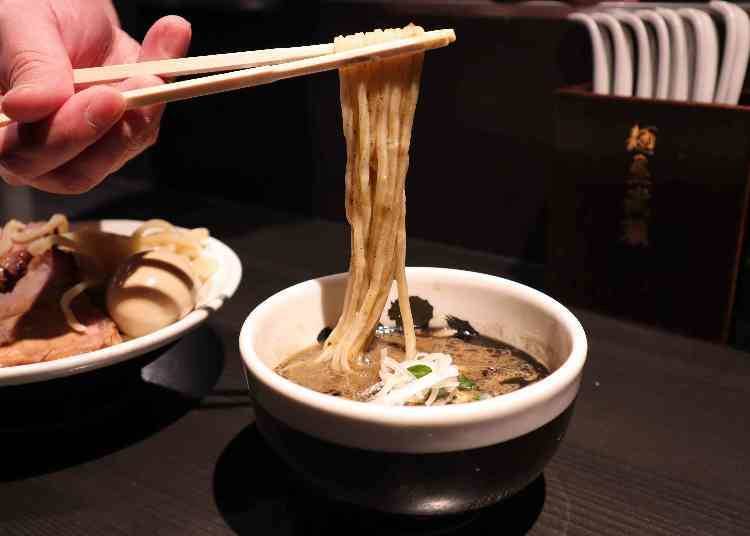
The most fundamental difference between tsukemen and ramen is simple: ramen serves everything together in one bowl, while tsukemen keeps the noodles separate. But beyond looks, the eating experience is genuinely different too. Because the noodles aren't sitting in soup, they don't get soggy as quickly.
"Unlike ramen, with tsukemen you can take your time and eat at your own pace. Some people also love that the soup tends to be slightly cooler," explained Manager Momiji of "Menya Musashi Bukotsu Souden."
Fair point! Piping-hot food is delicious, but not everyone's a fan of scalding temperatures. Eating at your own pace is also a huge plus, especially for those who prefer to savor their meal without rushing.
Tsukemen is overwhelmingly served with thick noodles, allowing the flavor of the noodles themselves to shine. At "Menya Musashi Bukotsu Souden," the noodles are chunky and wonderfully chewy, a key part of the experience.

Many shops let you increase your noodle portion at no extra cost, making it a great choice for bigger appetites too. At "Menya Musashi Bukotsu Souden," you can go up to a whopping 1kg of noodles for the same price! Regular (200g), medium (250g), large (300g), and extra-large (1kg) are all available at no additional charge. You can even request any specific gram count between large and extra-large. And the dipping broth? You get one free refill on that as well. For anyone who wants to go all-in on tsukemen, this place delivers.
The Secret to Great Tsukemen: Cold Noodles and a Broth You'll Drink to the Last Drop!

Tsukemen noodles are typically rinsed in cold water after boiling, so they're served chilled by default. Some shops will warm them up on request (called "atsumori"), but the recommended way is to keep them cold ("hiyamori"). At "Menya Musashi Bukotsu Souden," they specifically recommend going cold to fully enjoy the signature chewy texture of their noodles.
"It's up to you, but warm noodles get soft more quickly, so cold noodles are definitely the way to go!"
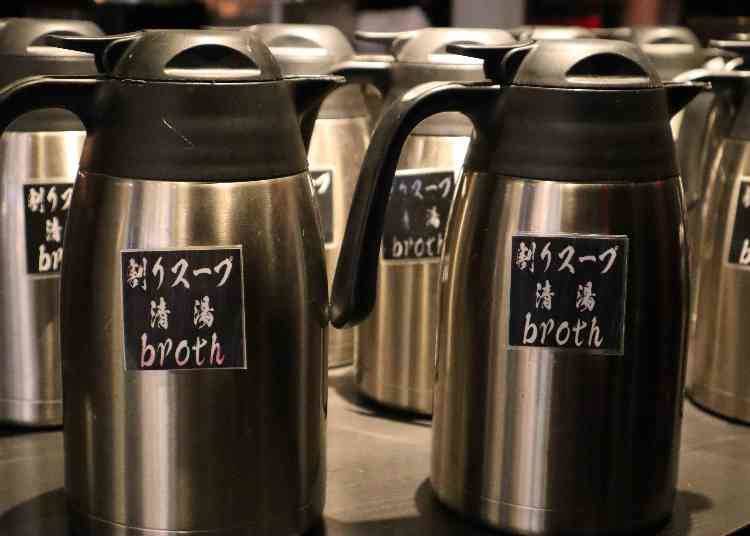
Once you've got your noodles in the broth, swirl them around and make sure they're well coated. Tsukemen broth tends to be richer and more concentrated than regular ramen soup, which makes it pair brilliantly with the noodles. Once you've finished the noodles, ask for "supu wari" (broth dilution service), where a splash of clear stock is added to the remaining dipping broth so you can sip it like a soup. Some restaurants even let you add rice to this and eat it like a risotto.
At "Menya Musashi Bukotsu Souden," diluting stock is available at any time, so whether you want to warm up a cooled broth or just enjoy it as a light soup at the end, you're free to do so whenever you like.
The Fan Favorite: "Rich Black Souden Tsukemen" with Thick Noodles and a Bold, Intense Broth

Orders are placed at a touch-panel ticket vending machine near the entrance. Before you sit down, just buy your ticket at the machine by the door. Given that about 60% of the clientele are now international visitors, the menu is available in multiple languages: Japanese, English, Traditional Chinese, Simplified Chinese, and Korean.
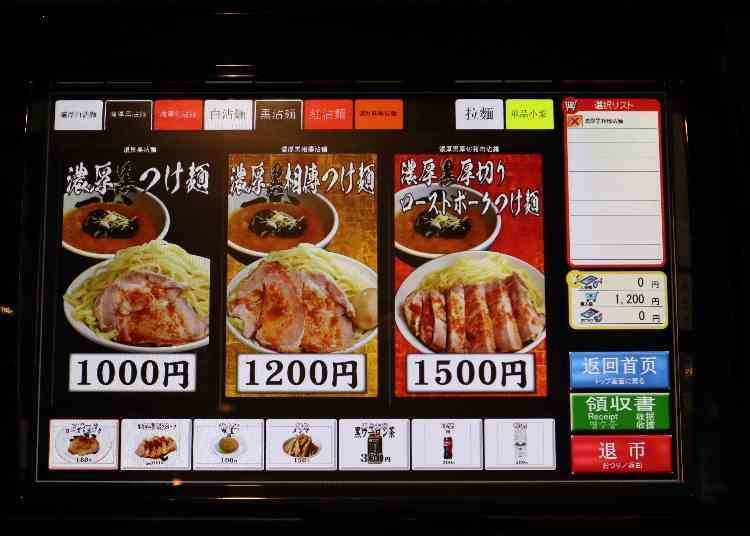
The menu features three broth types: black, white, and red, each available in both a regular version and a richer, more intense "rich" version, for six broth options in total.
The undisputed star of the menu is the "Kotteri Kuro Souden Tsukemen" (Rich Black Souden Tsukemen, 1,200 yen including tax), topped with a soft-boiled egg and pork. The dark, deep broth is thicker and more complex than anything you'd typically find overseas. Its distinctive color and flavor come from an aromatic charred oil made with fragrant vegetables, garlic, and detox-friendly bamboo charcoal.
"Outside Japan, you rarely find a broth this rich and intense, so most international guests end up ordering the 'rich black' option!" There's also one ramen variety on the menu if you're curious.
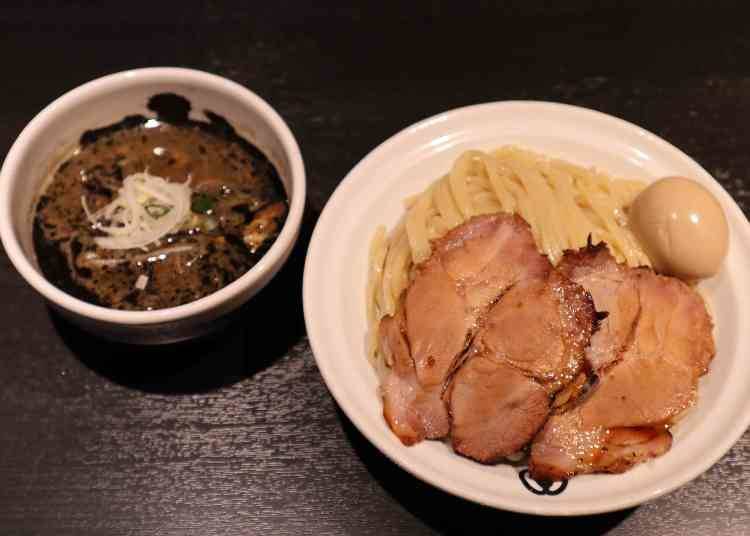
Today, we're going with the most popular dish: the "Rich Black Souden Tsukemen."
A Show-Stopping Roast Pork, Made Over Three Days Right in the Restaurant!
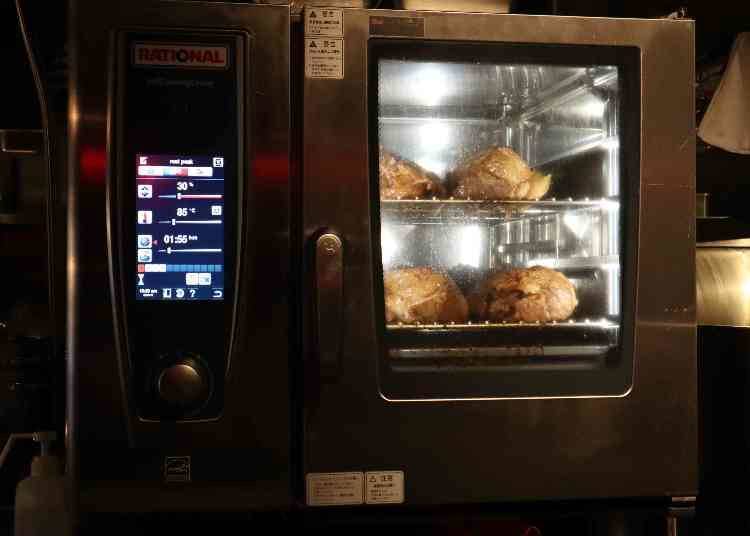
The star of the show is a thick-cut roast pork that's slow-cooked for three full days in an in-house convection oven. Rather than pre-slicing, they cut it fresh to order right in front of you, so it arrives warm and perfectly juicy.
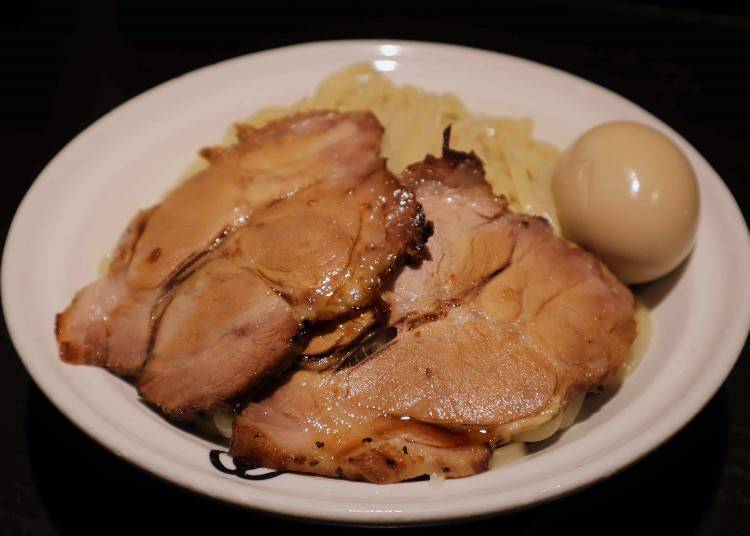
Here's the noodle plate! The restaurant's signature oversized roast pork instantly whets the appetite. The noodles are served cold (hiyamori) as recommended, while the pork arrives freshly sliced and still pleasantly warm.
The Charred Black Oil Broth: A Match Made in Heaven for Those Thick Noodles!
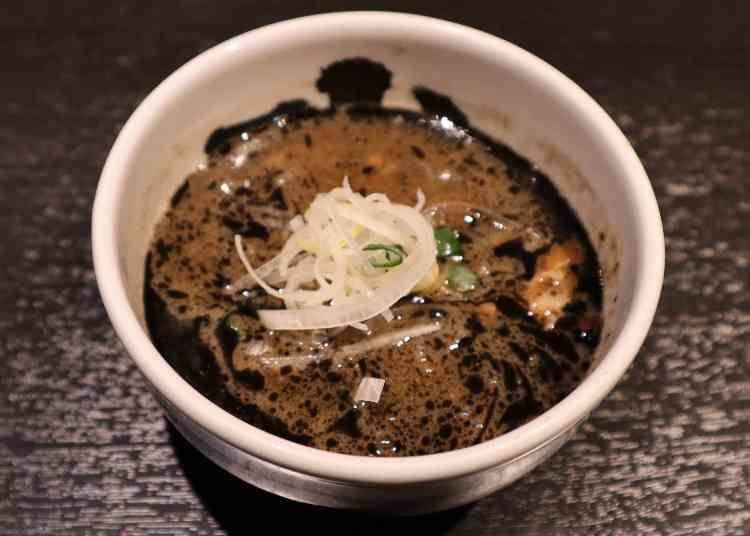
The deep black dipping broth carries an irresistible smoky aroma from the charred oil.
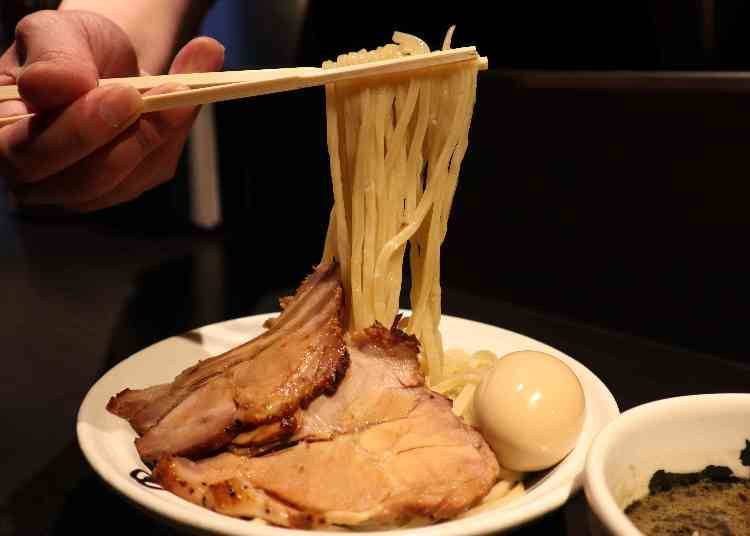
Take a look at those noodles! This is the large (300g) portion. At "Menya Musashi Bukotsu Souden," you can choose the amount of noodles that's right for you.
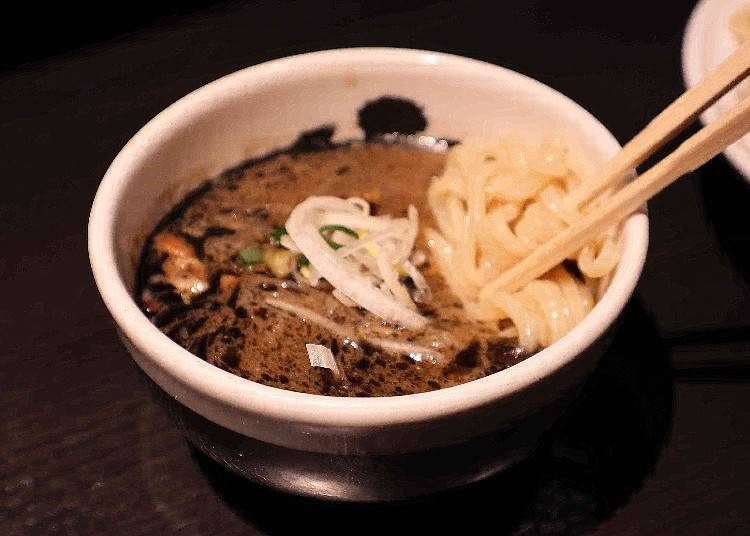
Time to dig in! Dip the noodles into the broth and give them a good swirl to coat. The noodles are wonderfully chewy with a satisfying weight to them. If you want to savor the noodles on their own first, go for it, there's no wrong way to enjoy them!
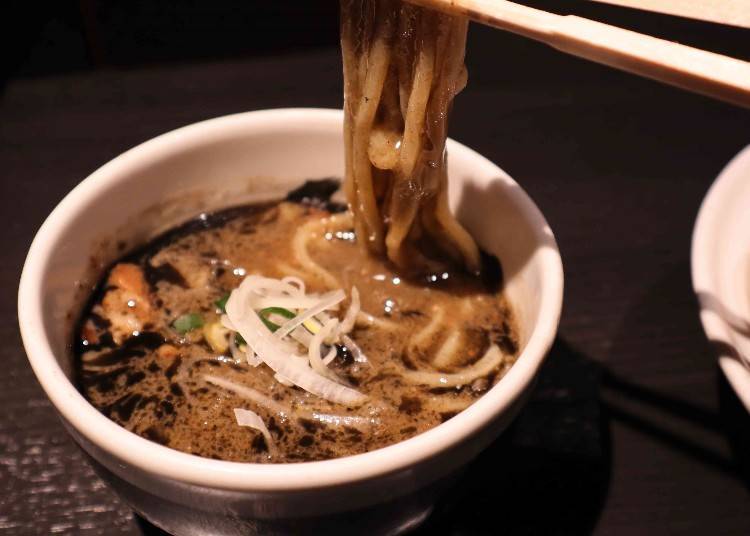
Every strand of noodle is thoroughly coated in that rich, full-bodied broth!
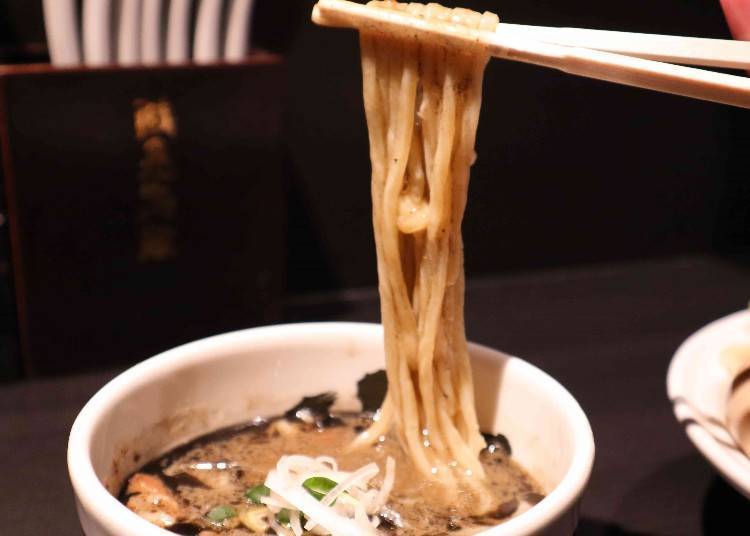
The noodles and broth are an absolutely perfect pairing! The noodles are firm and flavorful enough to hold their own against the rich, intense broth, and when they come together, the deliciousness multiplies. Every bite feels like a whole new level of good.
Don't Skip the Toppings! Pork, Soft-Boiled Egg, Aromatic Vinegar, and Pepper for Extra Depth
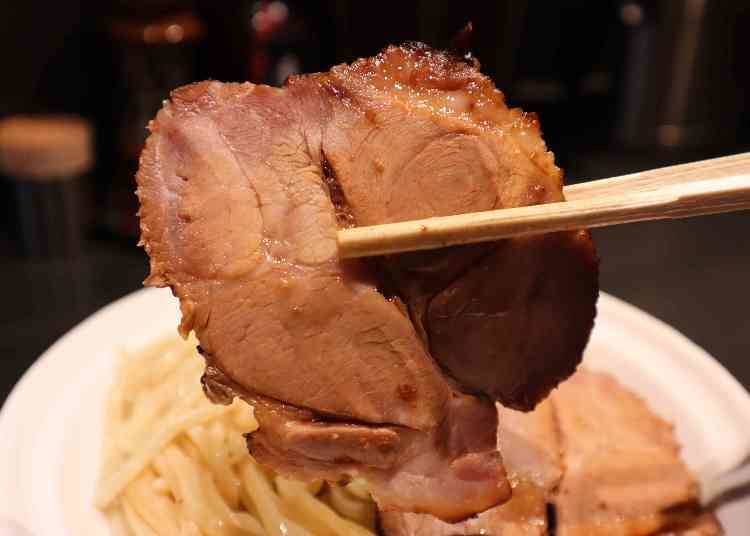
Next up: the roast pork. Honestly, this is so good you'd happily visit the restaurant just for this alone. It's quite different from the melt-in-your-mouth chashu that usually tops ramen; this pork has a satisfying meaty bite to it, with a subtly sweet sauce that complements the flavor beautifully.

There are also tender, finely shredded pieces of pork inside the broth itself. Swirling those together with the noodles for a bite is pure indulgence. Both ways are delicious in completely different ways! This is one of those bowls that even the most casual eater will find themselves finishing in no time.
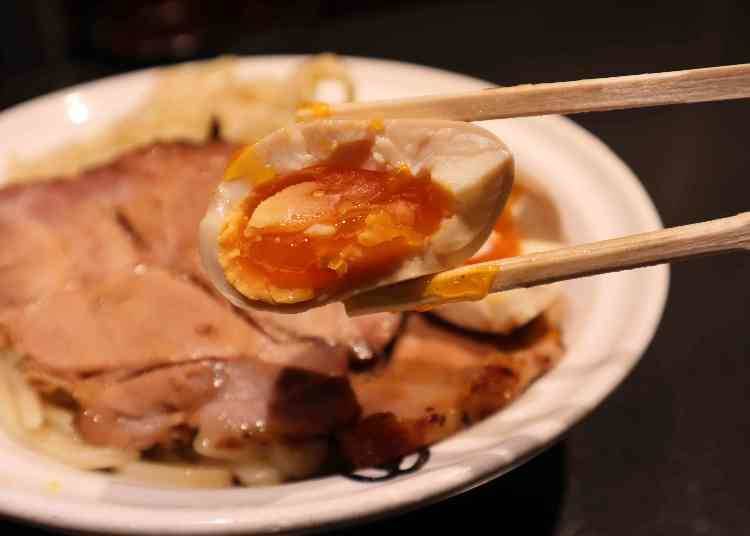
A soft-boiled marinated egg is a classic tsukemen (and ramen) topping for good reason. Packed with flavor all the way through, with a silky, runny yolk, this is the kind of egg you just can't replicate at home. Absolutely a must-order topping.
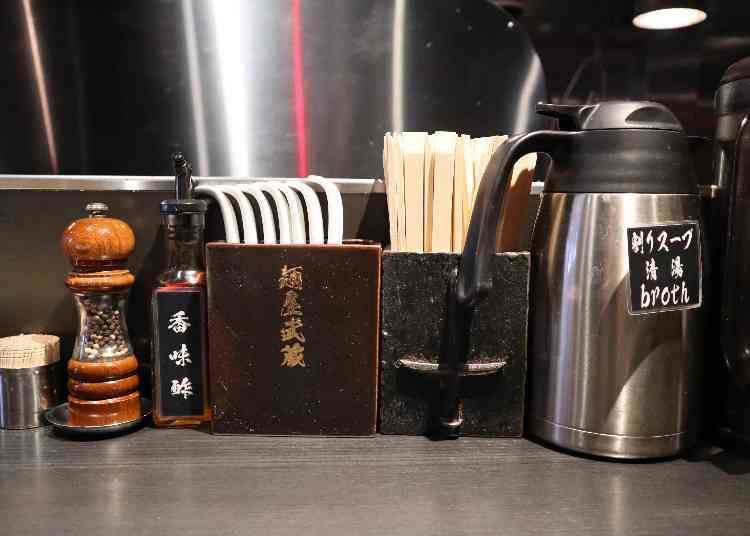
"You can also try adding pepper or vinegar to change up the flavor, it's great!" As suggested, the table is stocked with pepper and aromatic vinegar for you to customize at will. A dash of pepper pulls the whole bowl together with a sharper, more defined flavor, while the aromatic vinegar adds a spicy, refreshing kick.
Paper Aprons, Hair Ties, and More: Thoughtful Touches That Make Eating Easy and Fun!
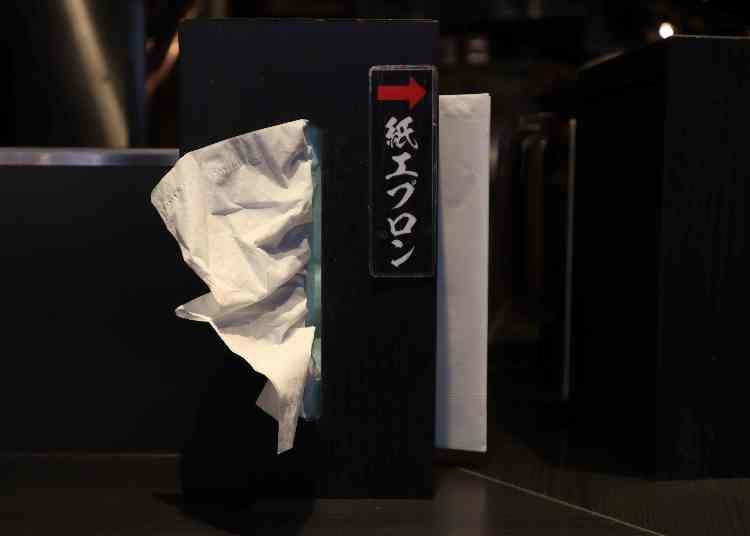
Tissues and paper aprons are provided at every table.
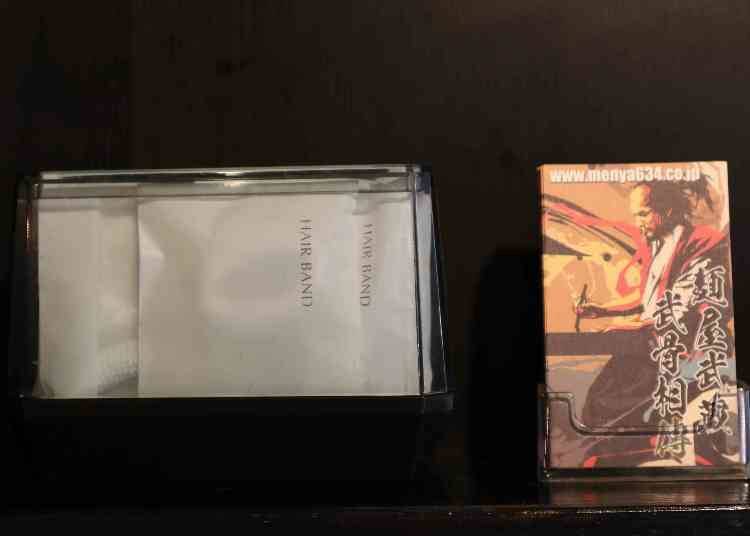
And for anyone with long hair, there are even hair ties available! These little touches of consideration really go a long way.

The restaurant has a sleek, monochrome interior that feels polished and clean. As one of Tokyo's most popular tsukemen spots, expect a queue during weekday lunches and on weekends. However, the window between 4:00 PM and 6:00 PM on weekdays is said to be comparatively quieter! If you'd rather avoid the wait, that's your golden hour.
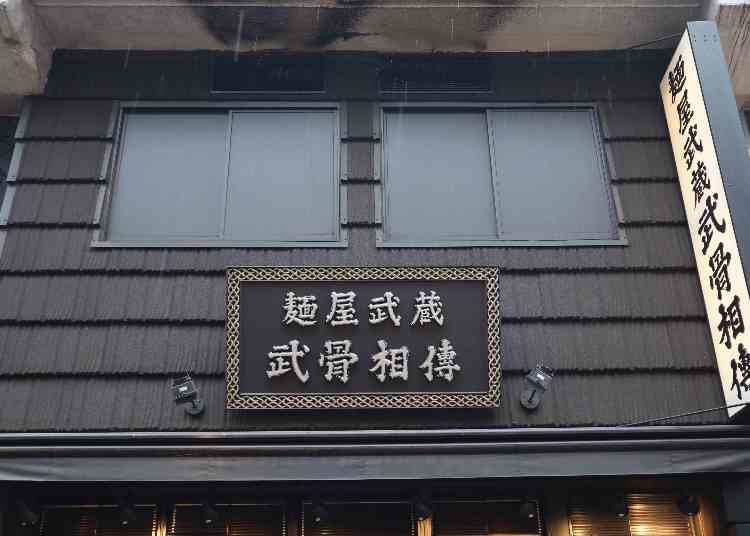
Discover Tsukemen: A Uniquely Japanese Noodle Experience You Have to Try!
Tsukemen has earned passionate fans not just among locals but from visitors around the world. While it might look similar to ramen at first glance, one taste and you'll immediately understand why they're worlds apart. Use this guide as your starting point to explore the wonderful variety of tsukemen Japan has to offer, and find your perfect bowl!
-
Ueno Menya Musashi Bukotsu Souden上野 麺屋武蔵 武骨相傳
-
Address
6-11-15 Ueno, Taito-ku, Tokyo
View Map -
Nearest Station
1-minute walk from JR Ueno Station (Shinobazu Exit)
Hours: 11:15 AM - 10:00 PM
*On odd-numbered months, closes at 8:00 PM on the 2nd Tuesday
Closed: None (open daily) -
Address
6-11-15 Ueno, Taito-ku, Tokyo

Miyu is a travel writer and tour conductor with over a decade of experience in developing educational content for working individuals. She has a passion for exploring new cultures and has visited more than 150 cities in around 50 countries. Her goal is to sample great food, experience nature, enjoy historical sites, and bathe in hot springs around the world. Miyu left her corporate job to pursue her passion for travel and now spends over 100 days a year abroad while working as a writer. She promotes the joy of travel, the beauty of Japan, and the diverse cultures of the world by traveling to different parts of Japan and collaborating with inbound tour operators and fellow travel writers.
- Area
- Category
*Prices and options mentioned are subject to change.
*Unless stated otherwise, all prices include tax.
Popular Tours & Activities
Recommended places for you

-
Cracked Phone Screen in Japan? Smahospital Repair Guide: Keep Your Data, Fixed in 15 Min, Multilingual Support | Up to 10,000 Yen Off with LIVE JAPAN Coupon
-
Just 2 Hours from Tokyo! Escape to Yamanashi's NIPPONIA Kosuge, Where an Entire 700-Person Village Becomes Your Hotel
by: Alice Lee
-
Ad

Pocket WiFi Rental in Japan 2026: Complete Price Comparison & Where to Get the Best Deal
-
Ad
Do’s and Don’ts: The Complete Guide to Sento Baths! Getting the Full Experience In Ueno’s Famous Kotobuki-yu
-

Daikoku Car Meet Guide: How to Visit, Best Times & Rules
-
Autumn in Japan 2026: Fall Foliage Forecast & Where to Enjoy the Colorful Leaves (+Tour Info)(Updated Oct 1)
Inspiration for Accommodations
-

Family-Friendly Hotels with Free Shuttle to Disneyland: Convenient Access for a Magical Stay
-

Top Ranked Hakone Hotels with Mt. Fuji View: Enjoy Stunning Scenery from Your Private Space
-

Convenient Tokyo Hotels with Airport Shuttle: Ideal for Families and Heavy Luggage
-
9 Family-Friendly Hotels with Comfortable Family Rooms in Asakusa
-
10 Open-air bath Onsen Ryokans in Hakone for Ultimate Relaxation
-
Italian Restaurants in Tokyo
-
Kichijoji – Explore Tokyo’s Top-Rated Stylish Suburb in Half a Day!
-
3 Tasty Donburi Dishes in Tokyo: Recommendations from a Japanese Food Expert
by: Miyu Shimada
-
Essential Tokyo: The Complete Guide to Ikebukuro Station
-

Tokyo Station Food Tour: 10 Convenient Spots Right Near Tokyo’s Transit Hub!
by: Lucio Maurizi
-
Tokyo Station Top 10 Sweets Ranking!
- #best ramen tokyo
- #what to buy in ameyoko
- #what to bring to japan
- #new years in tokyo
- #best izakaya shinjuku
- #things to do tokyo
- #japanese nail trends
- #what to do in odaiba
- #onsen tattoo friendly tokyo
- #daiso
- #best sushi ginza
- #japanese convenience store snacks
- #best yakiniku shibuya
- #japanese fashion culture
- #best japanese soft drinks