







The easiest place to buy a Japanese kitchen knife in Tokyo is Kappabashi Dougu Street (Kappabashi Kitchen Town). The street runs about 800 meters north to south between Asakusa and Ueno, about ten minutes on foot from Sensoji Temple. Both sides are lined with shops selling cookware, tableware and knives, including dozens of knife specialists. You can hold the knives, compare them, sometimes test-cut, and many shops will engrave your name on the spot.
The number of shops is also the problem. Plenty of new tourist-oriented stores have opened in recent years, and on a first visit it is hard to tell which ones have decades of history. On November 19, 2026, I walked the street, visited five knife shops, took photos and noted the prices on display. This guide follows the order you would buy in: how to choose a knife and what it costs, the five shops, and then tax-free refunds and getting the knife home.
The short answer:
・For a first Japanese knife, buy a santoku or a gyuto. Either handles meat, fish and vegetables. Budget around 20,000 yen.
・If you don't want to fuss over care, choose stainless steel. If you want a sharper edge and always dry your knife right after use, look at carbon steels such as shirogami or aogami.
・For multilingual help and a test cut, go to MUSASHI JAPAN. For free sharpening later, go to Kamata Hakensha. To buy cookware at the same time, go to Kama-Asa Shoten.
・Most knife shops close between 5 and 6 p.m., and Tsubaya closes at 5, so go in the morning or around lunch.
・From November 1, 2026, Japan's tax-free system works as a refund: you pay the full price and get the tax back after customs confirms your purchase when you leave. Knives must be checked, so do the customs check at the airport before you check your bags.
How do you choose a Japanese knife? Pick the shape first, then the steel
Before you walk in, decide two things: what you will mainly cut, and how much time you are willing to spend on care. With those answers, the staff can narrow things down quickly.
Common knife shapes
| Shape (Japanese name) | Main use | Good for |
|---|---|---|
| Santoku | Meat, fish and vegetables | A first Japanese knife for everyday home cooking |
| Gyuto | Meat and larger ingredients; longer than a santoku | People used to a Western chef's knife |
| Nakiri | Vegetables; flat, rectangular blade | Cooks who mostly prepare vegetables |
| Petty | Peeling, fruit, small jobs | A second knife alongside a santoku or gyuto |
| Deba | Breaking down fish, cutting through heads and bones | People who regularly fillet whole fish |
| Yanagiba | Slicing sashimi | People who make sashimi or sushi at home |


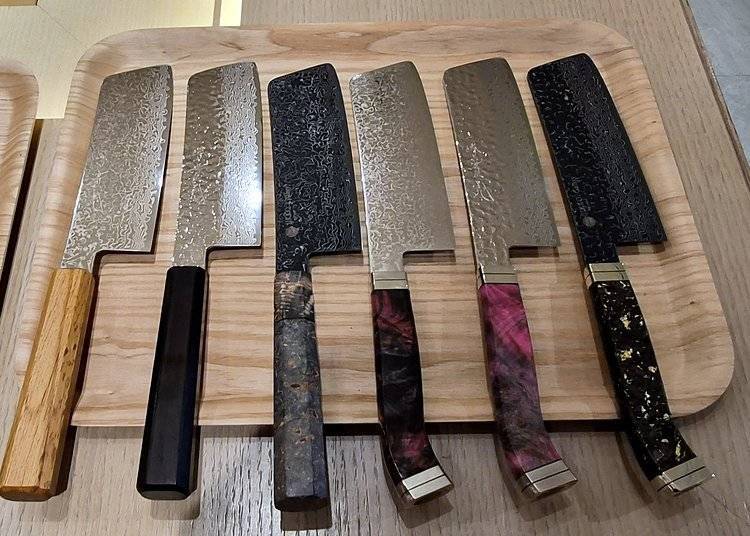
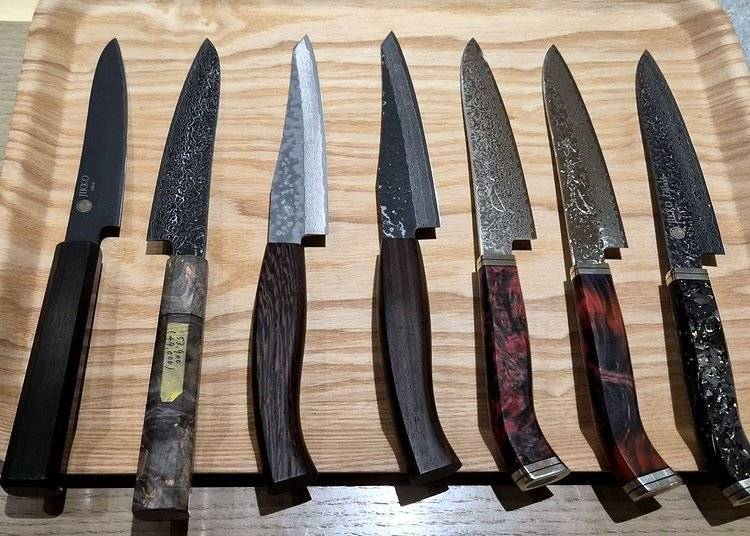
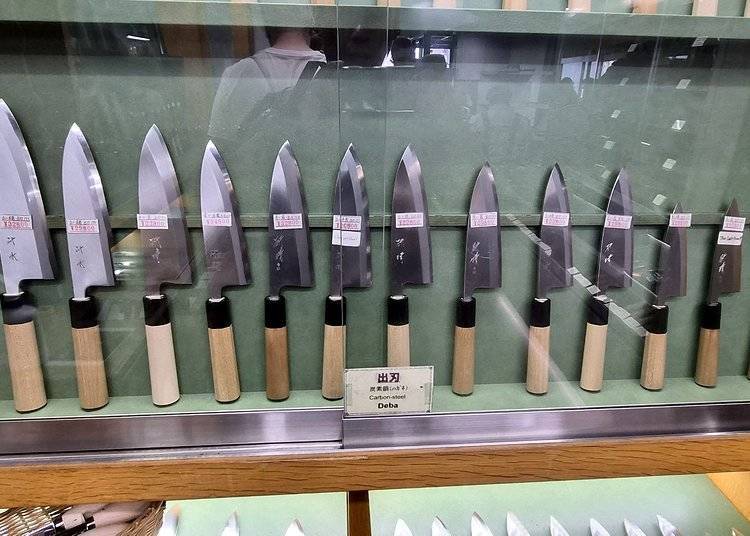

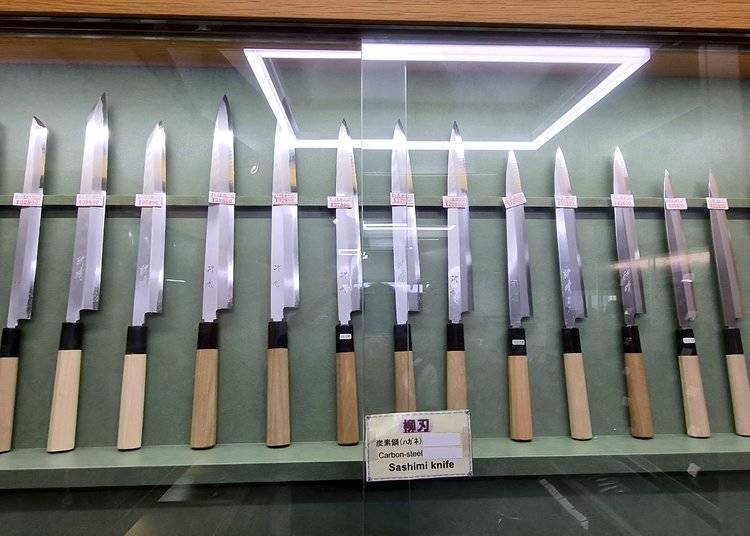

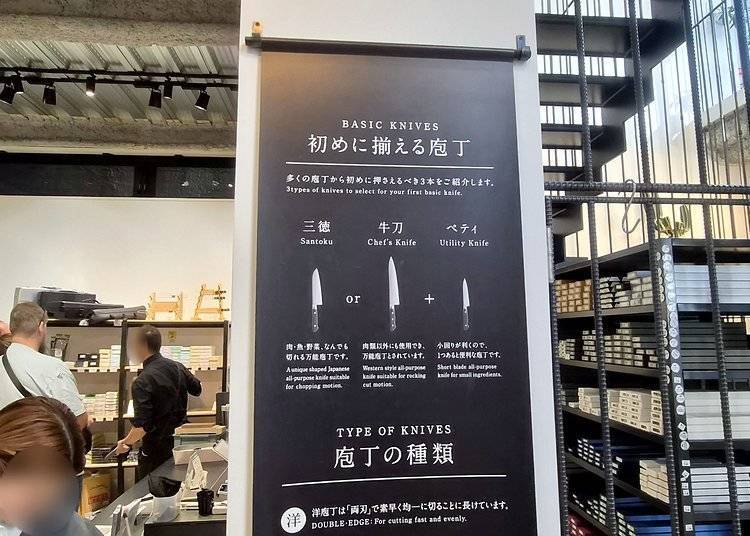
If you can't decide, buy a santoku. A blade of around 16.5 cm works well even in a small kitchen with a small cutting board. Kama-Asa Shoten has a "Basic Knives" sign in the shop that recommends the same start: a santoku or gyuto, plus a petty knife.
Stainless or carbon steel?
Choosing a steel mostly means choosing between low maintenance and sharpness.
・Stainless: VG-10 and Ginsan (Ginsanko) are common. They resist rust, so washing and drying is enough, which suits most households. Many of the knives with a rippled "Damascus" pattern have a VG-10 core with layers of steel around it, and the pattern is mainly decorative.
・Carbon: Shirogami and aogami are the best-known Japanese carbon steels. They take a very keen edge and are easy to sharpen, but they rust if left wet. Choose them if you always dry your knife right after use.
One more thing people miss: traditional knives like the deba and yanagiba are usually single-bevel, sharpened on one side only, and made for either the right or left hand. Santoku and gyuto are usually double-bevel and work for either hand. If you are left-handed and want a single-bevel knife, ask whether a left-handed version is available.
How much does a Japanese knife cost?
Anything from a few thousand yen to over 100,000 yen. Kamata Hakensha labels its glass cases by knife type with a price range for each, which makes it a good reference. These are the prices I saw there on November 19 (tax included):
| Knife type | Price on display (yen) |
|---|---|
| Santoku | 22,000 to 25,800 |
| Gyuto and sujihiki (stainless) | 12,800 to 25,800 |
| Deba (carbon steel) | 19,800 to 42,600 |
| Yanagiba (carbon steel) | 18,800 to 69,800 |
| Honesuki boning knife (carbon steel) | 11,400 to 24,800 |

For a first knife for home use, set a budget of around 20,000 yen and tell the staff. You will find the right knife much faster.
Which Kappabashi knife shop should you visit? 5 shops compared
All five are on or just off the main street, within a 10-minute walk of each other. All except Tsubaya offer tax-free shopping. If you have time, visit two or three before you buy.
| Shop | Founded | Best for | Engraving | Hours |
|---|---|---|---|---|
| MUSASHI JAPAN Kita-Kappabashi | 2023 | Buyers who want multilingual help and a test cut | Free | Daily, 10:30 a.m. to 6 p.m. |
| Kama-Asa Shoten | 1908 | Buying knives and cookware in one stop | Free | 11 a.m. to 5:30 p.m. |
| Kamata Hakensha | 1923 | People who care about sharpening and aftercare | Free, by hand | Daily, 10 a.m. to 6 p.m. |
| Tsubaya | 1952 | Handling and comparing lots of knives yourself | — | Daily, 10 a.m. to 5 p.m. |
| JIKKO Cutlery Kappabashi | 1900 | Knives made in Sakai, Osaka | Available | Daily, 10 a.m. to 5:30 p.m. |
MUSASHI JAPAN Kita-Kappabashi: multilingual staff and test cutting
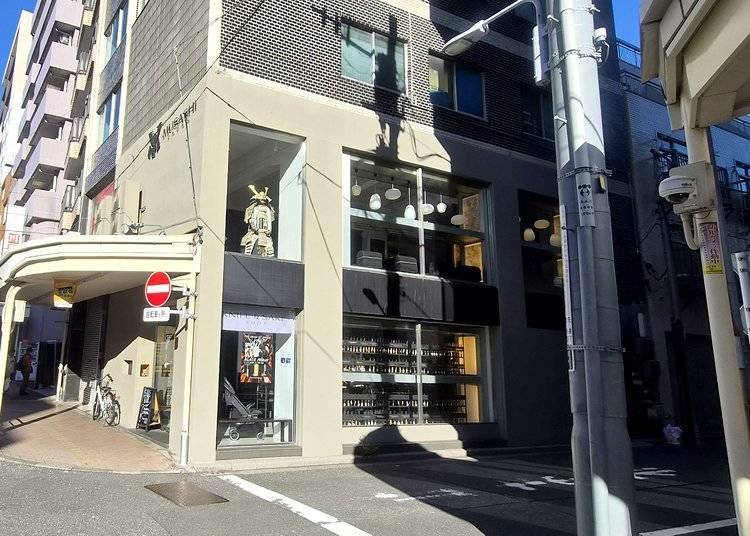
The big advantage here is communication. Staff speak English, Chinese, French, German, Thai, Italian and Spanish. You can test-cut, and they will show you how to sharpen and oil your knife. Engraving is free: they convert your name into kanji or katakana, and it takes a few minutes.
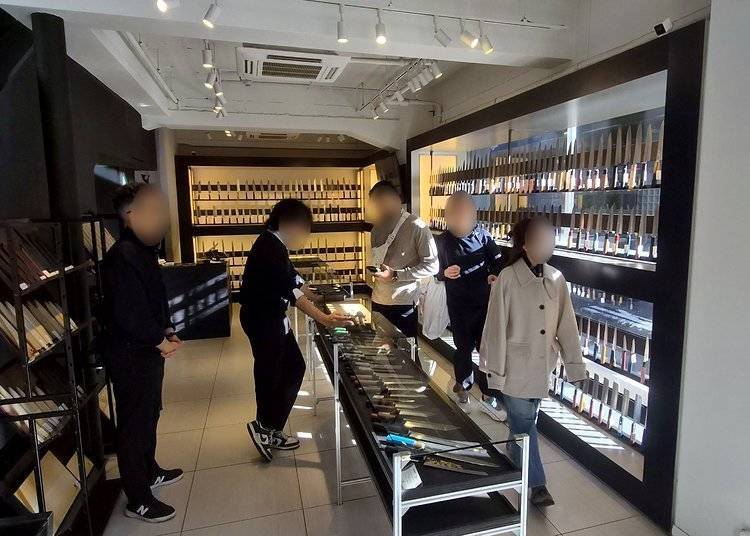
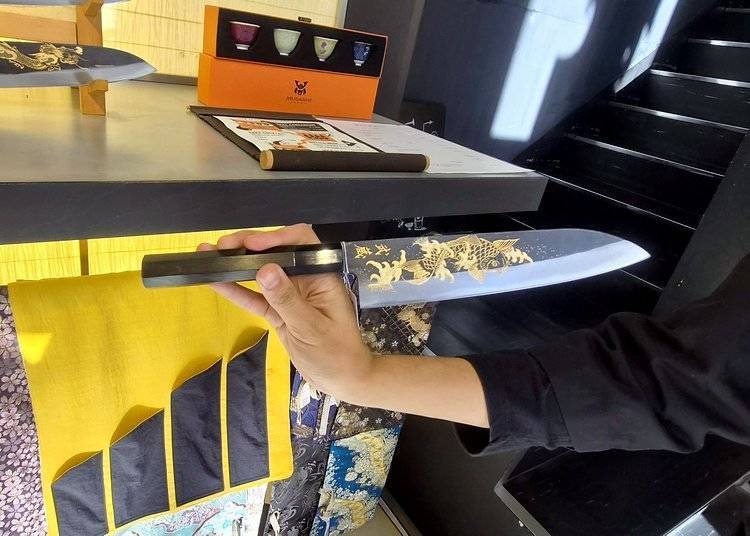
The "Sake" in the shop's name is there because you can also taste Japanese sake. Besides santoku, petty and sashimi knives, the shop carries house lines such as Tsushima ocean knives and chokin (hand-engraved) knives. Most knives on display cost 27,800 to 108,800 yen, and Apple Pay is accepted.

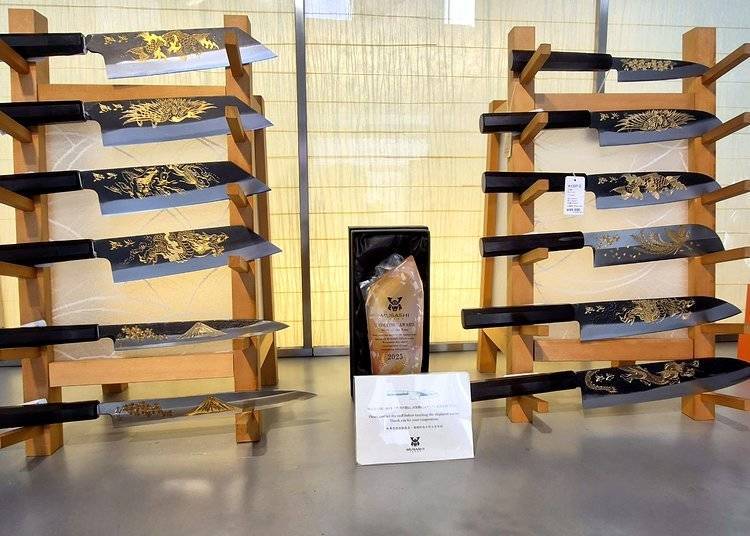
The gold-engraved knives are what catch your eye first: dragons, carp, a phoenix, Mt. Fuji and cherry blossoms on the blades. They make a striking gift. The shop also sells cloth knife rolls in Japanese patterns. The sake bar is upstairs, marked by a "SAKE BAR 2F" board at the foot of the stairs.


-
MUSASHI JAPAN Kita-KappabashiMUSASHI JAPAN 北合羽橋店
-
Address
THOSHICHI Building, 3-8-4 Nishiasakusa, Taito-ku, Tokyo
View Map -
Nearest Station
About 5 minutes on foot from Asakusa Station, Exit A2
- Phone Number 03-6824-5391
Hours: Daily, 10:30 a.m. to 6 p.m.
-
Address
THOSHICHI Building, 3-8-4 Nishiasakusa, Taito-ku, Tokyo
Kama-Asa Shoten: knives and cookware in one stop
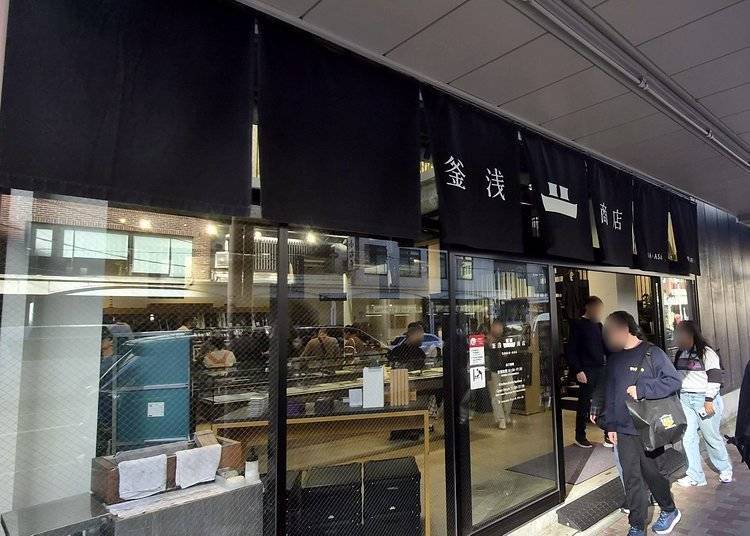
Kama-Asa has been in business since 1908 and opened a branch in Paris in 2018. The knife floor takes up the first and second floors of its own building, with well over a thousand Japanese and Western-style knives. Engraving on the blade or bolster is free with purchase; sharpening is a paid service.
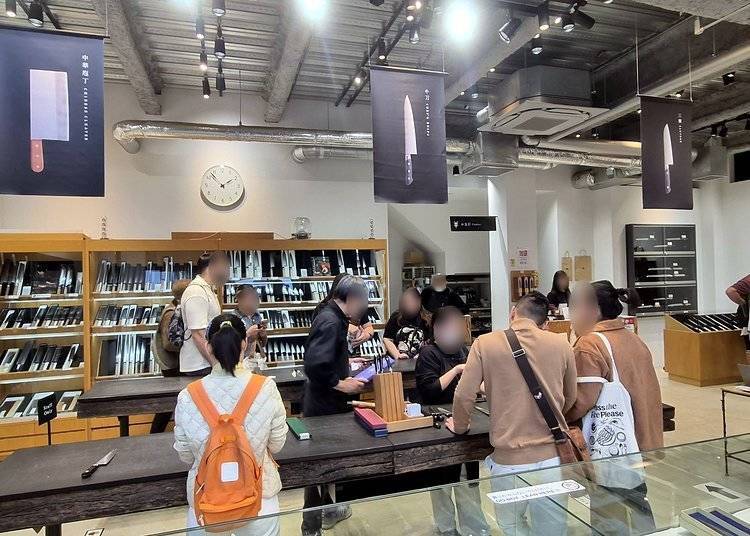

The reason to come here is that you can buy everything at once: iron pans, yukihira saucepans, Nanbu cast iron and bamboo baskets. The shop's own amane line was developed with a knife maker in Seki, Gifu; the 210 mm gyuto costs 24,420 yen.
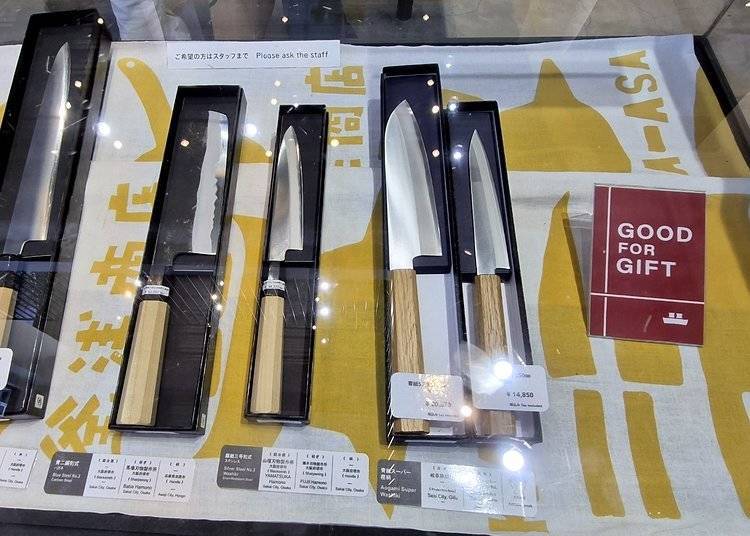

Large banners for gyuto, santoku and Chinese cleavers hang from the ceiling, and there is a counter in the middle where staff hand you knives to try the grip. Boxed knives labeled "Good for Gift" list the place of origin and steel on the tag, which makes choosing a present easy.
-
Kama-Asa Shoten釜浅商店
-
Address
2-24-1 Matsugaya, Taito-ku, Tokyo
View Map -
Nearest Station
About 5 minutes on foot from Asakusa Station (Tsukuba Express)
- Phone Number 03-3841-9357
Hours: 11 a.m. to 5:30 p.m.; closes at 4:30 p.m. on the last day of each month; closed over the New Year holidays
The phone number is for the knife counter. -
Address
2-24-1 Matsugaya, Taito-ku, Tokyo
Kamata Hakensha: an old shop that started as a knife sharpener

Kamata Hakensha opened in 1923 as a knife-sharpening business and is now run by the fourth generation. Knives bought here are engraved for free, and sharpening them later is also free. Engraving is done by hand with a chisel and hammer in front of you and takes about three minutes.
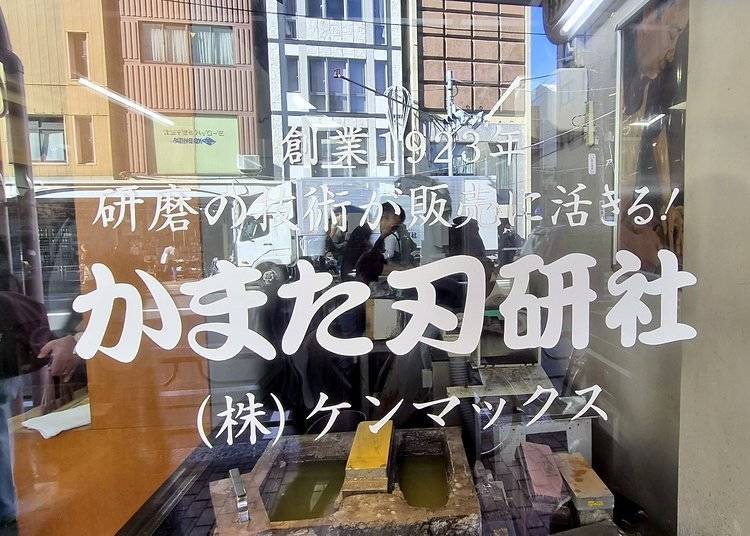
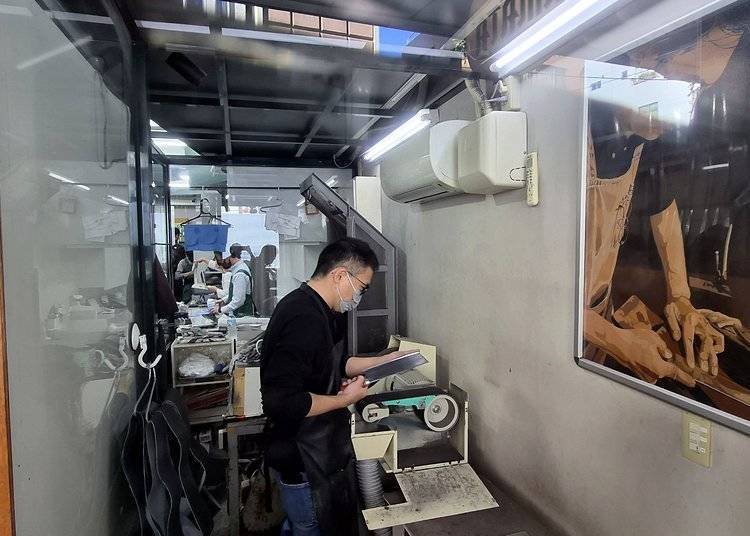
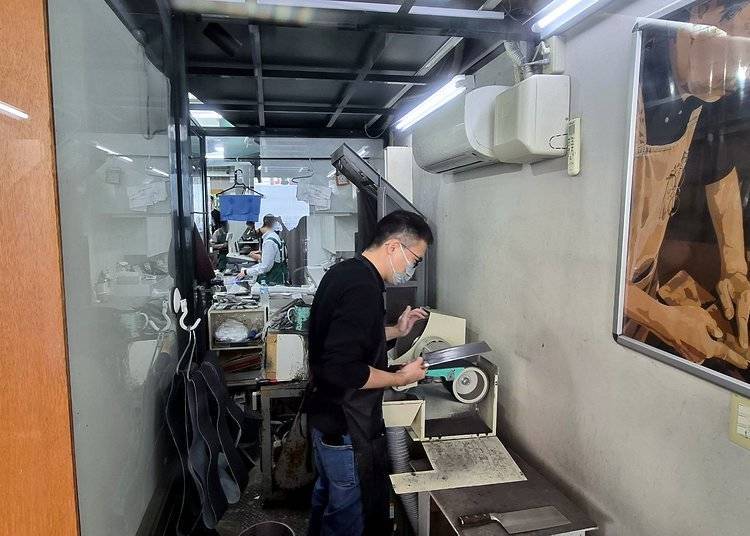
The sharpening room is at the back, and when I visited a craftsman was putting an edge on a blade at the belt grinder. The glass cases are divided by knife type, santoku, gyuto, deba and yanagiba, each with a price range, so comparing is easy.
Every knife is finished by hand before it is sold, and the shop ships overseas. If you visit Japan often, free sharpening for the life of the knife is a real benefit.


-
Kamata Hakenshaかまた刃研社
-
Address
2-12-6 Matsugaya, Taito-ku, Tokyo
View Map -
Nearest Station
7 minutes on foot from Tawaramachi Station, Exit 1
- Phone Number 03-3841-4205
Hours: Daily, 10 a.m. to 6 p.m.; irregular holidays
-
Address
2-12-6 Matsugaya, Taito-ku, Tokyo
Tsubaya: over a thousand knives you can pick up
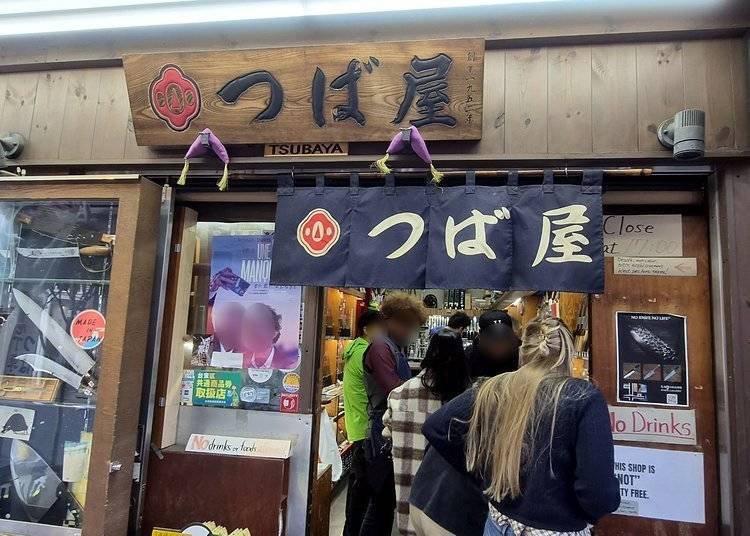
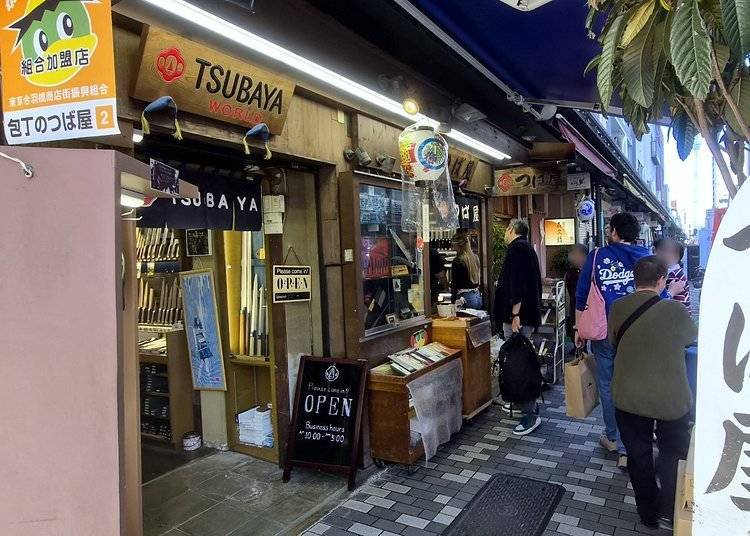
Tsubaya opened in 1952, before Kappabashi was known for knife shops. The shop is small, and more than a thousand knives sit out in the open, not behind glass, so you can pick them up and compare. It also sharpens knives for a fee; knives dropped off in the morning can usually be collected the same day, but confirm before you go.

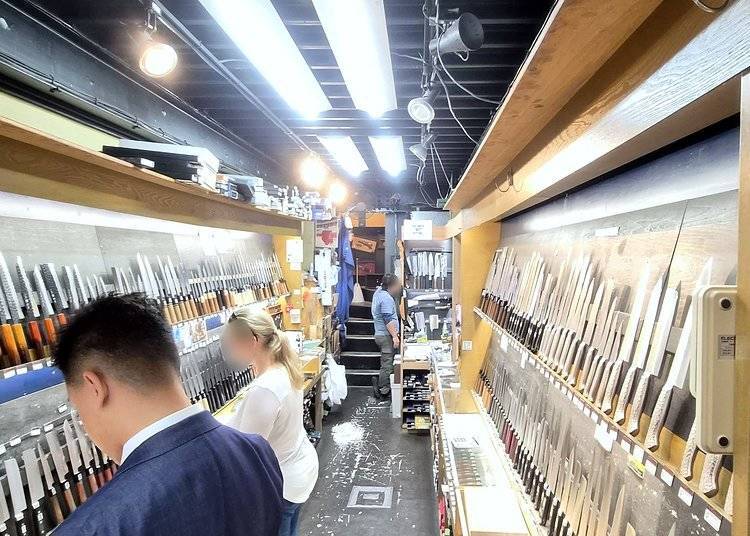
If you want to feel the weight and balance of knife after knife, this is the easiest place to do it. The aisle is narrow, so you may have to wait when it's busy. A sign on the wall asks you to place a knife on the table after looking at it rather than putting it back yourself. Another sign at the door says "This shop is not tax free."

-
Tsubayaつば屋庖丁店
-
Address
3-7-2 Nishiasakusa, Taito-ku, Tokyo
View Map -
Nearest Station
About 5 minutes on foot from Asakusa Station (Tsukuba Express)
- Phone Number 03-3845-2005
Hours: Daily, 10 a.m. to 5 p.m.; closed over the New Year holidays
Tax-free: Not available -
Address
3-7-2 Nishiasakusa, Taito-ku, Tokyo
JIKKO Cutlery Kappabashi: run directly by a Sakai knife maker

JIKKO was founded in 1900 and is a knife manufacturer from Sakai, Osaka. The Kappabashi store is run by the maker itself, which is unusual on this street. More than 100 Japanese and Western-style knives are on display for you to check the weight and balance, and the shop offers engraving and international shipping. Typical budgets are 20,000 to 50,000 yen; the NEVER STAIN 2 santoku, for example, is 33,000 yen.
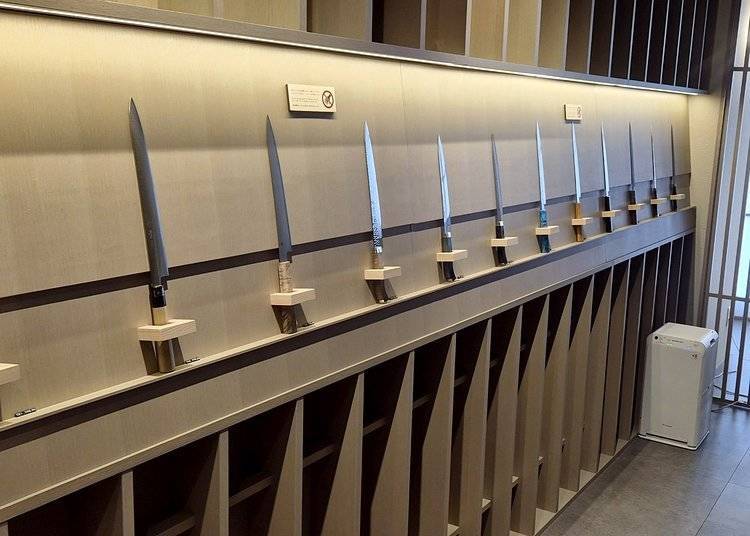
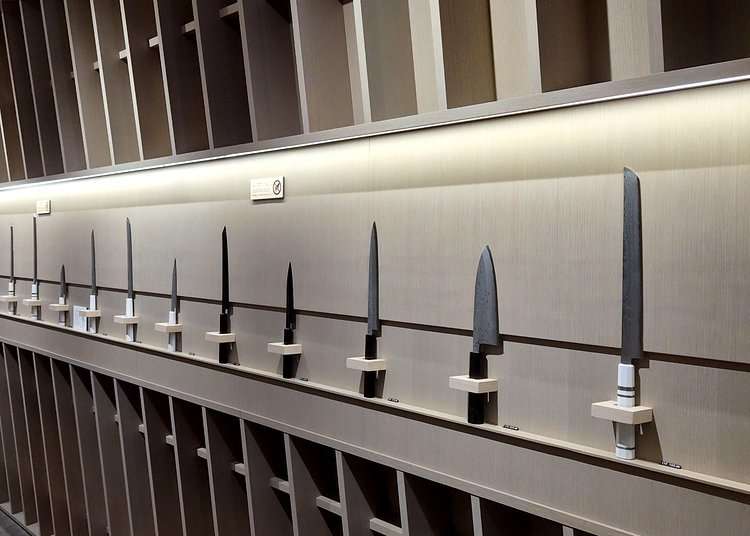
A cloth banner in the shop reads "Sakai-forged cutlery" with the founding year, Meiji 33 (1900). Knives line the display wall by length, and gyuto, santoku, nakiri and petty knives sit in separate trays, so you can compare them tray by tray.
Credit cards are accepted.
-
JIKKO Cutlery Kappabashi実光刃物 東京合羽橋店
-
Address
Matex Building 2, 1F and 2F, 1-9-10 Matsugaya, Taito-ku, Tokyo
View Map -
Nearest Station
About 5 minutes on foot from Tawaramachi Station, Exit 1
Hours: Daily, 10 a.m. to 5:30 p.m.; closed over the New Year holidays and for a period in summer
-
Address
Matex Building 2, 1F and 2F, 1-9-10 Matsugaya, Taito-ku, Tokyo
On the day: engraving, tax-free and getting the knife home
1. Bring your actual passport. Copies are not accepted for tax-free purchases.
2. Visit two or three shops before deciding. The street is short; walking it end to end takes about half an hour.
3. Engrave once you've decided. Most shops finish in a few minutes, and you can engrave your own name or the name of the person you're giving it to. An engraved knife usually can't be returned, so be sure first.
4. Ask for tax-free at the register. The shop will record your passport and purchase.
From November 2026, tax-free means a refund at departure
For purchases made on or after November 1, 2026, shops charge the tax-inclusive price. When you leave Japan, customs confirms you are taking the goods out, and then the consumption tax is refunded. Three points matter when you buy a knife:
・Minimum: 5,000 yen or more before tax, at the same shop on the same day. One knife usually clears it.
・Order at the airport: do the customs check before you check your bags. You must have the purchased items with you, and once a bag is checked you can't do the procedure or get the bag back. Knives can only travel in checked baggage, so go to the kiosk in the departure hall and scan your passport first, then go to the airline counter.
・Deadline: within 90 days of purchase. If even one item on a receipt is missing, nothing on that receipt is refunded.
After you scan your passport at the kiosk, a green screen means you're done; a red screen means you need to show the items at the customs counter. At Narita, Haneda, Kansai and some other airports you can also use Visit Japan Web, but only with "temporary visitor" status. How and when the refund is paid differs by shop, so ask when you pay. Customs and airlines will not compensate you if the procedure makes you miss a flight, so get to the airport early that day.
Don't want to carry it? Have it shipped
Kamata Hakensha and JIKKO both ship overseas. Kama-Asa's online shop also takes international orders but warns that holiday-season shipments are often delayed. Confirm shipping costs, delivery times and how tax is handled before you order.
FAQ
Can I bring a Japanese kitchen knife on the plane?
Not in the cabin; it must be checked. Japanese law prohibits carrying knives on board, with fines of up to 500,000 yen. Airlines also ask you to check knives in advance. Shops usually fit a blade guard and box the knife; wrap it in clothes inside your suitcase.
Can I bring it into my home country?
Rules differ by country and region, so check your own customs rules before you fly, especially for expensive knives or several knives at once.
Do I need to book engraving in advance?
Usually not. You buy the knife and it is engraved on the spot. MUSASHI JAPAN, Kama-Asa Shoten and Kamata Hakensha all engrave for free in a few minutes. Weekends can mean a wait, so go on a weekday if you're short on time.
Is Kappabashi open on Sundays?
Many shops on the street close on Sundays, and most close by 5 or 6 p.m. All five shops in this guide open on Sundays, and Tsubaya closes at 5 p.m. every day.
How do I keep a carbon steel knife from rusting?
Wash and dry it right after use. Don't leave it in the sink or put it in a dishwasher. If you won't use it for a while, wipe on a thin layer of oil. Whatever the steel, don't use a Japanese knife on bones or hard frozen food; the edge is thin and chips easily. If you're unsure, ask the staff to demonstrate when you buy. MUSASHI JAPAN and Kamata Hakensha both teach this.
Should I buy a whetstone too?
If you plan to use the knife for years, yes. Japanese knives are best sharpened on a whetstone, and a medium grit stone (around #1000) is enough for regular use. If you'd rather not sharpen it yourself, bring it back to the shop on your next trip.
Is Kappabashi worth it if I just want fun souvenirs?
Yes. The street is also known for food replicas. Ganso Shokuhin Sample-ya sells sushi-shaped magnets, rice-cracker key rings and kits for making your own replica food.
Getting to Kappabashi and how to explore it
Kappabashi Dougu Street runs about 800 meters north to south. Take the Tokyo Metro Ginza Line to Tawaramachi Station or the Tsukuba Express to Asakusa Station, and it's about a 5-minute walk. Look for the building with a giant chef's head on the roof, the Niimi building, which marks the street. From Sensoji Temple it's about 10 minutes on foot.
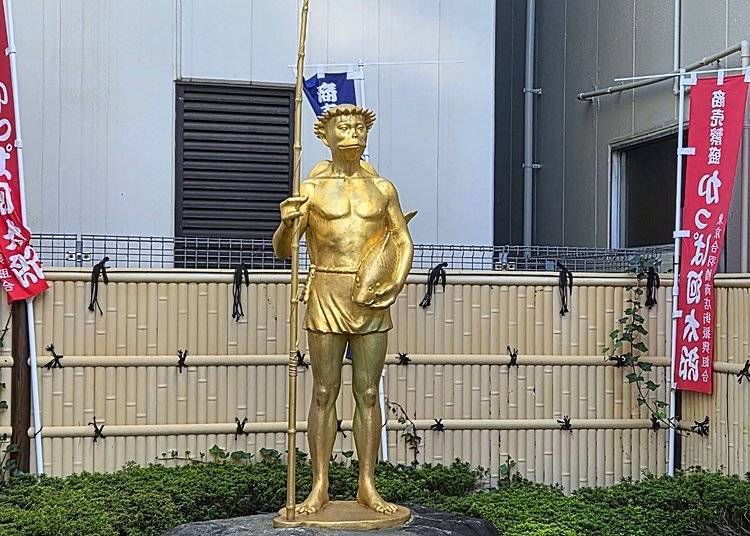
A good plan is Sensoji in the morning, lunch, then west to Kappabashi, starting at the south end on Asakusa-dori and working north. Allow two to three hours if you want to choose a knife and have it engraved. Many shops close after 5 p.m., so don't leave it too late.
-


-
Address
1, Matsugaya, Taitou-ku, Tokyo, 111-0036
View Map -
Nearest Station
Tawaramachi Station (Tokyo Metro Ginza Line)
- Phone Number 03-3844-1225
-
Address
1, Matsugaya, Taitou-ku, Tokyo, 111-0036
Author: Yang Yang. Employee of Gurunavi (the company that runs LIVE JAPAN), previously ran an e-commerce business selling Japanese snacks and knows Japanese food well. This guide is based on my visit to all five shops on November 19, 2026. Hours and prices may change, so check each shop's official site before you go.
- Area
- Category
*Prices and options mentioned are subject to change.
*Unless stated otherwise, all prices include tax.
Popular Tours & Activities
Recommended places for you
-
Goods

Azuma Minamoto no MASAHISA
Household Goods Stores
Tsukiji
-
Goods
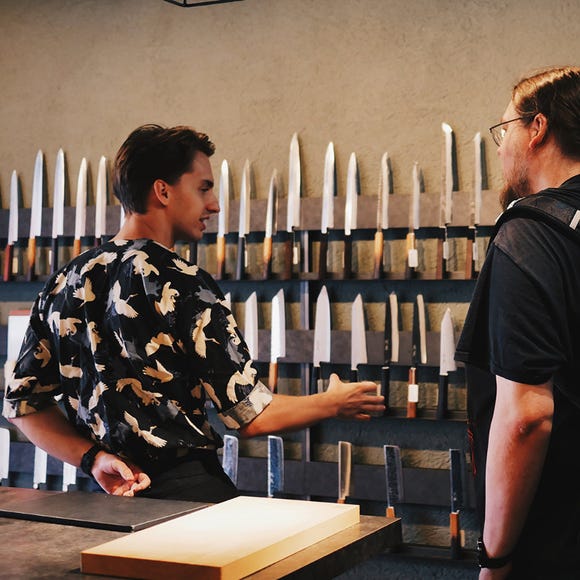
MUSASHI JAPAN Minami Kappabashi Knife Shop
Household Goods Stores
Asakusa
-
Coupons
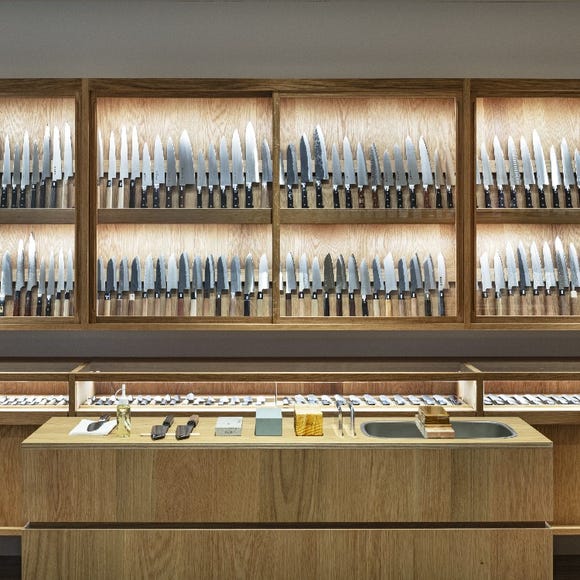
HITOHIRA | JAPANESE KITCHEN KNIFE
Household Goods Stores
Shibuya
-
Goods
Tonbo Western Umbrella Maehara Koei Shoten Asakusa Misujimachi Store
Household Goods Stores
Asakusa
-
Goods
HAKUSAN SHOP TOKYO SHOWROOM
Household Goods Stores
Harajuku
-
Goods
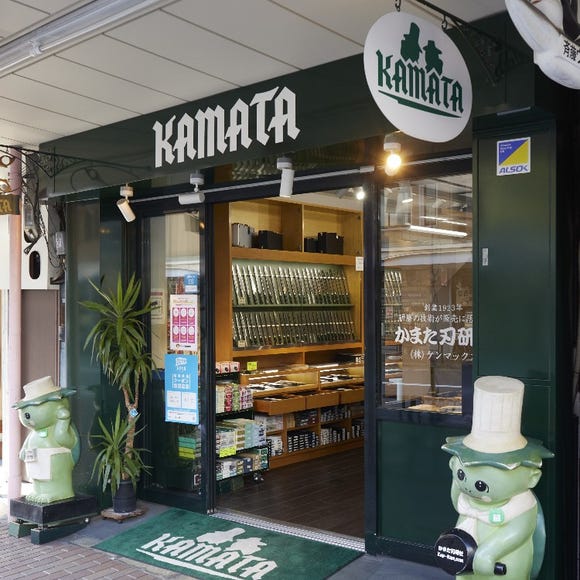
Knife shop KAMATA
Household Goods Stores
Asakusa
-
28 Best Things to Do in Odaiba (2026 Updated): Tokyo's Entertainment Island
-
BicCamera Tax Refund 2026: Refund Service Fee 0 Yen
-
(Japan Travel Etiquette) Eyes Up! Why You Shouldn't Walk and Scroll in Japanese Train Stations
by: Guest Contributor
-
[Starting Spring 2027] Japan's Railways Evolve Further! Why Tickets Are Changing to "QR Tickets" and a Riding Guide for Foreign Visitors
by: Guest Contributor
-
5 Japanese Craft Shops in Shinjuku: From Walls of Kokeshi Dolls to Artisan Teapots
-
Yamada Denki Tax Refunds: Zero-Yen Refund Fee
Inspiration for Accommodations
-
Family-Friendly Hotels with Free Shuttle to Disneyland: Convenient Access for a Magical Stay
-
Top Ranked Hakone Hotels with Mt. Fuji View: Enjoy Stunning Scenery from Your Private Space
-
Convenient Tokyo Hotels with Airport Shuttle: Ideal for Families and Heavy Luggage
-
9 Family-Friendly Hotels with Comfortable Family Rooms in Asakusa
-
10 Open-air bath Onsen Ryokans in Hakone for Ultimate Relaxation
-
Bring Home Traditional Japanese Kitchen Tools—Stylish & Affordable Finds at 3COINS
-

World-class Blades with Japanese Flair: The Art of the Kitchen Knife with Tsukiji Aritsugu
-

Meiji Shrine (Meiji Jingu): Exploring the Sacred Sanctuary of Peace in Bustling Tokyo
-

Numazuko Kaisho in Ueno: Good Quality, All-You-Can-Eat Seafood for Just US$12!?
-
Ad
Advice from the Experts at Hitohira: Here's How to Choose the Best Japanese Knife
-

6 Fun Things to Do at Tokyo's World-Famous Tsukiji Outer Market!
- #best ramen tokyo
- #what to buy in ameyoko
- #what to bring to japan
- #new years in tokyo
- #best izakaya shinjuku
- #things to do tokyo
- #japanese nail trends
- #what to do in odaiba
- #onsen tattoo friendly tokyo
- #daiso
- #best sushi ginza
- #japanese convenience store snacks
- #best yakiniku shibuya
- #japanese fashion culture
- #best japanese soft drinks