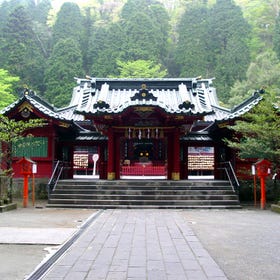
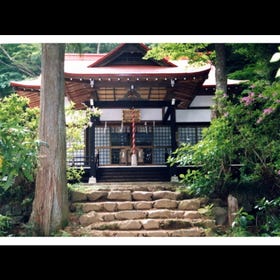
The Hakone Shrine with its vermillion-lacquered torii (Shinto shrine archway) and its Japanese cedars is a shrine with a holy presence that tells you about history
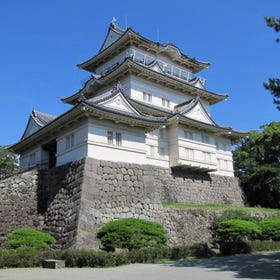
The symbol of Odawara City, Kanagawa. The former castle area is now a park beloved by town residents and has an amusement park for children.
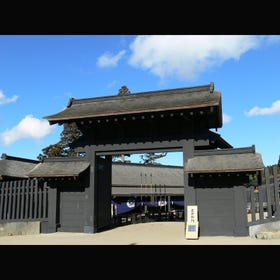
Hakone Sekisho is an impressive reproduction of an Edo Period sekisho on the banks of Lake Ashi. It is as if you've slipped back in time to the Edo Period.
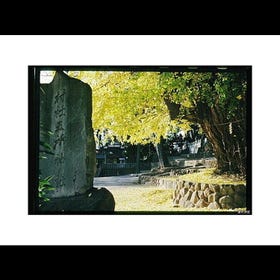
This shrine has a long history, going back to the time when Yugawara was developed by Shigeyuki Kaganosuke Futami and others. It is said that when Yoritomo Minamoto raised an army in Izu, Sanehira Jiro Doi, the head of the powerful local clan, prayed for his master Yoritomo's victory and offered the sword he carried at his waist to the shrine. The Myojin-no-kusunoki camphor tree spreads its branches by the side of the prefectural road. This tree is estimated to be over 800 years old and has a root circumference of 15.6 meters. An inner section of the trunk has decayed and been reinforced with concrete, which has been used to house a guardian deity. Access: From Yugawara Station, take the bus headed to Okuyugawara or Fudo-Taki for about 5 minutes The shrine is next to the Gosho Jinja bus stop
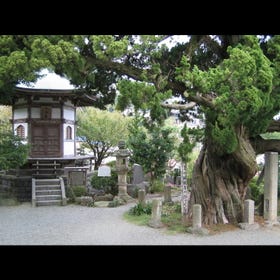
Sanehira Jiro Doi is famous for protecting Yoritomo Minamoto from Kagechika Oba’s army after he had lost the Battle of Ishibashiyama. Joganji Temple is the family temple of the Doi clan. The temple grounds contain many sights of historic interest, including Shichikido, a hall which keeps the seven wooden statues depicting Yoritomo and each of his samurai warriors who played an active part in the revival of the Minamoto family, as well as the Doi family’s burial ground (designated as a Kanagawa cultural property). A Chinese juniper tree planted by Sanehira himself (estimated to be 800 years old and designated as a national natural monument) is the largest and oldest in Kanagawa Prefecture, and its straight, vertical trunk is an impressive sight thought to be extremely rare in Japan.
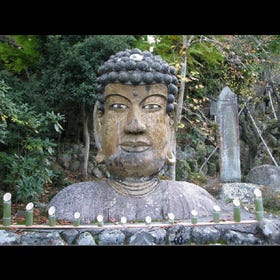
Originally, the ceramic statue of the Buddha was placed in Nagoya Castle, and after the war, it was dedicated to Fukusenji Temple. Mitsutomo Tokugawa, a former lord of Nagoya Castle, is said to have created the statue in honor of his deceased mother. It is thought that a complete statue was created in Nagoya, including the parts from the neck down, so now where has the body gone? Access: From Yugawara Station, take the bus headed to Okuyugawara or Fudo-Taki for about 5 minutes The statue is a five-minute walk from the Izumi Iriguchi bus stop
Tenshozan Shrine was founded in 1931. It honors the Japanese gods Ameterasu, Sarutahiko, and Taisei, and people from all over Japan come for the festival held each year on May 22, briefly creating a lively atmosphere. Located deep within the forest, the shrine comes alive in each season with flowers and foliage. Access: From Yugawara Station, take the bus headed to Motohakone for about 40 minutes The shrine is a 30-minute walk from the Shitodo-no-Iwaya Iriguchi bus stop