







What should you buy in Asakusa? I used to run a Japanese snack e-commerce business, so I visited 10 old shops and checked the price and shelf life at each one. Below you'll find which shop to pick for sharing at work, taking home, or eating on the spot.
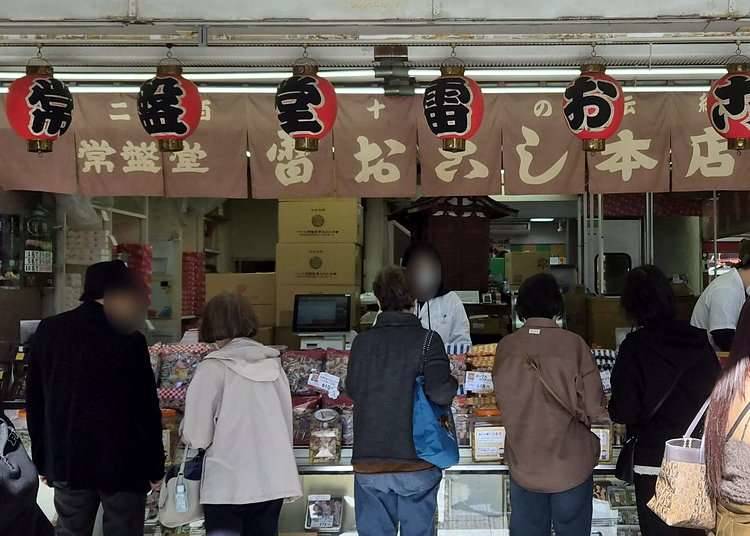
Most of Asakusa's souvenir shopping happens on Nakamise-dori, the roughly 250-meter street between Kaminarimon Gate and Sensoji Temple, and in the lanes around it. Sweet shops line both sides. In the crowds it's easy to grab a box and move on, then find out back at the hotel that it only keeps three days, or that a box of four won't go round the office.
I used to run a Japanese snack e-commerce business, where I checked shelf life and pack sizes every day, so I looked at those two things first and taste second. I visited Asakusa's best-known old shops in October 2026, then went back on November 19 to photograph each one and note the prices on display. All prices below are what I saw that day, tax included.
- To share at work: ningyo-yaki from Kimuraya Honten, 800 yen for eight, keeps 7 days. Tokiwado's kaminari okoshi keeps 2 to 3 months unopened.
- To take home: Tokiwado's kaminari okoshi, ideally in a tin so it doesn't break. Next best is Mangando's usukawa imokin, which keeps about 30 days.
- The most famous thing in Asakusa: Kameju's dorayaki, 430 yen each. There's a line most of the day, and it keeps only 3 days.
- For someone who doesn't like sweets: shichimi chili blend from Yagenbori, mixed to your taste for 540 yen a bag.
- Somewhere to sit down: the tea room at Asakusa Umezono, or the upstairs tea rooms at Funawa Honten.
All 10 shops at a glance
| Shop (Japanese name) | Signature item | Price seen (Nov 2026) | Keeps for | Best for |
|---|---|---|---|---|
| Kameju (亀十) | Dorayaki | 430 yen each | 3 days from production | Yourself, family |
| Funawa Honten (舟和 本店) | Imo-yokan, ningyo-yaki | Ningyo-yaki 195 yen each | Imo-yokan about 5 days, refrigerated; ningyo-yaki about 2 weeks | Giving the same day, sharing at work |
| Asakusa Umezono (浅草 梅園) | Awa-zenzai, dorayaki | Box of 6 dorayaki 2,484 yen | See label | A sit-down break, formal gifts |
| Kimuraya Honten (木村家本店) | Ningyo-yaki | 800 yen for 8 | 7 days | Sharing with colleagues |
| Tokiwado (常盤堂) | Kaminari okoshi | Raijin can 200g 1,944 yen | About 2 to 3 months unopened | Taking home |
| Asakusa Kokonoe (浅草九重) | Age-manju | From 220 yen | Same day | Eating hot on the spot |
| Asakusa Mangando (浅草満願堂) | Imokin | 1,296 yen for 6 | Usukawa imokin about 30 days | Taking home, eating on the spot |
| Izumiya Honten (和泉屋 本店) | Cat senbei | Check in store | See package | Kids, cat lovers |
| Ichibanya (壱番屋) | Hand-grilled senbei | Sold singly | See package | People who don't like sweets |
| Yagenbori (やげん堀) | Custom-blended shichimi | 540 yen a bag | About 90 days from production | People who cook or like spicy food |
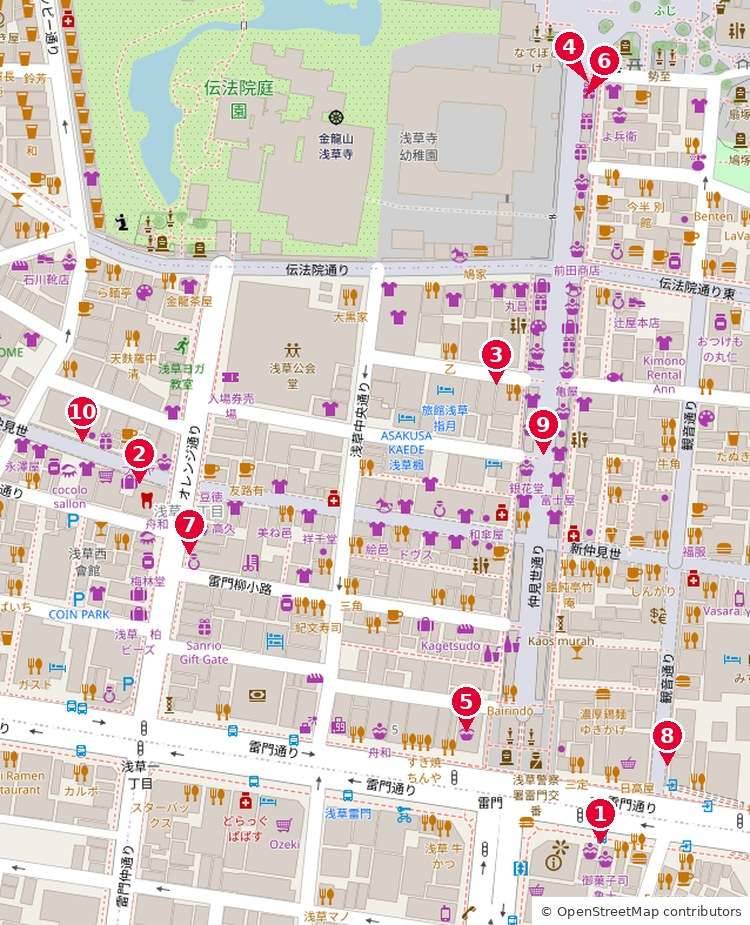
First time in Asakusa? Start with these 5 classic sweet shops
Wagashi is the general word for traditional Japanese sweets, mostly made from sweet bean paste, rice or rice flour. Each of these five shops has been in business for around a century or longer.
Kameju: which dorayaki is Asakusa famous for?
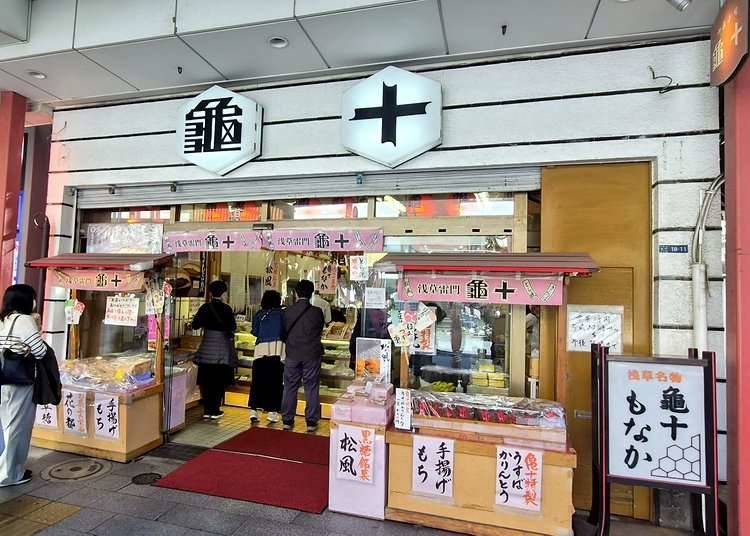
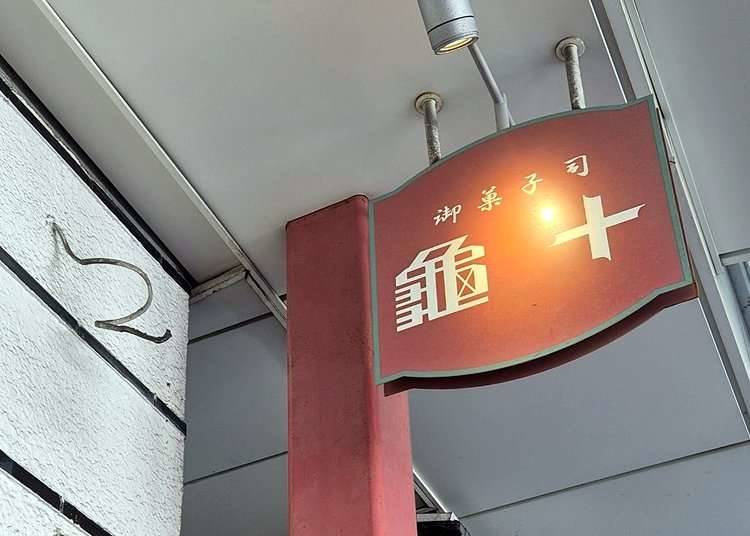
Dorayaki are two round pancakes sandwiching sweet red bean paste, the snack Doraemon is always eating. Kameju's are often named among Tokyo's three best. The shop sits diagonally across from Kaminarimon Gate and dates back to the 1920s.
The pancakes are thick and soft, close to fluffy American pancakes, and are cooked one at a time by hand. There are two fillings: kuro-an, made from red adzuki beans grown in Tokachi, Hokkaido, and shiro-an, made from a small white bean called tebo. Both cost 430 yen (the price since a 2024 increase). Buy one of each and compare: the red bean tastes more strongly of beans, the white is lighter.
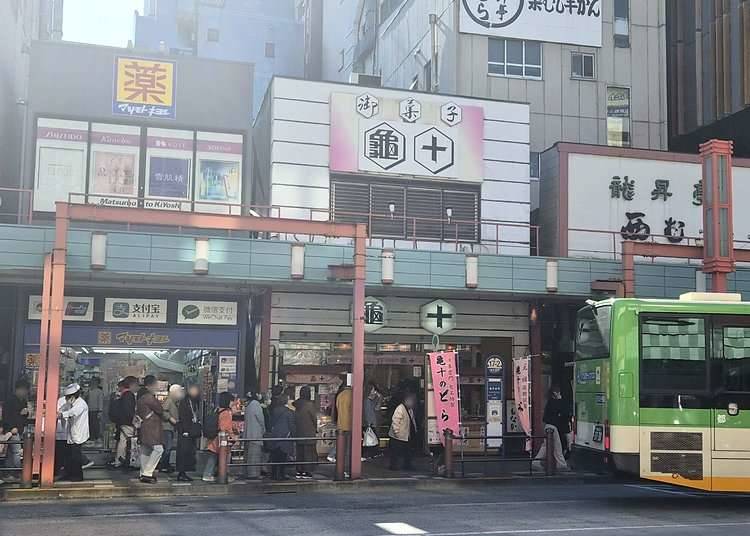
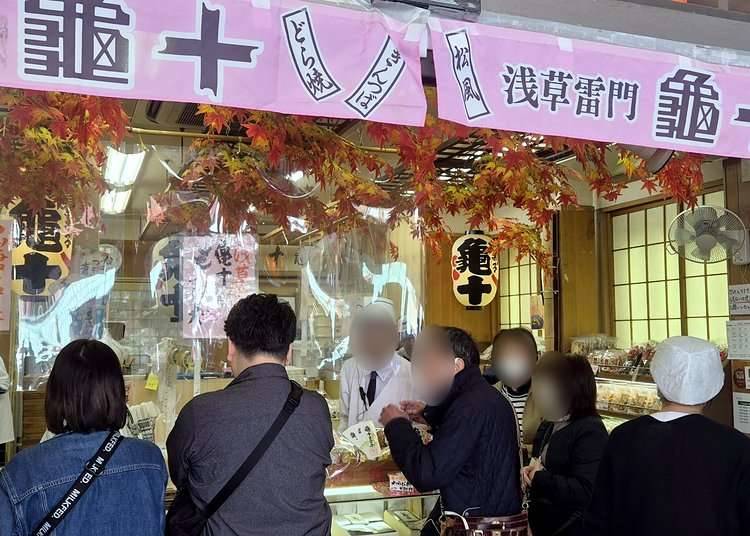
I went on a weekday, November 19, and there was still a line. It moves fast, usually 10 to 20 minutes on weekdays and longer at weekends. Dorayaki keep only 3 days from production, so eat them the same day or buy them a day or two before you hand them over.
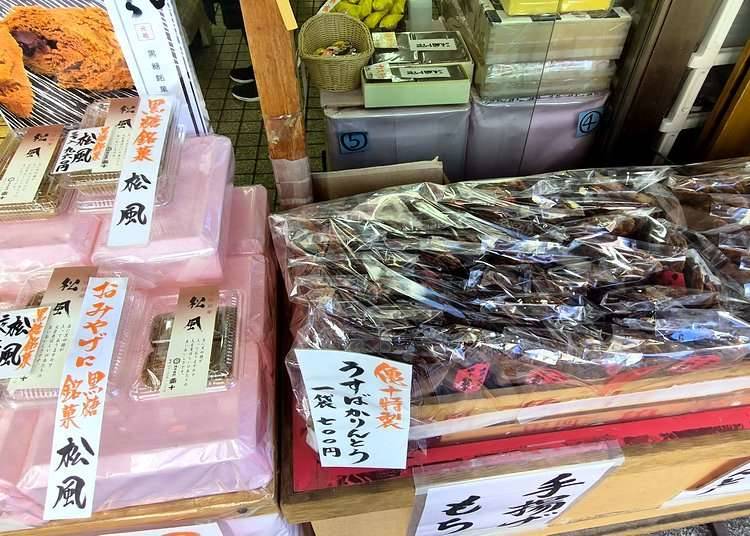
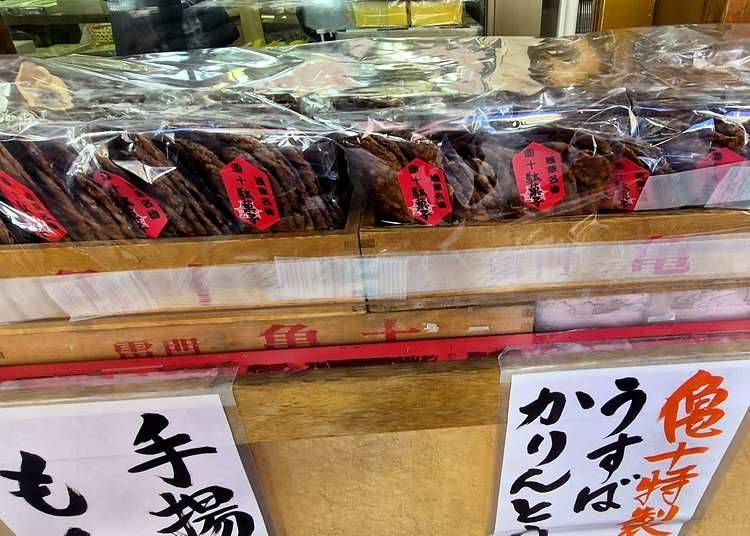
If you don't have time to queue, or want something that keeps longer, look at the other sweets by the door: matsukaze, a brown-sugar cake, and bags of thin karinto snacks at 700 yen.
-
Kameju
-
Address
2-18-11 Kaminarimon, Taito-ku, Tokyo (diagonally across from Kaminarimon Gate)
View map - Hours 10:00 to 19:00
- Keeps for dorayaki 3 days from production
- Nearest station About 1 min walk from Asakusa Station (Tokyo Metro Ginza Line / Toei Asakusa Line)
-
Address
2-18-11 Kaminarimon, Taito-ku, Tokyo (diagonally across from Kaminarimon Gate)
Funawa Honten: why is imo-yokan an Asakusa specialty?
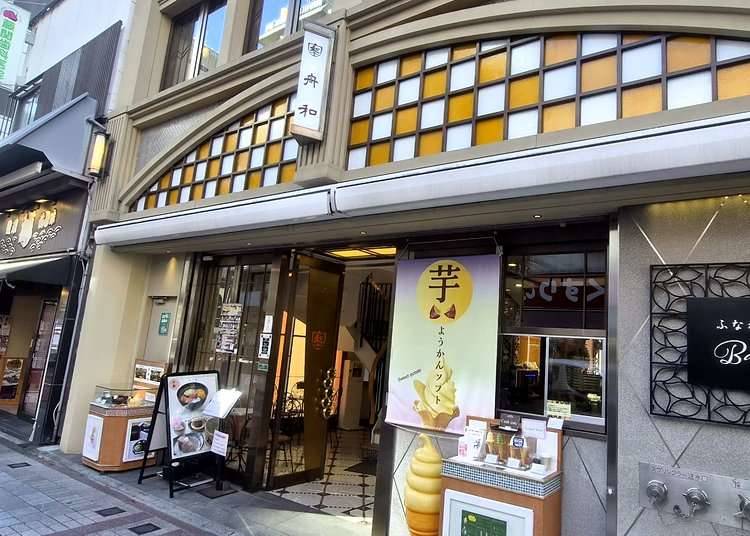
Yokan is a firm sweet traditionally made from red bean paste set with agar. Imo-yokan uses sweet potato instead and tastes like a dense, lightly sweet block of mashed sweet potato.
Funawa opened in Asakusa in 1902. The founder was a sweet potato wholesaler; red bean yokan was expensive then, so he worked with a confectioner to make an affordable version from everyday sweet potatoes. The ingredients are still just sweet potato, sugar and salt. Funawa suggests warming slices in a toaster oven or frying them in a little butter. Imo-yokan must be refrigerated; the shop's online listing gives 5 days from production, so it suits gifts you'll hand over that day or the next.
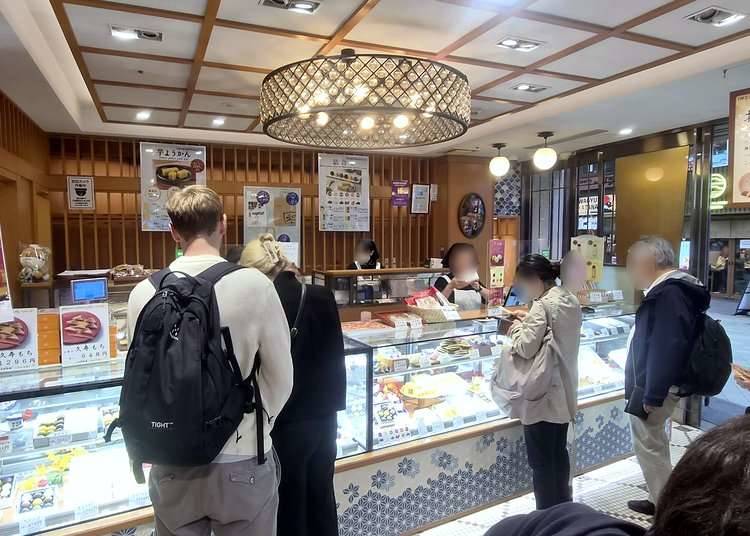
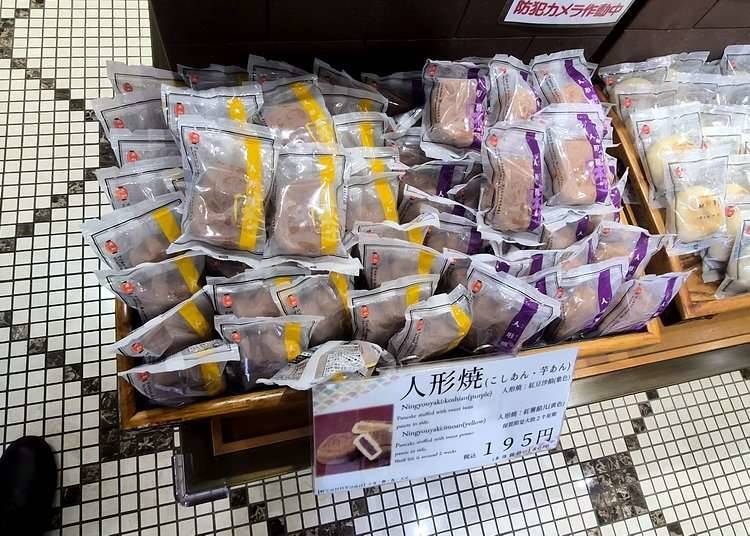
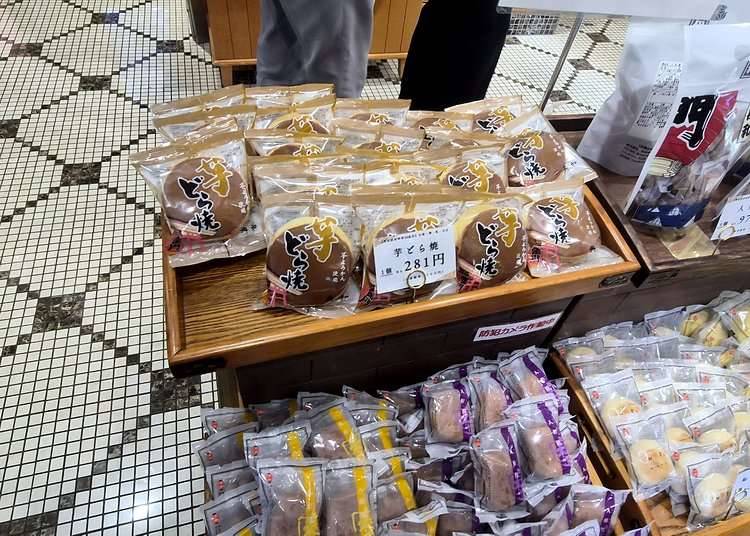
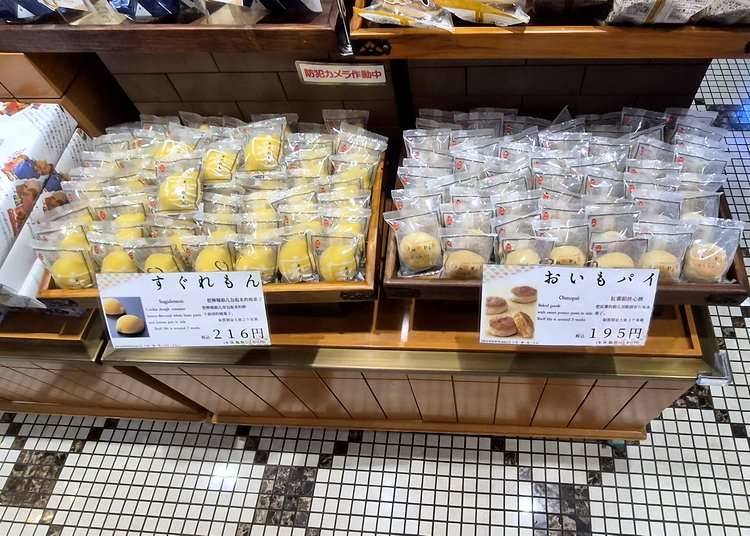
For sharing at work, Funawa's ningyo-yaki are a better fit: red bean or sweet potato filling, 195 yen each, and the price card says they keep about two weeks. There are also imo dorayaki filled with imo-yokan (281 yen), sweet potato pie (195 yen) and a lemon-shaped cake called Sugulemon (216 yen). The price cards are in English and Chinese as well as Japanese.
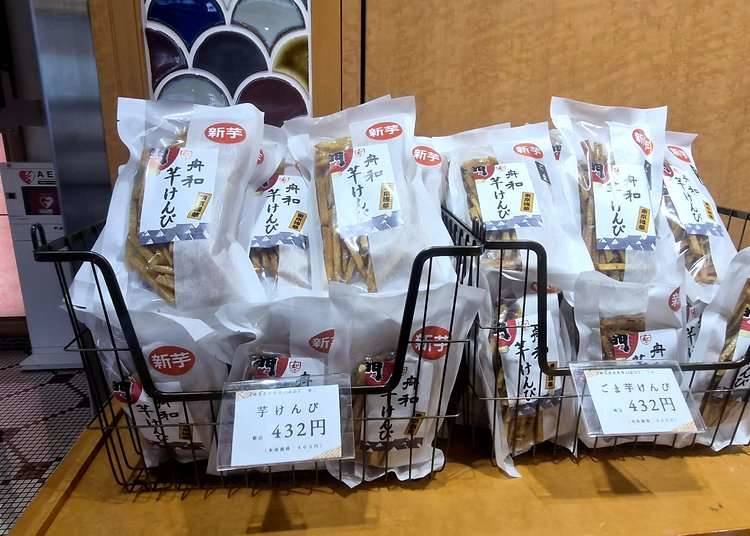
For something less sweet, try imo kenpi, candied sweet potato sticks, plain or sesame, 432 yen each. There's also Asakusa boro, small egg biscuits in a tin printed with the Kaminarimon lantern (216 yen for the small one), and an imo-yokan flavor of Fujiya's Country Ma'am cookies (1,026 yen for 16).
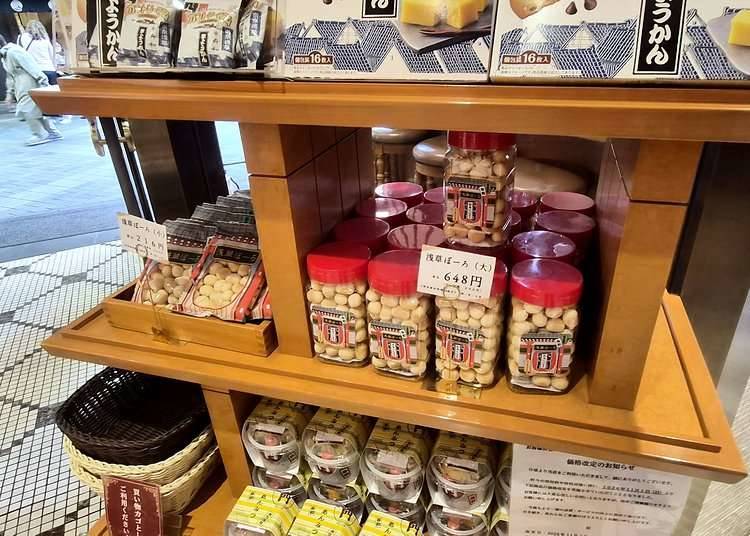
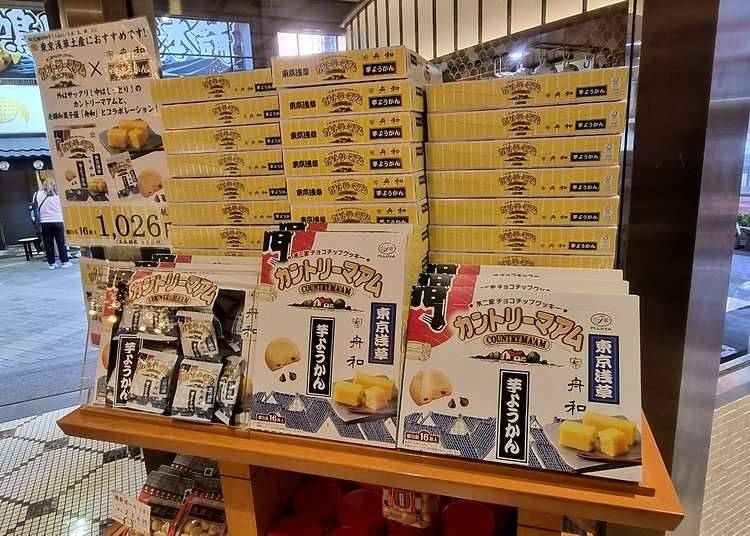
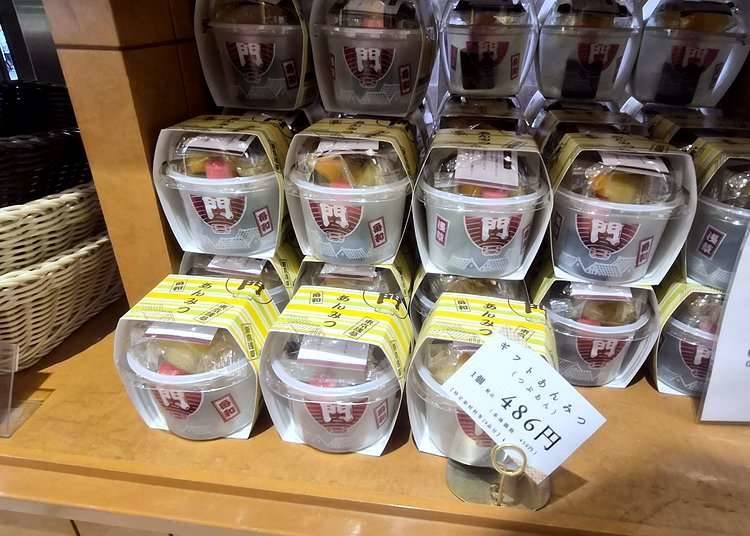
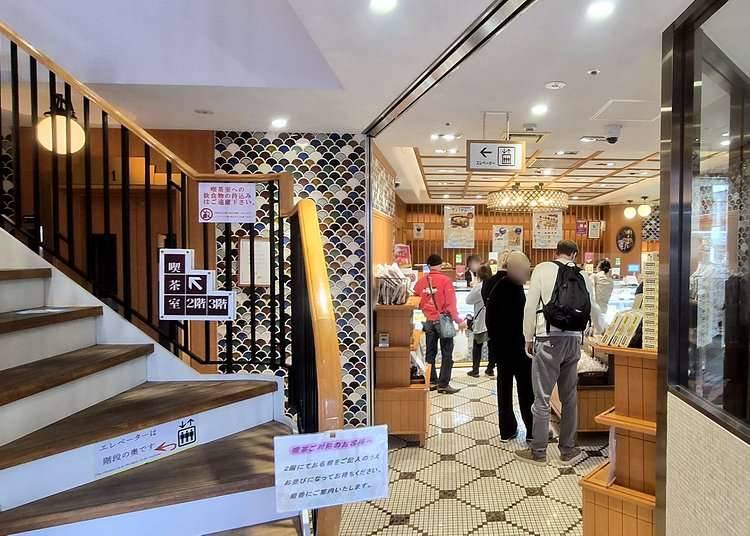
The ground floor is the shop; the 2nd and 3rd floors are a kissashitsu, a Japanese-style tea room, where you can sit down with matcha.
-
Funawa Honten
-
Address
1-22-10 Asakusa, Taito-ku, Tokyo
View map - Hours shop 10:00 to 19:00; tea room 10:30 to 18:30 (last order)
- Keeps for imo-yokan about 5 days from production, refrigerated; ningyo-yaki about 2 weeks
- Nearest station About 5 min walk from Asakusa Station (Tokyo Metro Ginza Line / Toei Asakusa Line)
-
Address
1-22-10 Asakusa, Taito-ku, Tokyo
Asakusa Umezono: where to sit down for a traditional sweet
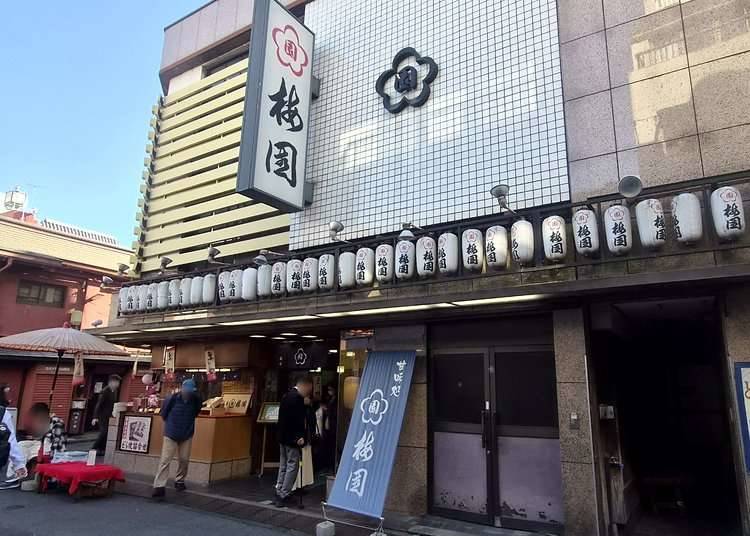
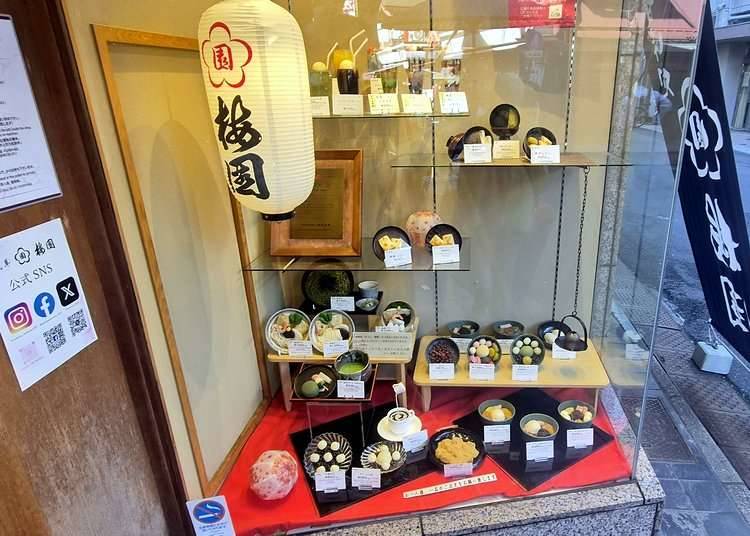
Umezono opened in 1854 as a teahouse beside Baionin, a sub-temple of Sensoji. Its signature is awa-zenzai: half-pounded glutinous millet in a bowl under a generous ladle of hot, smooth red bean paste. It's quite sweet, and the hot tea that comes with it balances it out. You buy a meal ticket first; the window by the entrance shows food models of every dish, so you can just point.
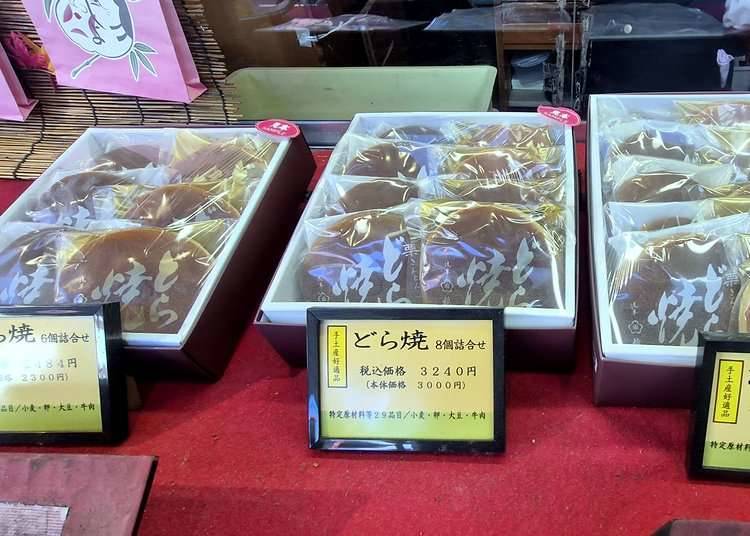
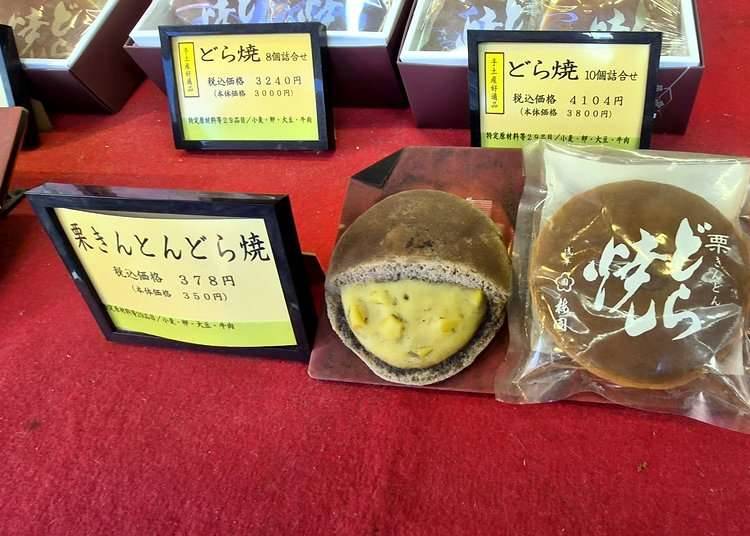
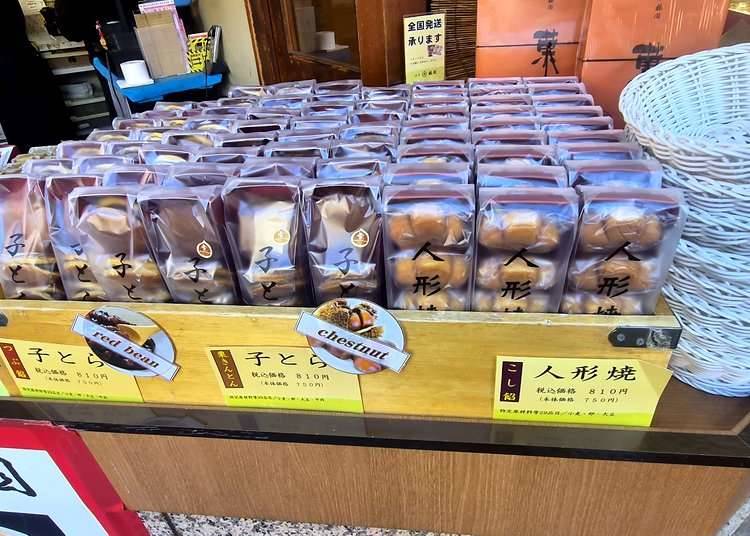
The counter at the front is worth a look too. Boxed dorayaki labeled as suitable for gifts cost 2,484 yen for six, 3,240 yen for eight and 4,104 yen for ten, in a smart box that works for a formal present. A single chestnut dorayaki is 378 yen.
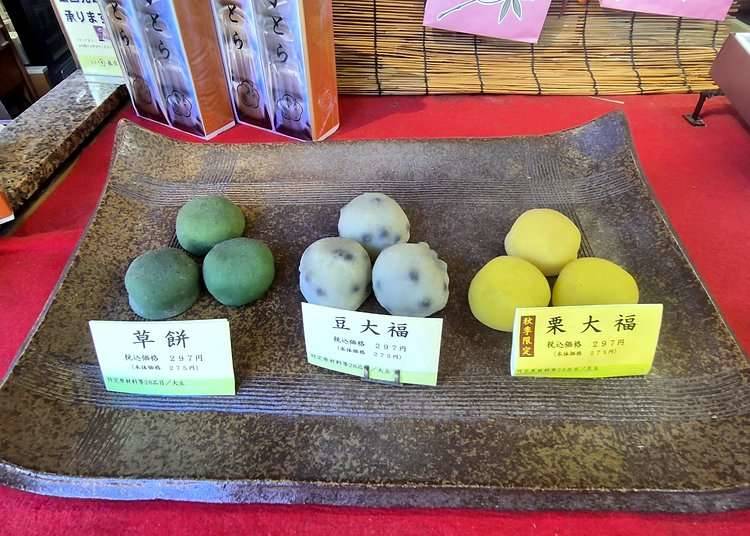
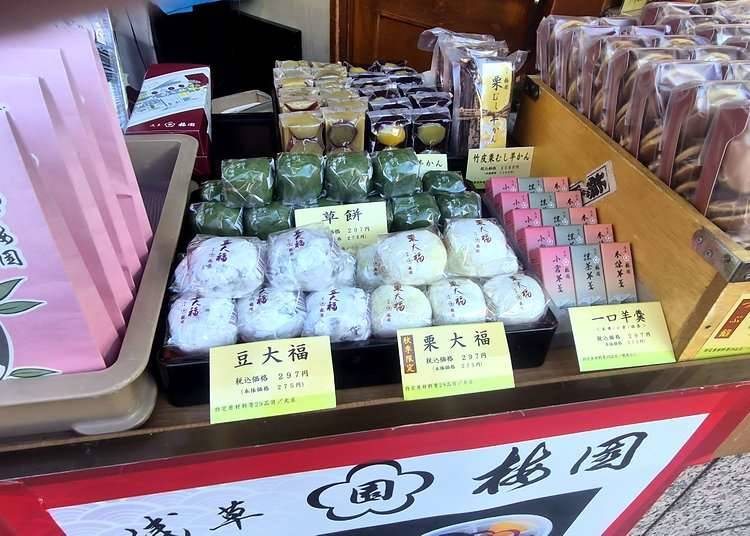
Daifuku, kusamochi and bite-size yokan are individually wrapped at 297 yen each. A sign says the shop ships anywhere in Japan.
-
Asakusa Umezono
-
Address
1-31-12 Asakusa, Taito-ku, Tokyo
View map - Hours weekdays 10:00 to 17:00; weekends and holidays 10:00 to 18:00
- Closed two irregular Wednesdays a month (check the official website)
- Nearest station About 4 min walk from Asakusa Station (Tokyo Metro Ginza Line / Toei Asakusa Line)
-
Address
1-31-12 Asakusa, Taito-ku, Tokyo
Kimuraya Honten: where to buy ningyo-yaki to share at work
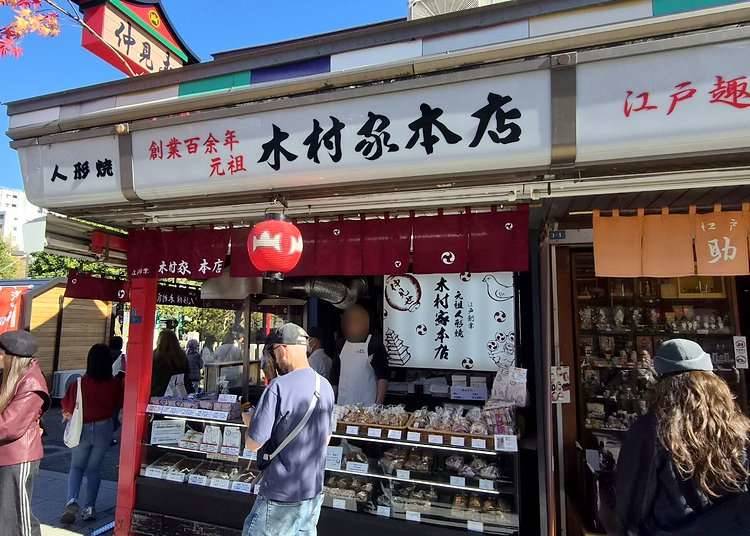
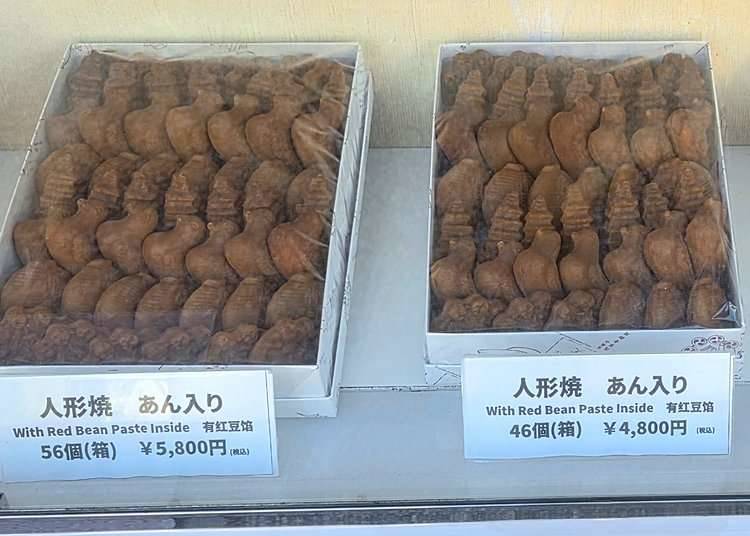
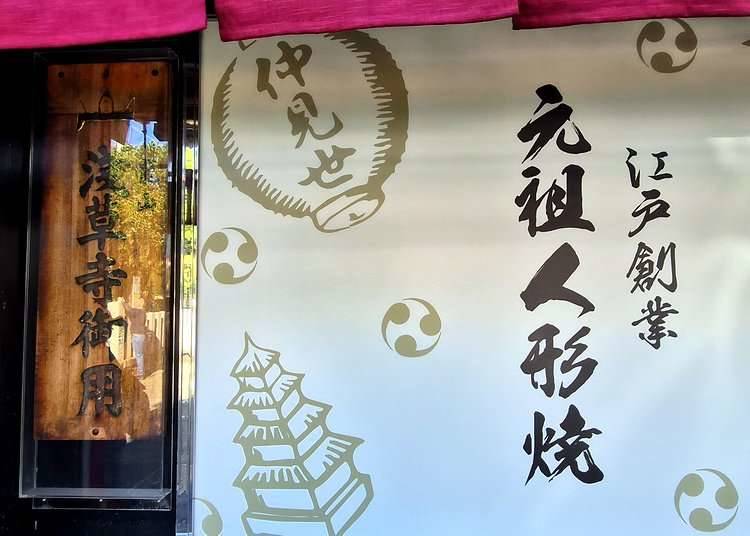
Ningyo-yaki are small sponge cakes baked in molds around a red bean filling. Kimuraya Honten was founded in 1868 and still uses its four original shapes: the five-story pagoda, the thunder god, a lantern and a pigeon, all symbols of Sensoji.
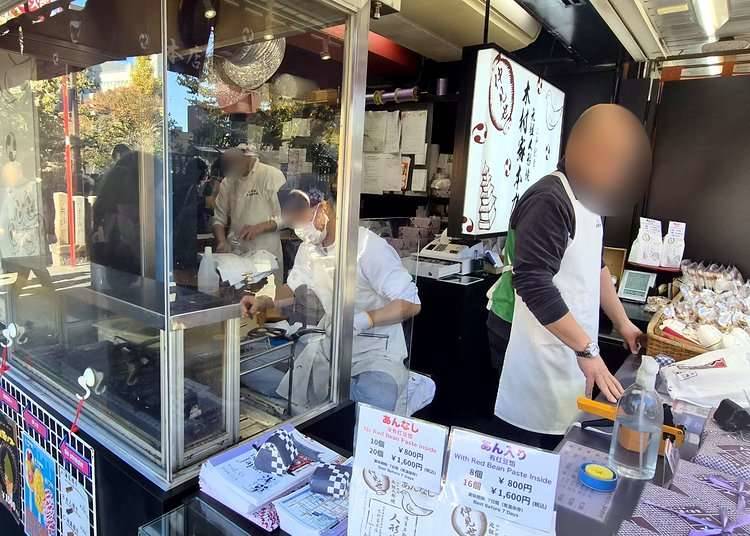
The shop is at the Sensoji end of Nakamise-dori, and you can watch them being baked behind glass. Pricing is simple: 800 yen for eight with filling, or 800 yen for ten without, and the price card says they keep 7 days. For a whole department there are big boxes of 46 for 4,800 yen and 56 for 5,800 yen.
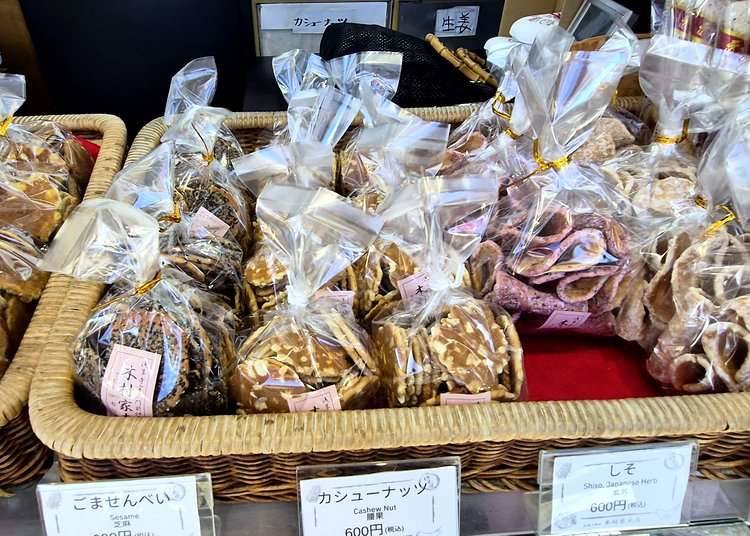
The shop also sells bagged kawara senbei, crisp roof-tile-shaped biscuits, in sesame, cashew, shiso and ginger, for 600 yen.
-
Kimuraya Honten
-
Address
2-3-1 Asakusa, Taito-ku, Tokyo (Nakamise-dori)
View map - Hours 9:00 to 18:00
- Keeps for ningyo-yaki 7 days
- Nearest station About 5 min walk from Asakusa Station (Tokyo Metro Ginza Line / Toei Asakusa Line)
-
Address
2-3-1 Asakusa, Taito-ku, Tokyo (Nakamise-dori)
Tokiwado: which Asakusa souvenir keeps longest?
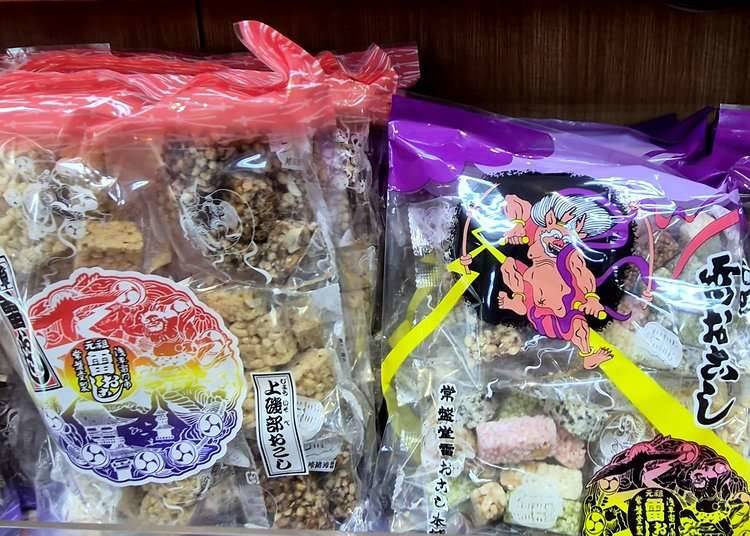
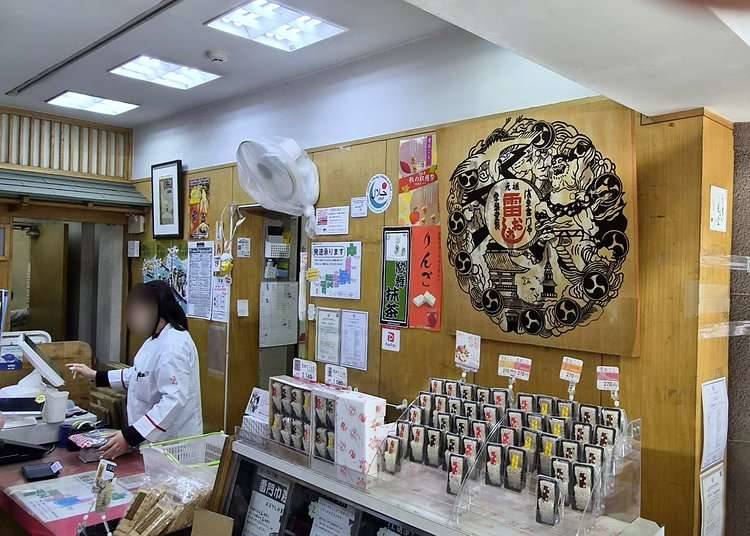
Kaminari okoshi is a crunchy block of puffed rice held together with syrup, a bit like a rice crispy bar; Tokiwado's classic version adds peanuts. "Okoshi" sounds like the Japanese word for raising up, as in raising your family's fortunes, so it has long been a lucky souvenir after visiting Sensoji.
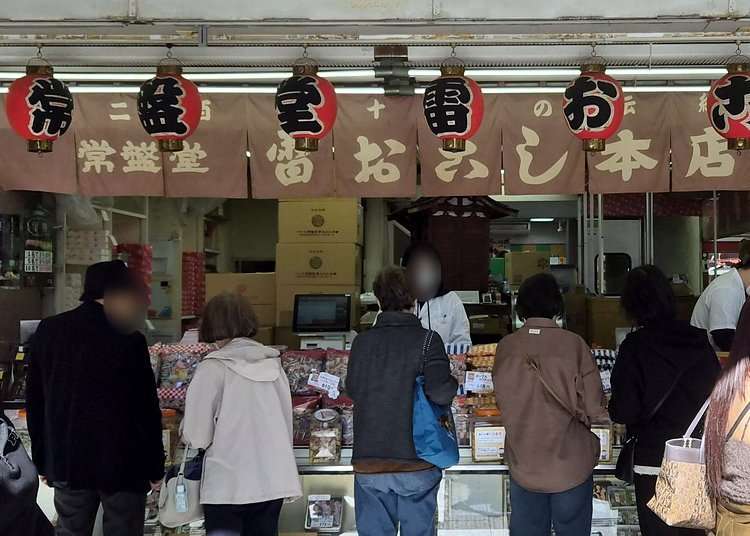
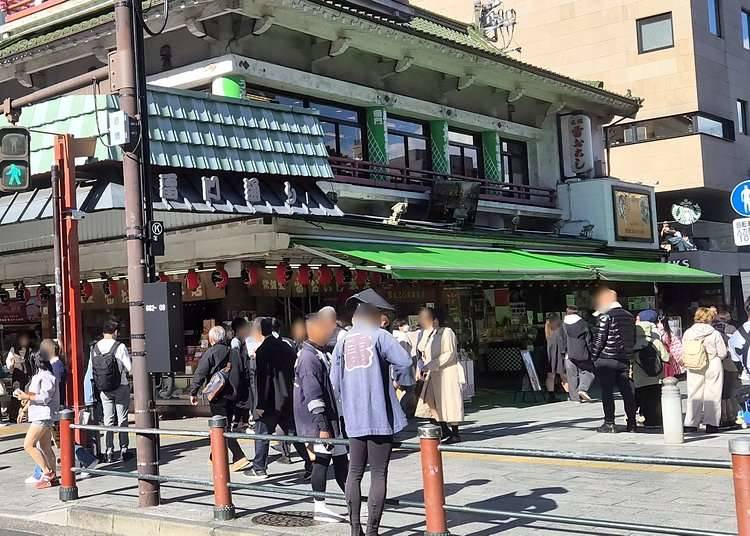
Tokiwado is on the left as you face Kaminarimon Gate and has been in business for more than 200 years. Unopened, its okoshi keeps 2 to 3 months, which makes it the best choice of these ten for taking home.
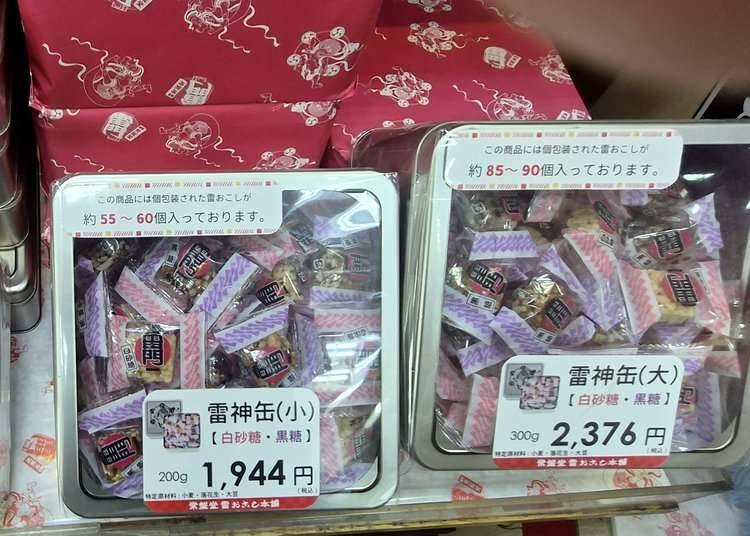
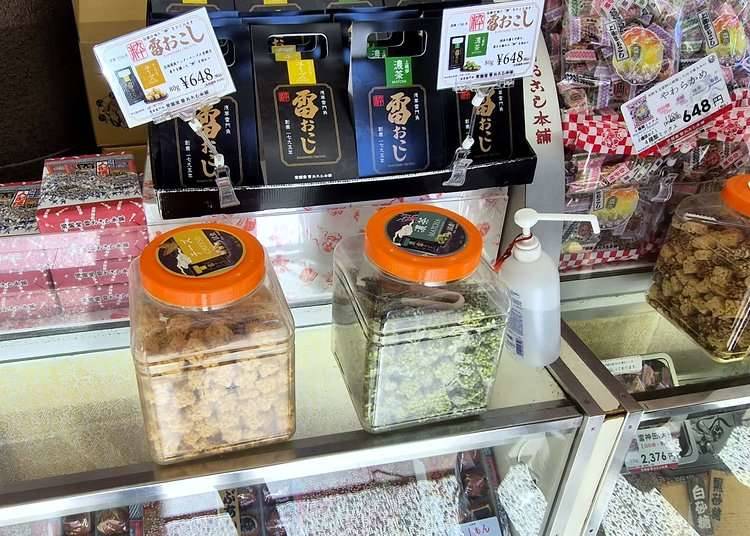
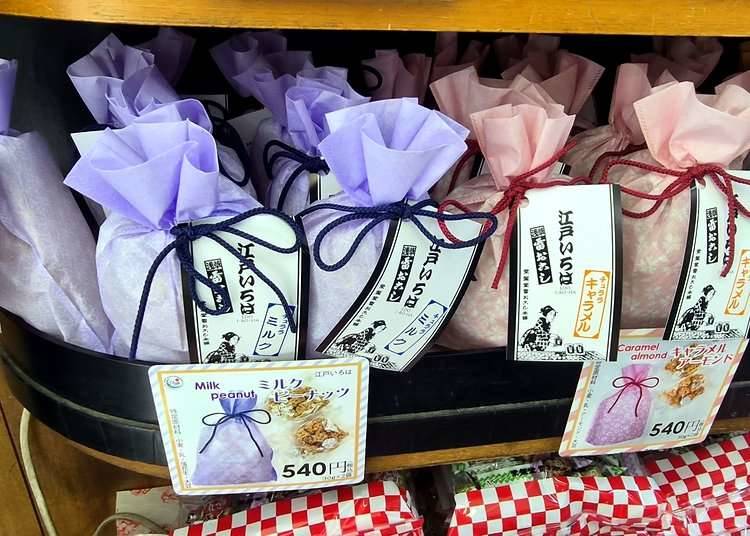
For the flight, get a Raijin can. The tin is embossed with the thunder god, the pieces inside are individually wrapped, and it won't crush in your suitcase. The shop price was 1,944 yen for 200g and 2,376 yen for 300g. For newer flavors, the Iki range comes in clear tins in cheese and rich matcha (648 yen for 80g), and Edo Iroha comes in cloth bags in flavors such as milk peanut and caramel almond (540 yen). There's a shipping counter by the register if you'd rather send it.
-
Tokiwado
-
Address
1-3-2 Asakusa, Taito-ku, Tokyo
View map - Hours 10:00 to 18:30, open every day
- Keeps for about 2 to 3 months unopened
- Note the classic version contains peanuts
- Nearest station About 2 min walk from Asakusa Station (Tokyo Metro Ginza Line / Toei Asakusa Line)
-
Address
1-3-2 Asakusa, Taito-ku, Tokyo
Want to eat it right there? Two shops to visit hot
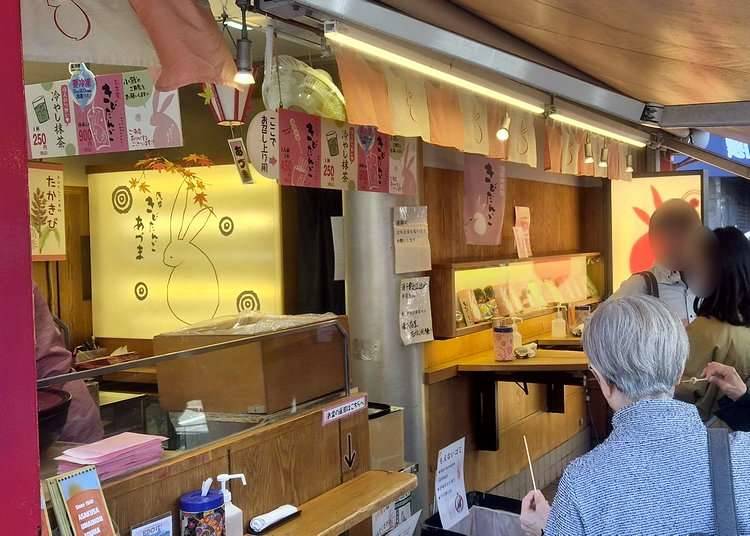
One rule first: you can't eat while walking on Nakamise-dori, and shops post signs saying so. Eat in front of the shop or in its eat-in corner, and hand your rubbish to the staff.
Asakusa Kokonoe: what to eat on the spot on Nakamise-dori
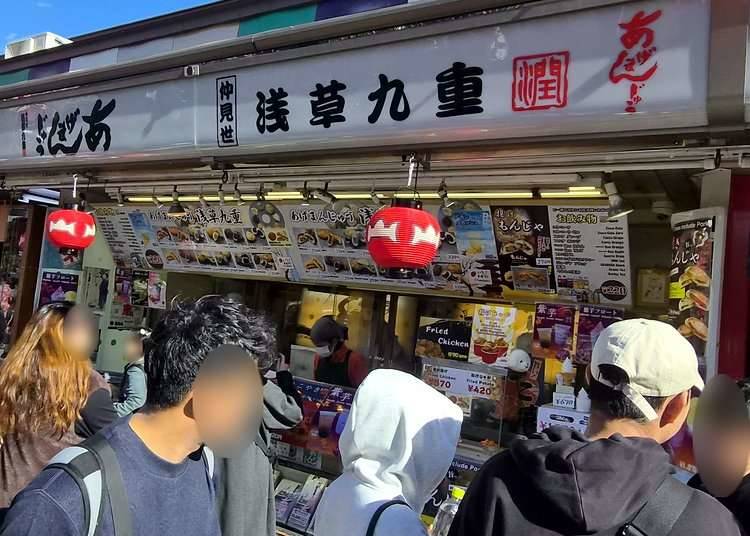
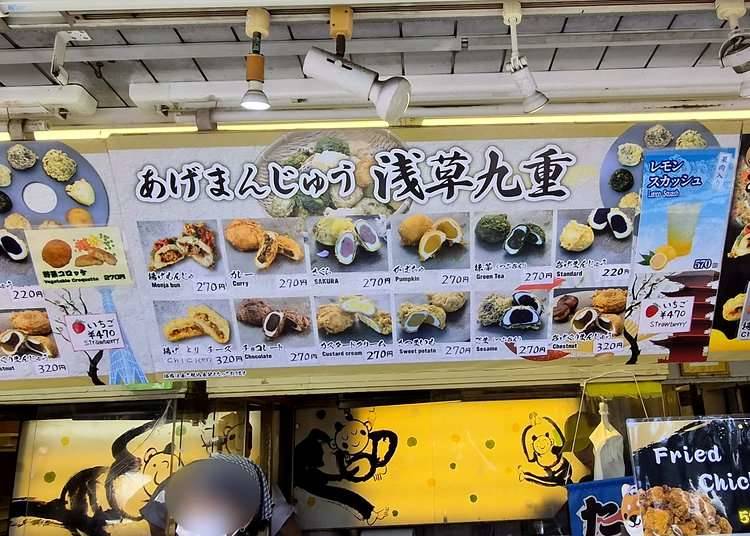
Kokonoe sells age-manju: small buns filled with sweet bean paste, coated in tempura batter and fried in sesame oil, crisp outside and soft inside. The classic smooth red bean costs 220 yen; matcha, sweet potato, pumpkin, cherry blossom, custard and other flavors are 270 to 320 yen. Eat them straight from the fryer in front of the shop. If you take them away, eat them the same day.
-
Asakusa Kokonoe
-
Address
2-3-1 Asakusa, Taito-ku, Tokyo (Nakamise-dori, Sensoji end)
View map - Hours about 9:30 to 19:00, open every day (may change in November, December and during events)
- Nearest station About 5 min walk from Asakusa Station (Tokyo Metro Ginza Line / Toei Asakusa Line)
-
Address
2-3-1 Asakusa, Taito-ku, Tokyo (Nakamise-dori, Sensoji end)
Asakusa Mangando: one thing to eat now, another to take home
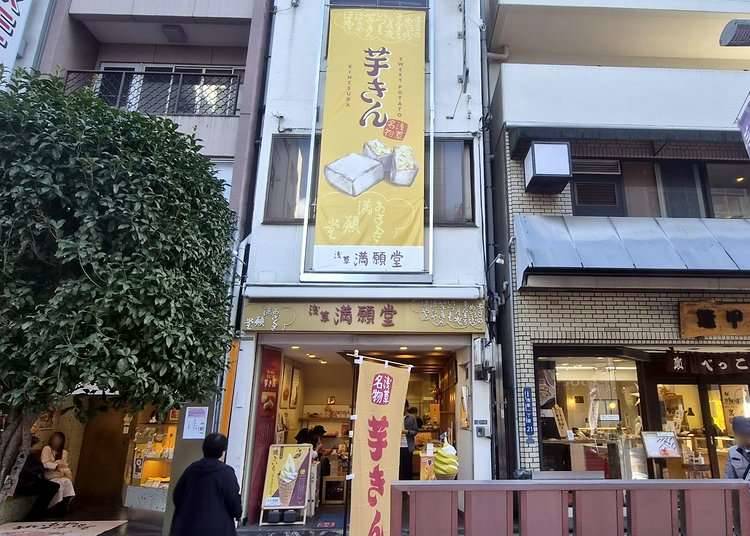
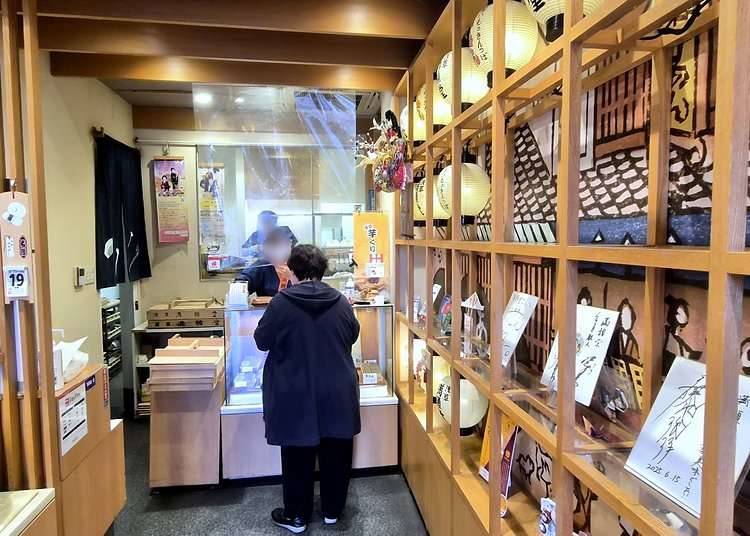
Mangando's specialty is imokin, a sweet potato kintsuba. Kintsuba is a square sweet with a filling coated in very thin batter and grilled on each side. Fresh from the griddle, the outside is toasty and the inside soft. At the main store on Orange-dori you can buy them one at a time.
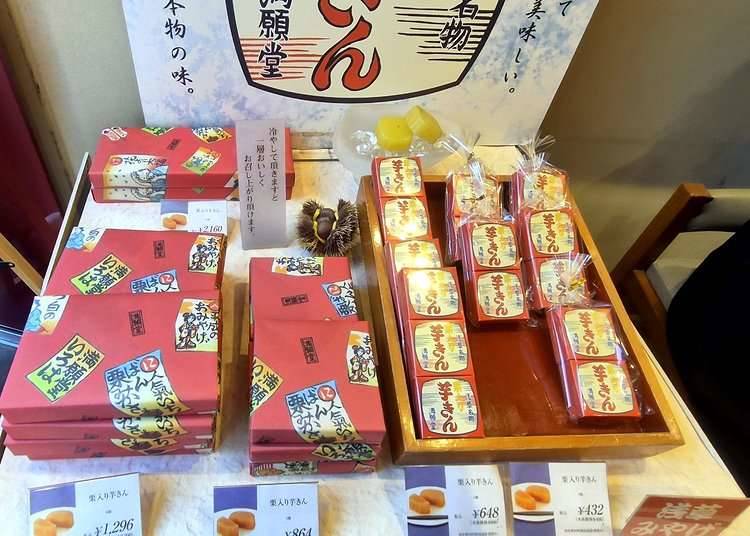
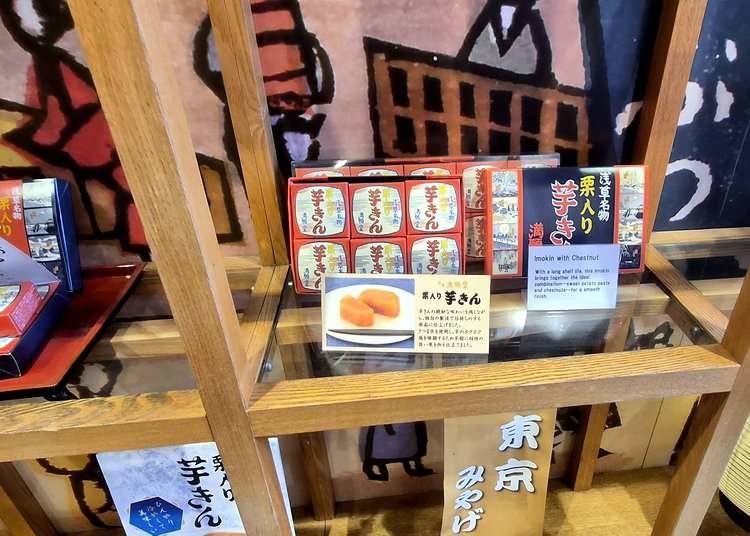
For taking home, switch to usukawa imokin, the thin-skin version, which keeps about 30 days, or kuri-iri imokin with chestnut; the English card on the shelf also recommends it as a gift. Both cost 1,296 yen for six, and there are small boxes of two for 432 yen and three for 648 yen. A sign in the shop says they taste even better chilled.
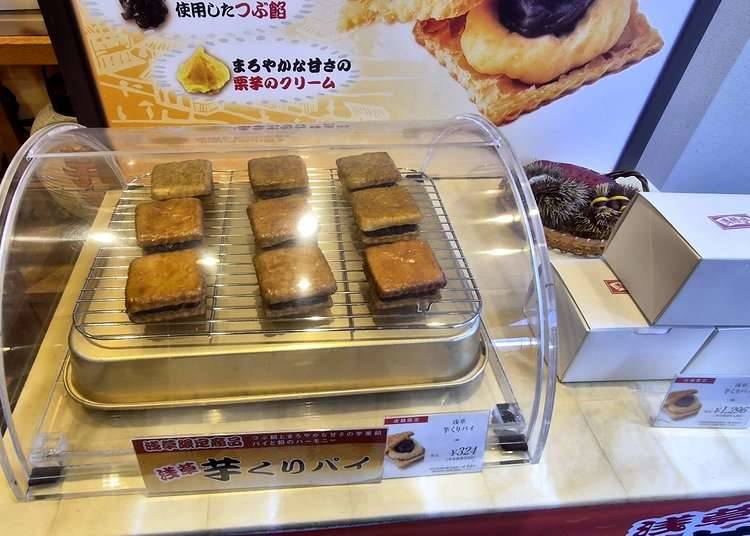
The Asakusa-only imokuri pie, filled with red bean and chestnut-sweet potato cream, is 324 yen.
-
Asakusa Mangando
-
Address
1-21-5 Asakusa, Taito-ku, Tokyo
View map - Hours 10:00 to 18:00
- Closed Tuesdays
- Keeps for usukawa imokin about 30 days
- Nearest station About 4 min walk from Asakusa Station (Tokyo Metro Ginza Line / Toei Asakusa Line)
-
Address
1-21-5 Asakusa, Taito-ku, Tokyo
Not a fan of sweets?
Izumiya Honten: a cute souvenir that isn't sweet
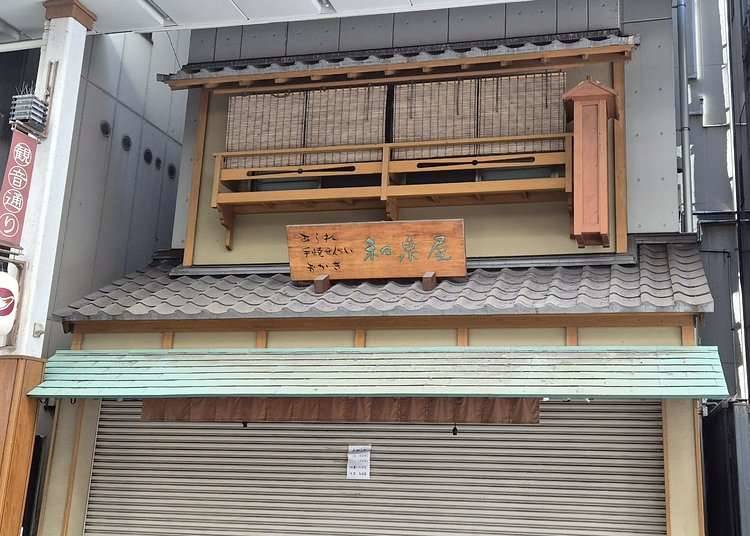
Senbei are Japanese rice crackers. Izumiya has been making them since 1940 in the Kannon-dori shopping arcade near Kaminarimon Gate. Its best-known product is neko senbei: each cracker has a cat's face, modeled on cats the shop once kept. Flavors include soy sauce, nori and coarse sugar, plus wasabi, black sesame and matcha sugar. The small size comes in a lidded jar that looks good on a desk.
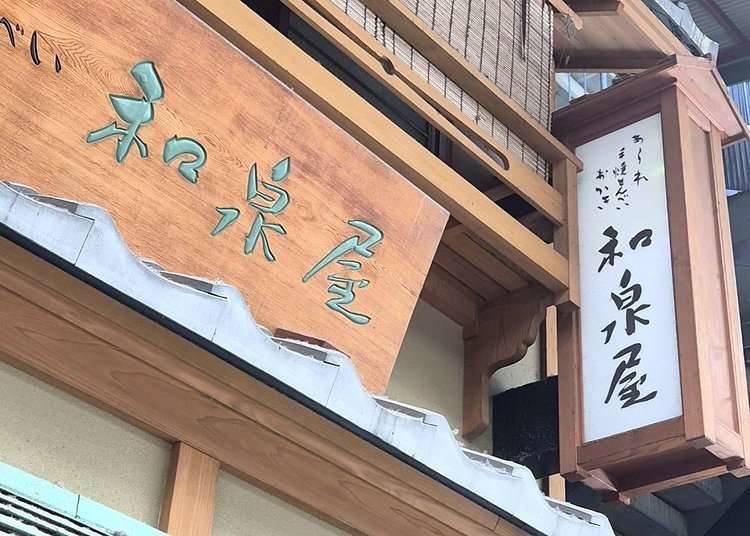
It closes more often than most shops. When I went on November 19 it was a closing day, so I could only photograph the outside. Check before you go.
-
Izumiya Honten
-
Address
1-1-4 Asakusa, Taito-ku, Tokyo
View map - Hours 11:00 to 18:30
- Closed Wednesdays and Thursdays (check the shop's notices)
- Nearest station About 1 min walk from Asakusa Station (Tokyo Metro Ginza Line / Toei Asakusa Line)
-
Address
1-1-4 Asakusa, Taito-ku, Tokyo
Ichibanya: try one before you buy a bag
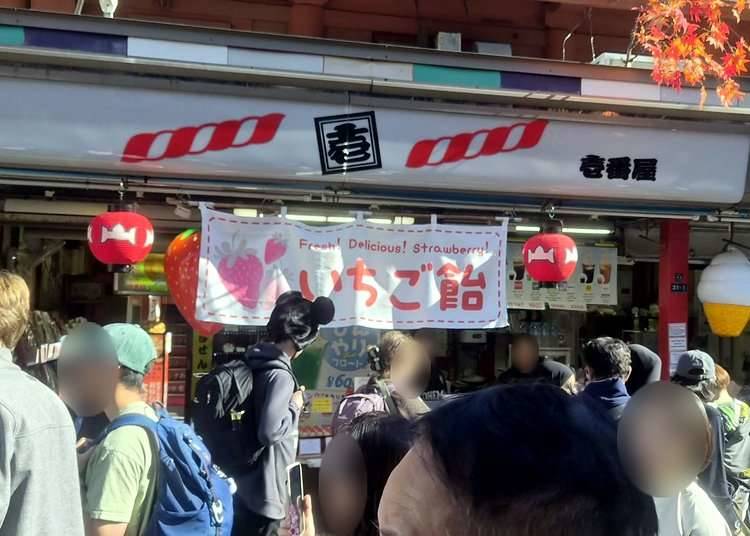
Ichibanya opened in 1884, halfway along Nakamise-dori, and sells its hand-grilled senbei one at a time, so you can taste before buying a bag. At weekends a craftsman often grills soy sauce senbei over charcoal at the front, drying them before they're bagged. The okogesen, light crackers made from glutinous rice, go well with beer.
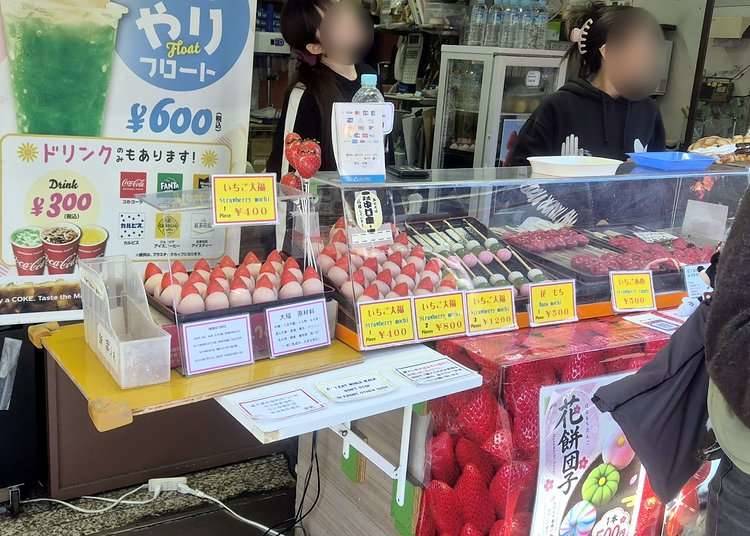
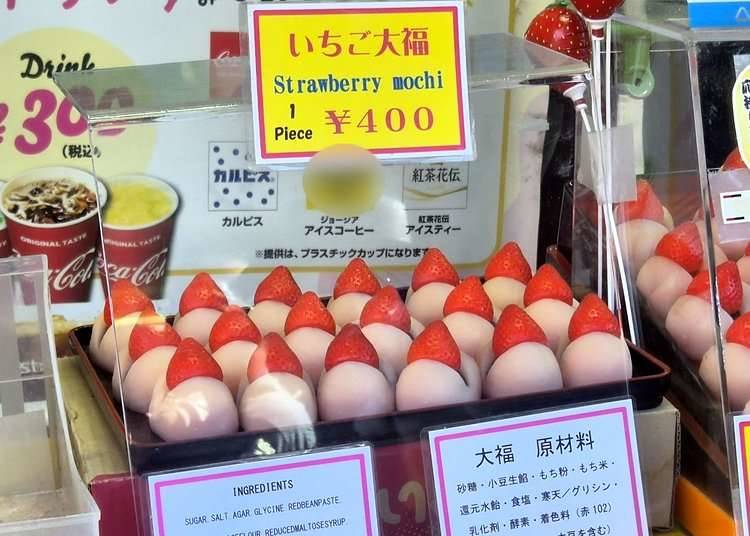
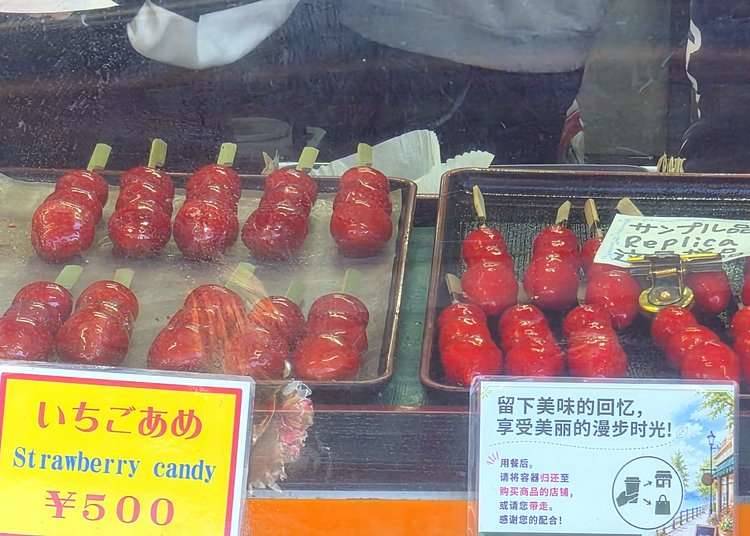
When I visited in November, the front counter also had seasonal strawberry daifuku (400 yen) and candied strawberries (500 yen); the tray marked "sample" is for display only.
-
Ichibanya
-
Address
1-31-1 Asakusa, Taito-ku, Tokyo (Nakamise-dori)
View map - Hours about 9:00 to 18:00 (until about 19:00 on Saturdays and Sundays), open every day
- Nearest station About 3 min walk from Asakusa Station (Tokyo Metro Ginza Line / Toei Asakusa Line)
-
Address
1-31-1 Asakusa, Taito-ku, Tokyo (Nakamise-dori)
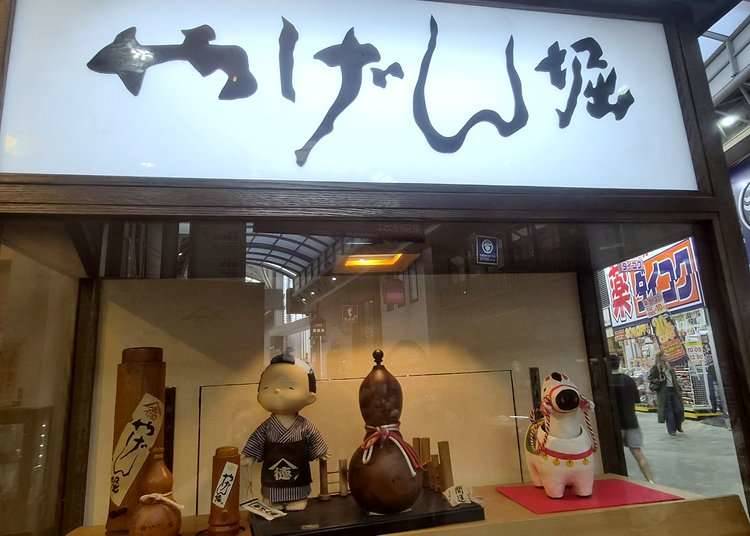
Yagenbori: a souvenir you can only get in Asakusa
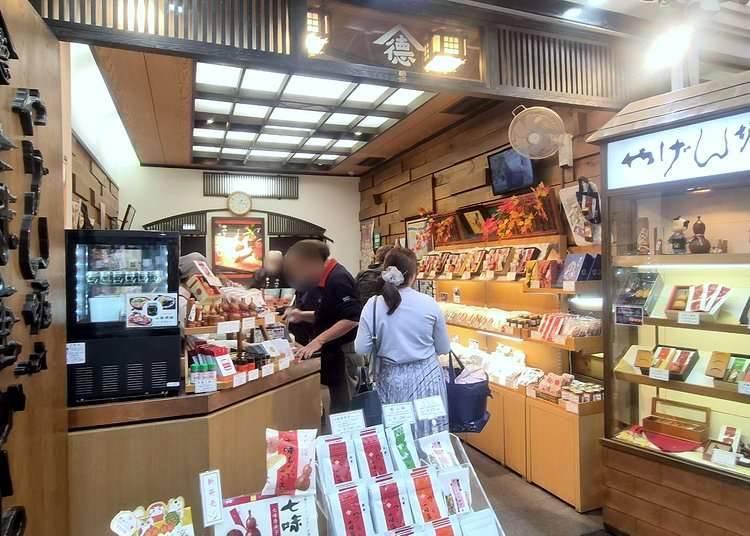
Shichimi togarashi is a seven-ingredient chili blend that people in Japan sprinkle on udon, soba and yakitori. Yagenbori was founded in 1625, and the blend is said to have been created by its first owner.
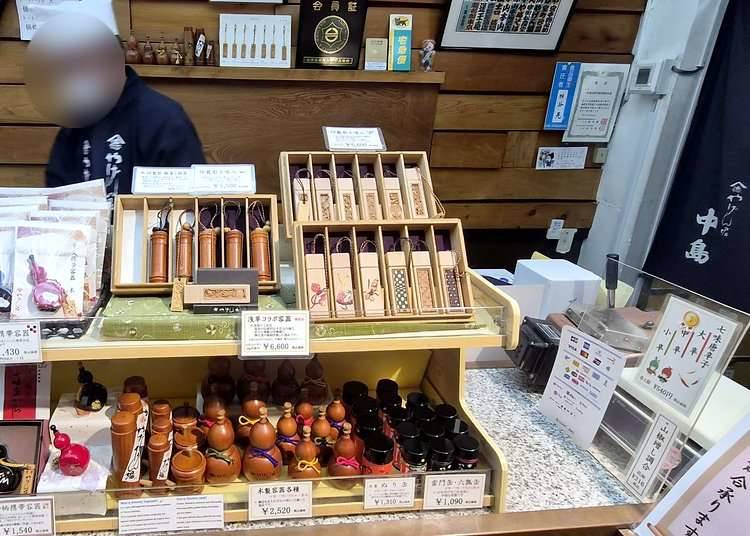
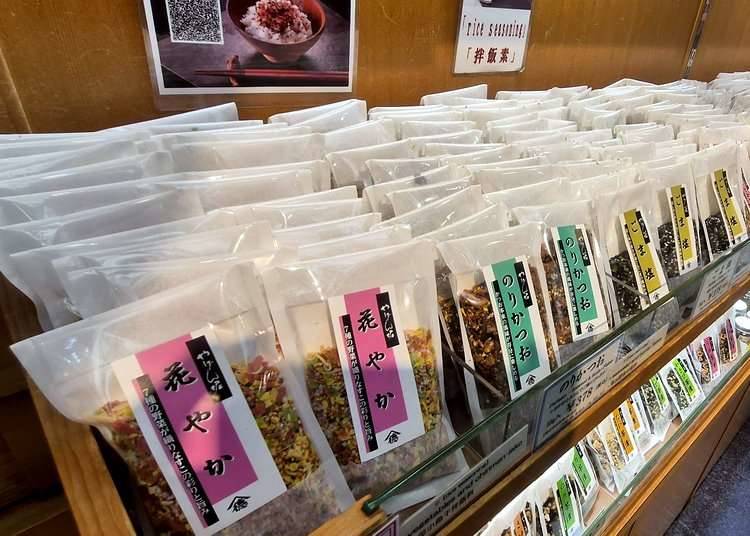
A sign on the counter says blends are made to order. Tell the staff whether you want mild, medium or hot, and which flavors you'd like more of, and they'll mix raw and roasted chili, poppy seeds, hemp seeds, sansho pepper, sesame and dried citrus peel in front of you. Mild, medium and hot are all 540 yen a bag and keep about 90 days. It's light and takes up almost no room in a suitcase.
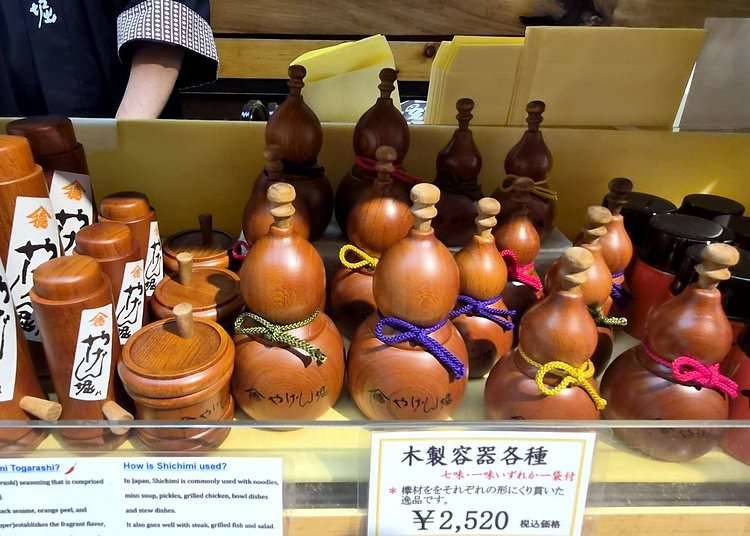
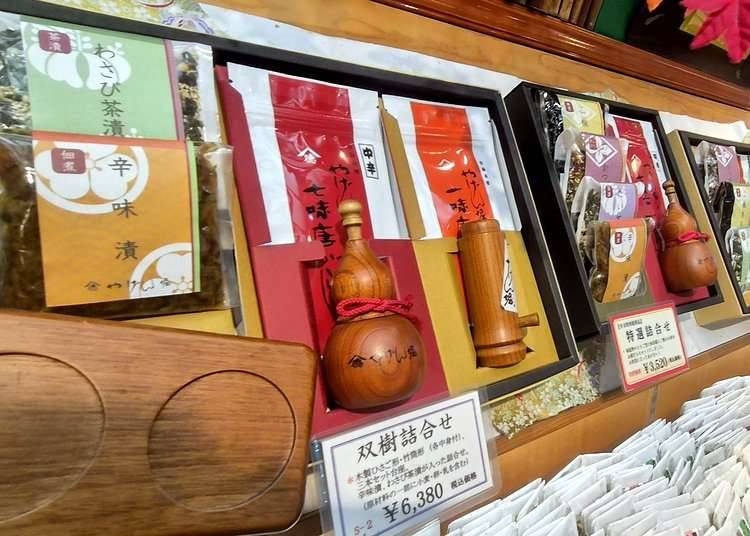
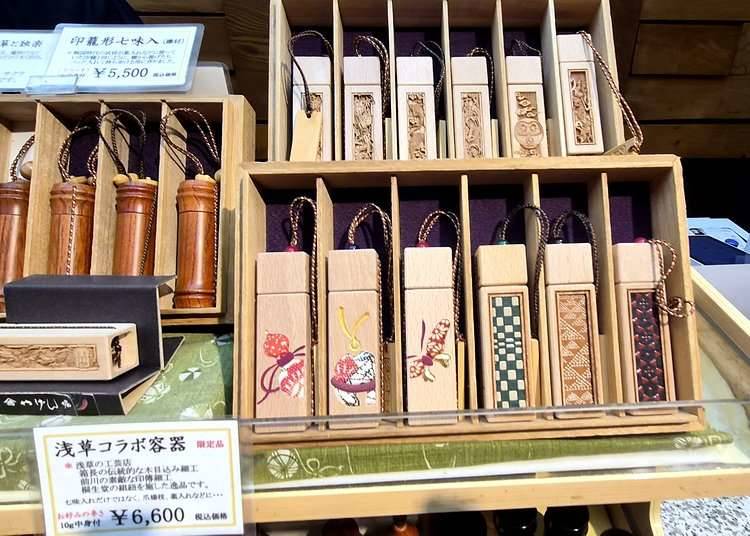
For a more formal gift, there are wooden gourd and bamboo containers (2,520 yen with a bag of shichimi) and a gift set with containers, shichimi and pickles (6,380 yen). An Asakusa-only container was 6,600 yen.
-
Yagenbori
-
Address
1-28-3 Asakusa, Taito-ku, Tokyo (Shin-Nakamise shopping street)
View map - Hours 10:00 to 18:00
- Note shichimi contains poppy seeds and hemp seeds, which some countries restrict. Check your home country's rules before you buy.
- Nearest station About 5 min walk from Asakusa Station (Tokyo Metro Ginza Line / Toei Asakusa Line)
-
Address
1-28-3 Asakusa, Taito-ku, Tokyo (Shin-Nakamise shopping street)
Bonus: treats you can only eat in Asakusa
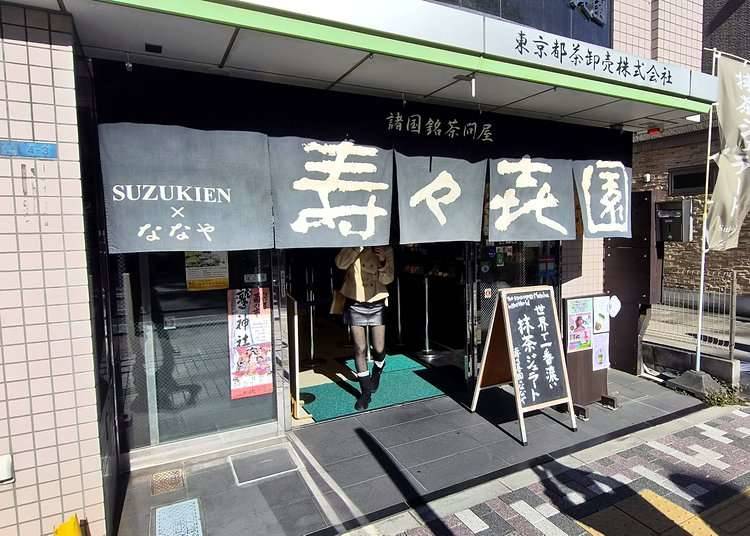
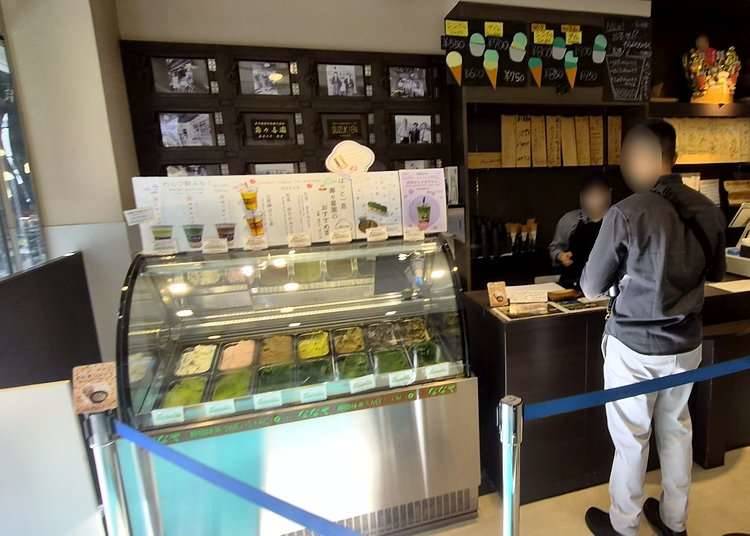
・Suzukien (壽々喜園) matcha gelato: a tea wholesaler selling gelato from Nanaya, a matcha sweets shop in Fujieda, Shizuoka. The matcha comes in seven strengths, No.1 to No.7, and the sign outside calls No.7 the world's richest matcha gelato. It's noticeably bitter. 3-4-3 Asakusa, 11:00 to 17:00, irregular closing days.
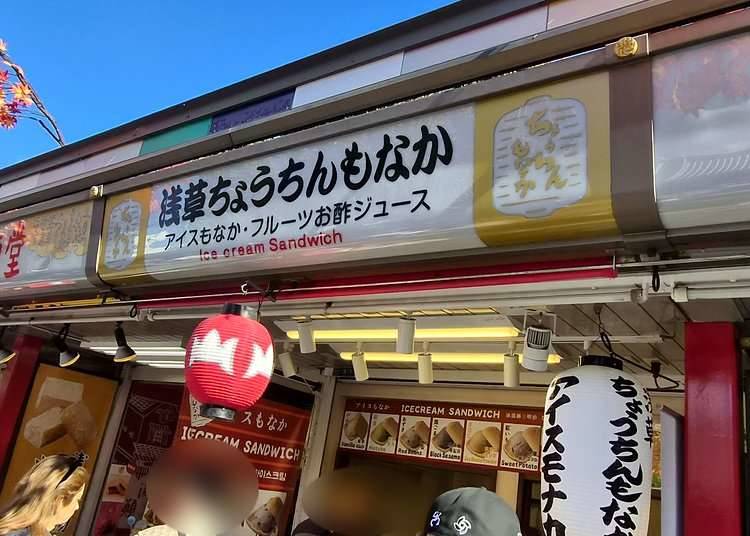
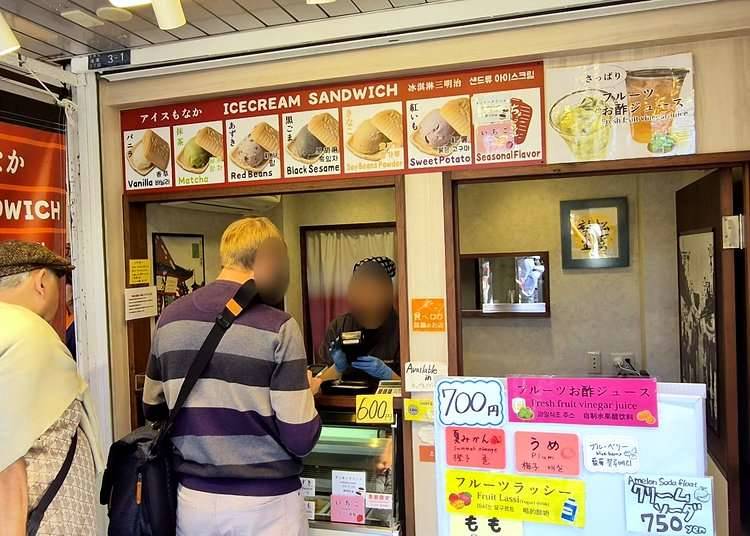
・Asakusa Chochin Monaka (浅草ちょうちんもなか): monaka is a crisp rice wafer shell. Here it's shaped like Kaminarimon's giant lantern and filled with ice cream: vanilla, matcha, red bean, black sesame, roasted soybean flour, purple sweet potato and a seasonal flavor. 2-3-1 Asakusa (Nakamise-dori), about 10:00 to 17:30, irregular closing days.
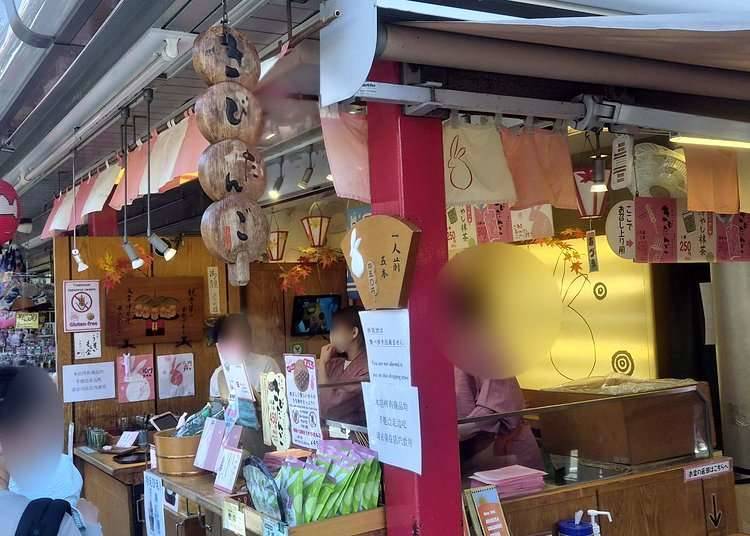
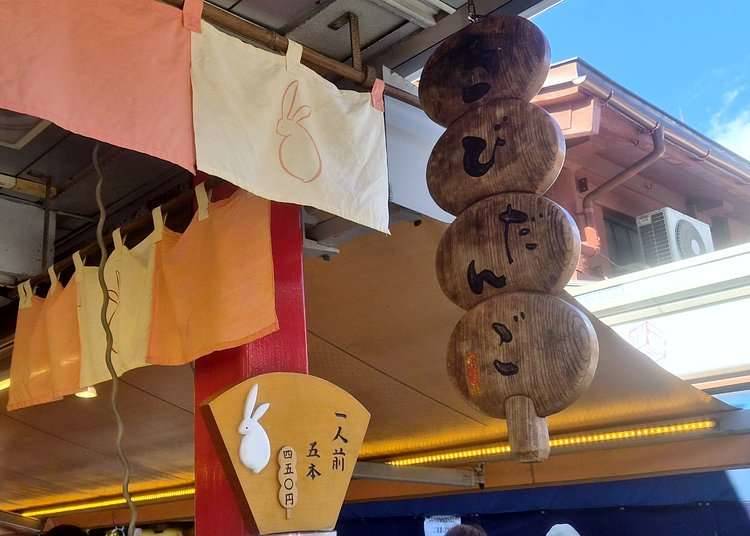
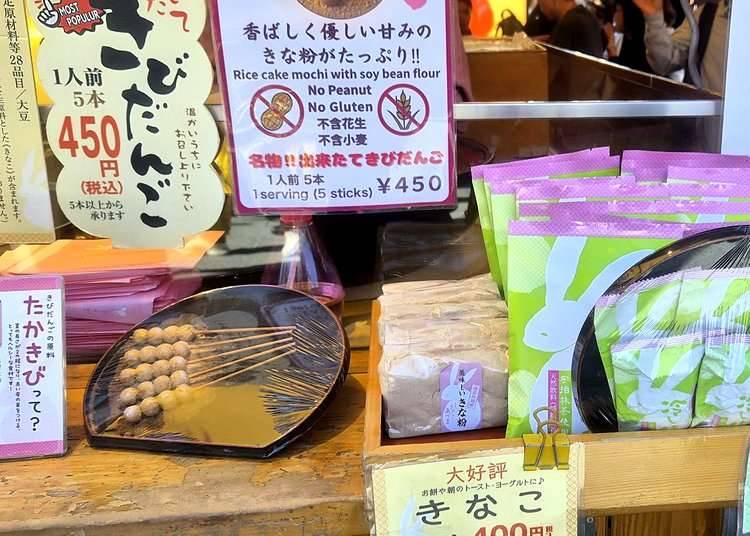
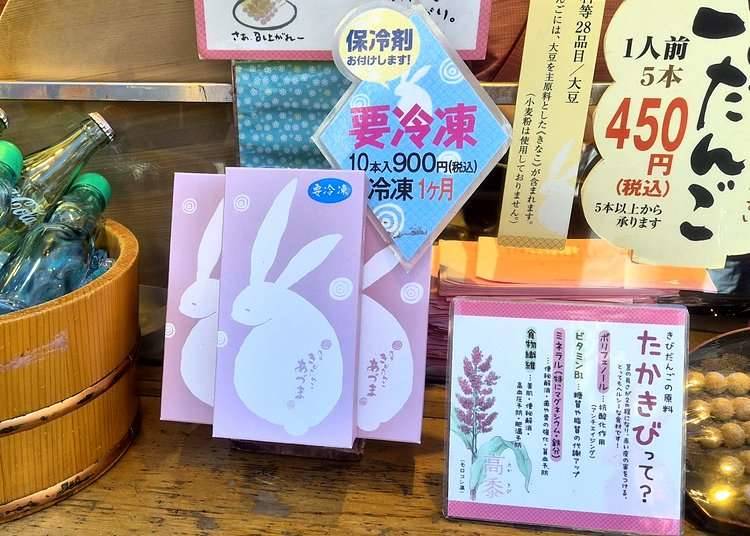
・Asakusa Kibidango Azuma (浅草きびだんご あづま): small millet dumplings boiled in front of you and rolled in roasted soybean flour, 450 yen for five skewers, made without peanuts or wheat. A frozen gift box of ten skewers costs 900 yen and keeps a month in the freezer, with an ice pack. 1-18-1 Asakusa, 9:30 to 19:00, closes when sold out.
How to see them all in one walk
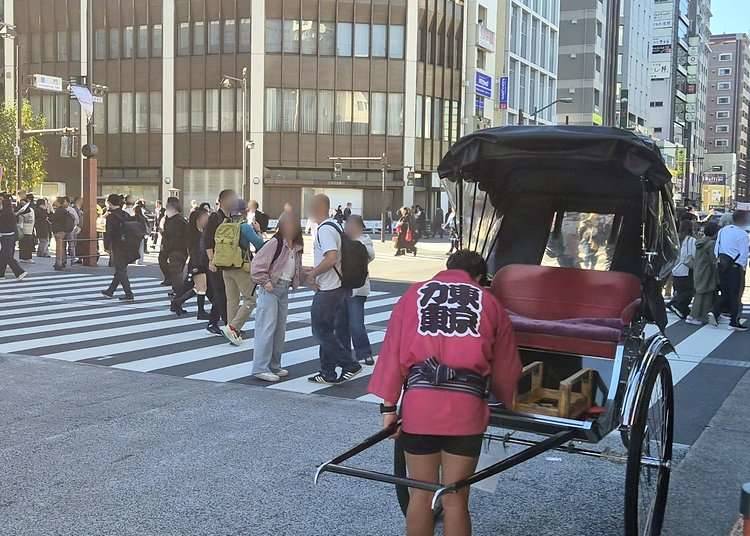
From Asakusa Station on the Ginza or Toei Asakusa Line, start at Kaminarimon. Tokiwado is to the left of the gate, Kameju is diagonally across the road, and Izumiya is on Kannon-dori near the station. Then walk up Nakamise-dori toward the temple: Azuma and Ichibanya are along the way, and Kimuraya Honten, Kokonoe and Chochin Monaka are at the temple end. Umezono, Yagenbori on Shin-Nakamise, Funawa Honten and Mangando on Orange-dori are all in the lanes west of Nakamise-dori, a few minutes' walk from each other. Suzukien is north of the temple, so make a detour if you want matcha gelato. Allow two to three hours including queues and shopping.
Frequently asked questions
- Q Which Asakusa souvenirs can I take home?
- A Tokiwado's kaminari okoshi keeps longest, 2 to 3 months unopened. Yagenbori's shichimi keeps about 90 days and Mangando's usukawa imokin about 30 days. Funawa's ningyo-yaki keep about 2 weeks and Kimuraya's 7 days, enough for a short trip. Kameju's dorayaki keep 3 days and Funawa's imo-yokan must be refrigerated, so enjoy those in Japan.
- Q What should I buy for 10 colleagues, and how much will it cost?
- A The easiest is Kimuraya Honten's ningyo-yaki: 800 yen for eight, so two bags (1,600 yen) cover ten people. If you want each piece individually wrapped, get a Raijin can of kaminari okoshi from Tokiwado or a small box of imokin from Mangando.
- Q How long is the line at Kameju?
- A There's a line most of the day, usually 10 to 20 minutes on weekdays and longer on weekends and holidays.
- Q Can I take shichimi home?
- A It contains poppy seeds and hemp seeds, which some countries don't allow in. Check the rules where you live before you leave.
- Q Can I eat while walking on Nakamise-dori?
- A No. Eat in front of the shop or in its eat-in corner, then walk on.
- Q What time do the shops on Nakamise-dori close?
- A Most close around 18:00 to 19:00. Kimuraya Honten closes at 18:00 and Kokonoe around 19:00. If you want to browse at leisure, go in the early afternoon.
- Q How does tax-free shopping work in Japan from November 2026?
- A Since November 1, 2026, Japan uses a refund system. At tax-free shops you pay the full price including tax, then get the consumption tax back after customs checks your purchases at the airport when you leave. Do the customs check before you check in your bags. Most of Asakusa's old sweet shops don't offer tax-free shopping, so ask at each one.
About the author: Yang Yang
Yang Yang works at Gurunavi, which has run the Japanese restaurant search site "Gurunavi" (now "Rakuten Gurunavi") since 1996 and also operates LIVE JAPAN, a travel information service for visitors to Japan. In the souvenir field, Gurunavi also runs "Settai no Temiyage," a site where working executive assistants choose gifts for business occasions.
Yang previously ran a Japanese snack e-commerce business and knows the flavors, shelf life and packaging of many brands well. For this Asakusa guide, Yang chose shops by the same standards used when buying souvenirs: it should taste good, keep well, be easy to share, and ideally come with a story worth telling.
*Prices and options mentioned are subject to change.
*Unless stated otherwise, all prices include tax.
Popular Tours & Activities
Recommended places for you
-
Goods
Yoshida Gennojo-Roho Kyoto Buddhist Altars
Gift Shops
Nijo Castle, Kyoto Imperial Palace
-

LakeAkan
Rivers, Lakes & Canyons
Abashiri
-
Appealing

Rukku and Uohei
Izakaya
Sapporo / Chitose
-

ISHIDAYA Hanare
Yakiniku
Kobe, Sannomiya, Kitano
-

Jukuseiniku-to Namamottsuarera Nikubaru Italian Nikutaria Sannomiya
Izakaya
Kobe, Sannomiya, Kitano
-

Kiyomizu-dera Temple
Temples
Gion, Kawaramachi, Kiyomizu-dera Temple
-

Don Quijote (Donki) Tax Refund from Nov 1, 2026: No Refund Service Fee
-
[Starting Spring 2027] Japan's Railways Evolve Further! Why Tickets Are Changing to "QR Tickets" and a Riding Guide for Foreign Visitors
by: Guest Contributor
-
5 Japanese Craft Shops in Shinjuku: From Walls of Kokeshi Dolls to Artisan Teapots
-
(Japan Travel Etiquette) Eyes Up! Why You Shouldn't Walk and Scroll in Japanese Train Stations
by: Guest Contributor
-
Where to Buy Japanese Knives in Tokyo: How to Choose One, and 5 Kappabashi Knife Shops I Visited (November 2026)
-
Ikebukuro Anime & Character Walking Route: A Half-Day Oshikatsu Guide
by: Ran Tanaka
-

Inside Kobe Tower: Fun Things to Do at the Symbol of Kobe
-

Shirakami-Sanchi Guide: Hiking in Japan's Intense & Untouched Beech Forest (Aomori)
-

Must-try Regional Hokkaido Foods: Robatayaki, Jingisukan & More
-

Checking out Restaurant Zauo - The Quirky Tokyo Restaurant Where You Catch Your Own Fish!
-

Where to Stay in Otaru: Hotels & Guide for First-Time Visitors
by: Andy Cheng
-

Sapporo New Chitose Airport (CTS): Complete Guide to Restaurants, Souvenirs, Shopping & More!
- #best sushi japan
- #what to do in odaiba
- #what to bring to japan
- #new years in tokyo
- #best ramen japan
- #what to buy in ameyoko
- #japanese nail trends
- #things to do japan
- #onsen tattoo friendly tokyo
- #daiso
- #best coffee japan
- #best japanese soft drinks
- #best yakiniku japan
- #japanese fashion culture
- #japanese convenience store snacks