




Driving in Japan Guide: Essential Road Rules, Signs, and Parking Tips for Beginners
- Written by: LIVE JAPAN Editor
Japan’s rail system is incredibly convenient, but renting a car opens up places that trains cannot easily reach. From Hokkaido’s vast scenery and Okinawa’s coastal roads to quiet rural areas in Tohoku, driving lets you travel at your own pace without worrying about schedules or carrying luggage between stations.
It is normal to feel unsure if you are used to driving on the opposite side of the road. Many travelers wonder whether they will adapt to right-hand drive, understand Japanese road signs, or avoid costly fines. These concerns are common, especially for first-time drivers in Japan.
This guide is based on the latest information from the Japan Automobile Federation and the National Police Agency, and covers what you need to know for driving in Japan in 2026. We explain key rules that must never be broken, such as alcohol and mobile phone restrictions, and clearly walk through how Japan’s two main types of parking facilities work. With these basics in mind, even first-time visitors can drive in Japan with confidence and peace of mind.
(Main image: PIXTA)
(This article includes affiliate links)
- Table of Contents
-
- Driving in Japan: Laws and Essential Driving Etiquette
- Required Documents Before You Go: Do You Need an International Driving Permit or a Japanese Translation?
- Know These by Sight: 3 Japanese Road Signs You Must Never Ignore
- Parking in Japan: Know the Difference Between Lock-Plate and Gate-Type Lots
- Type A: Lock-Plate (Flap) Type
- Practical Skills: Using Self-Service Gas Stations and Expressway ETC
- Emergency Situations: What to Do If You Have an Accident in Japan
- Final Checklist for Driving in Japan
Driving in Japan: Laws and Essential Driving Etiquette
When driving in Japan, the first adjustment is right-hand drive with left-side traffic. Beyond that key difference, Japan strictly enforces its traffic laws and follows distinct driving customs, all of which are important to understand before getting behind the wheel.
Three Absolute No-Gos When Driving in Japan
1. Driving without valid documents is strictly prohibited
This sounds basic, but it is one of the most common mistakes visitors make. Japan does not allow direct use of Taiwanese or Mainland China driver’s licenses. Taiwan license holders must carry an official Japanese translation, while Hong Kong drivers must have an International Driving Permit (IDP).
Key point: Always carry all three documents together: your passport, home-country driver’s license, and IDP or Japanese translation. If you cannot present even one of them during a police check, it is treated as unlicensed driving, which can result in heavy fines, trip disruption, and possible criminal penalties.
2. Drunk driving is zero tolerance, and passengers are also liable
Japan enforces extremely strict drunk-driving laws. The alcohol limit is so low that even one beer can put you over.
Important: Japan applies joint liability. Anyone who provided alcohol, as well as passengers who knowingly ride with a drunk driver, can also be fined. If you plan to drink, use a designated driver service (unten daikō) or take a taxi instead.
3. No mobile phone use while driving
Penalties for distracted driving have been significantly increased in recent years.
Rule: Using a handheld phone while driving, including at red lights, is illegal. This includes calling, checking maps, or messaging. If you need to set navigation, pull over safely, such as at a convenience store parking lot. Voice navigation systems are strongly recommended to stay compliant and safe.
Driving Etiquette Unique to Japan
1. Avoid using the horn
In some countries, honking is a normal way to communicate. In Japan, it is considered rude and can even feel aggressive.
・When is it acceptable? Only in situations where there is an immediate risk of a collision. Do not use the horn to hurry another car or as a greeting.
2. The hidden meaning of hazard lights
In Japan, flashing the hazard lights does not always mean trouble. It often means “thank you,” commonly called the thank-you hazard.
・Typical situation: If another driver slows down to let you change lanes, it is polite to flash your hazard lights two or three times to show appreciation. This small gesture is widely understood and helps keep driving interactions friendly.
3. Keep a safe following distance
Traffic often flows smoothly, sometimes slightly faster than the posted speed limit, but drivers generally follow the rules. Always maintain enough distance from the car ahead to avoid sudden braking and rear-end collisions.
This is especially important in Hokkaido and mountainous areas, where wildlife may suddenly enter the road. Keeping your distance is one of the best ways to stay safe.
Required Documents Before You Go: Do You Need an International Driving Permit or a Japanese Translation?
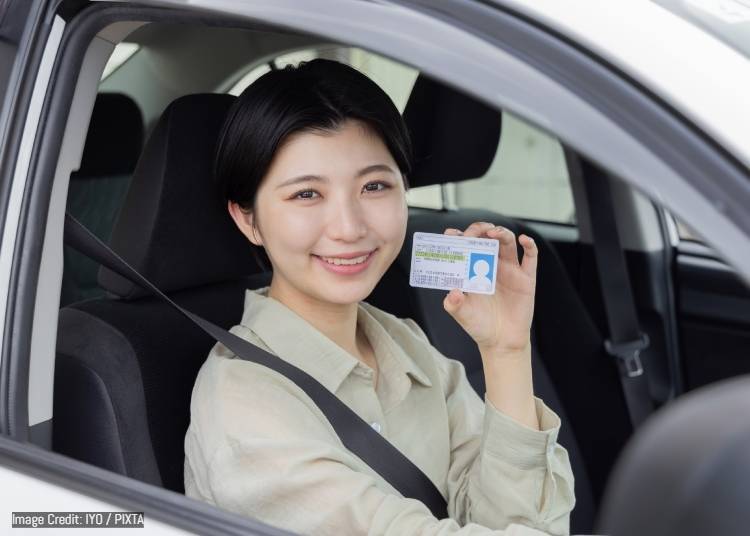
One of the most common problems when renting a car in Japan is bringing the wrong documents. Japan applies different rules depending on where your driver’s license was issued, so it is essential to confirm which documents you need in advance. If you arrive with incorrect paperwork, the rental company can refuse to release the car and may not issue a refund.
Case A: Drivers from 1949 Geneva Convention Countries ➔ International Driving Permit (IDP) Required
If your driver’s license was issued in a country that is a party to the 1949 Geneva Convention on Road Traffic, you must use an International Driving Permit (IDP) to drive in Japan. A Japanese translation is not accepted for these licenses. Japan only recognizes IDPs issued under the 1949 Geneva Convention.
Required documents (all are mandatory):
(1) Passport
(2) Original driver’s license from your home country
(3) International Driving Permit (IDP)
Important notes:
・Convention format: Your IDP must clearly state “1949 Convention” on the cover. IDPs issued under the 1968 Vienna Convention are not valid in Japan.
・Vehicle class: When renting a standard passenger car, confirm that the Class B (private vehicle) section inside the IDP is stamped.
・No local issuance: IDPs cannot be issued or replaced in Japan. If you arrive without one, you will not be able to rent a car.
Countries that typically fall under this category
Drivers from the following regions generally require an IDP to drive in Japan. This list is not exhaustive, so always check with the issuing authority in your country before traveling.
・Americas: United States, Canada, Argentina, Chile, Peru, Venezuela, and others
・Asia / Pacific: Australia, India, Philippines, Thailand, Malaysia, Sri Lanka, Cambodia, Laos, Fiji
・Europe: United Kingdom, France, Italy, Spain, Germany, Netherlands, Switzerland, Nordic countries, and many others
・Africa / Middle East: South Africa, Egypt, Nigeria, Tunisia, Lebanon, Bahrain, and others
If your country issues a 1949 Geneva Convention IDP, obtaining it before departure is essential for driving legally and smoothly in Japan.
Case B: Licenses from Certain European Countries ➔ Japanese Translation Required
If your driver’s license was issued in one of the seven countries listed below, the rules are the same as for Taiwan. An International Driving Permit cannot be used. You must carry an official Japanese translation of your license.
・Eligible countries: Switzerland, Germany, France, Belgium, Slovenia, Monaco, Estonia
・How to apply: The Japanese translation is typically issued by the country’s diplomatic mission in Japan or by the Japan Automobile Federation.
Without the official Japanese translation, rental companies in Japan will refuse to release a vehicle. Always confirm your documents before departure.
Quick Summary: What Documents Do I Need?
・If your license is from a 1949 Geneva Convention country (for example, the United States, Canada, Australia, Malaysia, Singapore): bring your International Driving Permit (IDP) + original driver’s license + passport.
・If your license is from Taiwan: bring the official Japanese translation + original Taiwan license + passport. Do not bring an IDP.
・If your license is from certain European countries (such as Germany, France, or Switzerland): bring the official Japanese translation + original license + passport.
When in doubt, always confirm your license category before departure. Bringing the wrong documents can mean being unable to rent a car in Japan.
Know These by Sight: 3 Japanese Road Signs You Must Never Ignore
Most road signs in Japan follow international standards, but a few key signs work differently than drivers expect. To protect both your safety and your wallet, make sure you remember the three “gotchas” below.
1. The inverted red triangle “STOP” sign (止まれ)
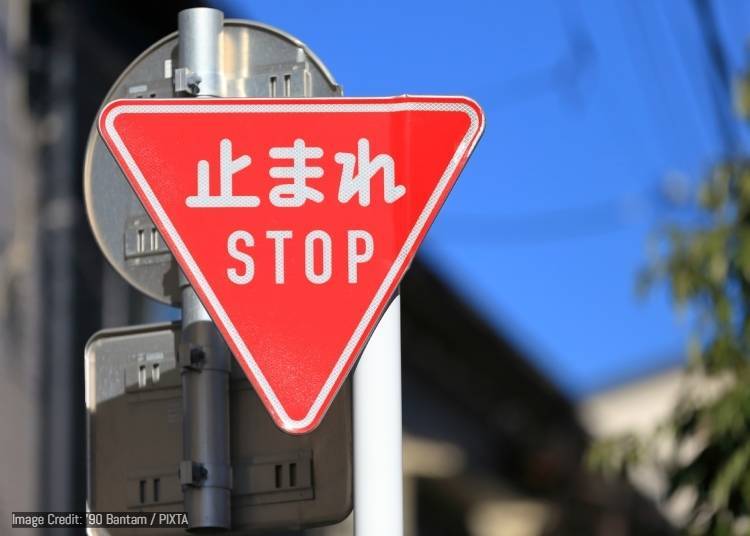
This is the number one reason foreign drivers get ticketed in Japan.
・What it looks like: A red inverted triangle with white Japanese text reading 止まれ. Some newer signs also include “STOP” in English. Unlike the octagonal stop signs used in many countries, the shape is the biggest clue.
・What to do: Your vehicle must come to a complete stop. The wheels must fully stop turning.
・Official guidance: Count 1, 2, 3 in your head, check carefully for cars and pedestrians, then proceed.
・Common trap: Simply slowing down and rolling through counts as a violation and is treated like running a red light. Fines are typically around 7,000 to 9,000 yen.
2. The red circle “Do Not Enter” sign

Japanese cities, especially Kyoto and Tokyo, have many narrow one-way streets, making this sign easy to miss.
・What it looks like: A red circle with a white horizontal bar across the center.
・What to do: Do not enter under any circumstances.
・Common trap: GPS navigation can sometimes misjudge your position and tell you to turn the wrong way. Always follow the physical road signs, not the map. If you enter by mistake, pull over immediately if it is safe to do so, then carefully reverse or ask a nearby pedestrian for guidance.
3. A critical trap: the right-turn arrow signal
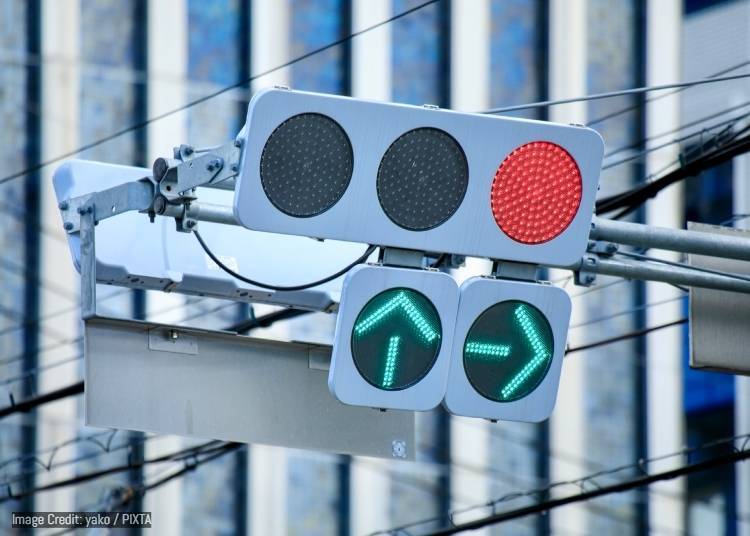
For drivers used to left-hand traffic, right turns across oncoming lanes are where serious accidents most often happen. Japan’s traffic lights follow these rules:
・Solid green circle only: You may go straight or turn left. If turning right, you must yield to oncoming traffic. Move into the center of the intersection and wait until it is clear before turning.
・Green right-turn arrow (➡): This is your protected right-turn phase. Oncoming traffic will have a red light, so you can turn safely.
・Important: If the main signal is red but the green right-turn arrow is lit, you may only turn right. Going straight is not allowed.
Bonus: road surface markings
・Diamond marking (◇): This white diamond on the road means a pedestrian crossing is ahead. Ease off the accelerator, be ready to slow down, and prepare to stop before the crosswalk to give pedestrians priority.
Parking in Japan: Know the Difference Between Lock-Plate and Gate-Type Lots
Street parking in Japan is illegal and tickets can appear within minutes, so using paid parking lots is essential when driving. Most unmanned parking lots fall into two main types, each with very different procedures. Knowing which one you are using will save you time, money, and stress.
Type A: Lock-Plate (Flap) Type

This is the most common style in city centers, near convenience stores, and on small lots. It is also where visitors most often make mistakes.
Parking steps:
(1) Check that the metal plate on the ground is lowered.
(2) Reverse into the space and park within the lines.
(3) After about 3–5 minutes, the plate will rise and lock your car in place.
Paying & exiting (very important):
(1) Go to the payment machine.
(2) Enter your parking space number.
(3) Confirm the fee and pay with cash, credit card, or Suica.
(4) Wait until the plate fully lowers.
(5) Only then, carefully drive out.
Common mistake: Many drivers rush out before the plate is fully down, damaging the undercarriage or bumper. This is considered a self-inflicted accident, and NOC insurance may not cover it.
Type B: Gate Type
Usually found at large malls, department stores, and bigger facilities. This works much like parking garages in the US and other countries.
Parking steps:
(1) Press the button at the entrance to get a parking ticket.
(2) The gate opens. Drive in and park.
(3) Keep the ticket with you. Do not leave it in the car.
Paying & exiting:
(1) Pre-payment recommended: Before returning to your car, use a pre-payment machine inside the facility. Pay, take your ticket back, and exit smoothly by inserting it at the gate.
(2) Pay at exit: If there is no pre-payment machine, drive to the exit gate, insert the ticket, and pay the displayed amount.
Understanding these two systems in advance will help you park smoothly and avoid costly mistakes during your drive in Japan.
Useful Kanji Guide: Is There Parking Available?
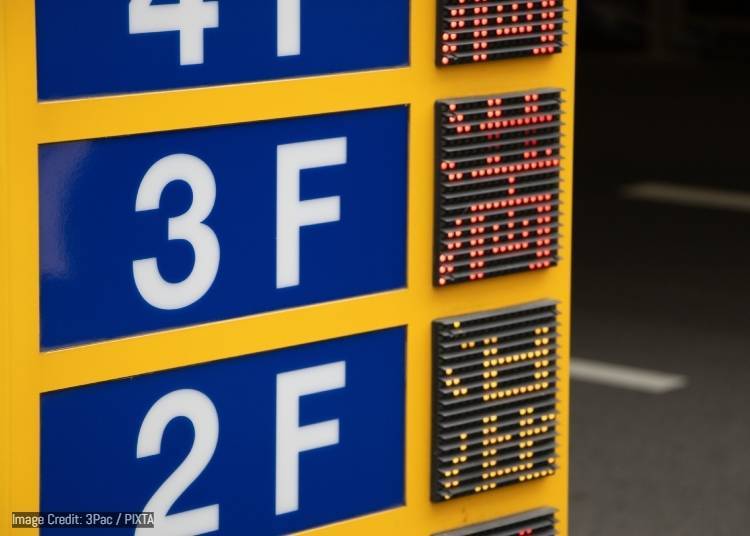
When looking for a parking lot, check the electronic sign at the entrance. You can tell availability instantly by the kanji and color:
・空 (usually blue or green): Spaces available. You can enter.
・満 (usually red): Full. Look for another lot.
・混 (usually orange): Almost full. Limited spaces left.
Quick Tip: Convenience Store Parking
Most Japanese convenience stores (such as 7-Eleven and Lawson) have free parking, but it is for customers only. Parking there and walking off to nearby attractions is considered unauthorized parking. Store managers are allowed to report it or demand compensation, so always park responsibly.
Practical Skills: Using Self-Service Gas Stations and Expressway ETC
Once parking is sorted, the next essentials are fueling up and paying tolls. Japan’s gas stations and expressway systems are highly automated, but for first-time drivers, there are a few color-based cues and common pitfalls worth knowing in advance.
Gas Station Guide: Never Grab the Wrong Fuel Nozzle
Japanese gas stations come in two types: full service and self-service (セルフ). To save time and money, most rental car users choose self-service stations. The systems are easy to use once you know the rules. The biggest risk is choosing the wrong fuel nozzle color, so read this carefully.
1. Fuel nozzle colors (most important)
Japan uses nationwide standardized colors. Memorize the colors and do not rely only on kanji, as some characters can be misleading.
・Red nozzle = Regular (レギュラー)
For about 90 percent of rental cars such as compact cars, K-cars, and standard sedans.
Corresponds to 92 or 95 unleaded gasoline.
・Yellow nozzle = High Octane (ハイオク)
For luxury imports or sports cars such as Mercedes or BMW.
Corresponds to 98 unleaded gasoline.
・Green nozzle = Diesel (軽油)
For trucks, buses, and some large SUVs.
Critical trap: The kanji 軽油 does not mean fuel for K-cars. It means diesel. Putting diesel into a gasoline car will cause severe engine damage and rental insurance will not cover it.
2. One phrase you can always use: “Mantan”
At a full-service station, simply lower your window and say:
“Regular, mantan.”
This means regular gasoline, fill it up.
3. Self-service fueling steps
(1) Park and turn off the engine.
(2) Discharge static electricity by touching the anti-static panel.
(3) Use the screen to select the fuel type, usually Regular, and the amount, usually fill up (満タン).
(4) Pay by credit card or cash.
(5) Lift the nozzle and fuel until it automatically stops.
(6) Return the nozzle and take your receipt. If you paid cash, use the adjustment machine to receive any change.
Remembering these basics will help you refuel safely and avoid one of the most expensive mistakes drivers make in Japan.
Expressway Basics: ETC Lanes vs General Lanes
1. Which toll lane should you use?
When entering an expressway interchange (IC), lane types are clearly marked by color on signs and road markings.
Purple sign “ETC Only”:
・For vehicles with a valid ETC card inserted in the car.
・How to pass: Slow down to under 20 km/h. The gate opens automatically once the system reads your card. Do not speed through, as the gate may not open if the signal fails.
Green sign “General”:
・For vehicles without ETC or those paying by cash or card.
・How to pass: Stop, press the button to take a ticket at the entrance, then hand the ticket to the attendant at the exit and pay by cash or credit card.
2. What if you enter the wrong lane?
・No ETC card but entered an ETC-only lane: This is a common mistake. Do not reverse. Reversing is extremely dangerous. Stop in front of the gate and wait for staff assistance, or use the intercom. They will help you settle the toll.
・Have an ETC card but entered a general lane: No problem. Remove the ETC card from the onboard unit and hand it to the attendant for payment.
Emergency Situations: What to Do If You Have an Accident in Japan
An accident is the last thing anyone wants while driving in Japan. Whether it involves another vehicle or a minor scrape in a parking lot, stay calm and remember one critical rule that differs from many countries: every accident, no matter how small, must be reported to the police.
If there is no official police accident report, rental insurance can refuse coverage, leaving you responsible for repair costs that may reach tens or even hundreds of thousands of yen.
If an accident occurs, first move the car to a safe spot to prevent secondary collisions. Call 110 for the police. If you cannot speak Japanese, say “Accident” or “Interpreter.” Police can usually arrange phone interpretation.
Clearly explain the location and situation, and wait for officers to arrive. Do not agree to settle privately or leave the scene. If anyone is injured, call 119 for an ambulance.
While waiting, contact the emergency number listed on your rental agreement to notify the rental company. This step is essential, as most rental contracts require immediate notification for insurance to remain valid.
Even with full coverage, insurance may be void if you fail to report the accident, or if the incident involves violations such as drunk driving, speeding, or late vehicle return. Also note the NOC (Non-Operation Charge).
This compensates the rental company for lost business while the car is being repaired and typically ranges from 20,000 to 50,000 yen, unless you purchased the highest-level coverage. Following traffic rules carefully is the safest and most cost-effective protection.
Final Checklist for Driving in Japan
Driving in Japan offers incredible freedom, but the rules are detailed. Before you set off, run through this six-point checklist to make sure everything is in place for a safe, smooth trip.
- 1. Do you have the right documents?
- Double-check your wallet. You must have your passport and original driver’s license.
・Licenses from 1949 Geneva Convention countries: bring an International Driving Permit (IDP).
・Taiwan and certain EU country licenses: bring an official Japanese translation (not an IDP).
Missing any one item means the rental company will not release the car.
- 2. Is navigation ready?
- Bring a USB cable and use Apple CarPlay or Android Auto with Google Maps for the most reliable routing. For rural destinations, look up the MapCode in advance.
- 3. Do you understand right turns?
- With a solid green light, right turns must yield to oncoming traffic. You may turn right only when the green right-turn arrow is lit.
- 4. Can you spot the stop sign?
- At the red inverted triangle STOP (止まれ) sign, come to a full stop. Count to three, check both directions, then proceed. Never roll through.
- 5. Will you choose the correct fuel?
- Remember this rule: red nozzle equals Regular gasoline. Never use the green nozzle, which is diesel. Misfueling can destroy the engine and is not covered by insurance.
- 6. Know what to do in an accident
- For any incident, even a minor scrape, follow the standard procedure. Call 110 for the police first, then contact the rental company’s emergency number. Without an official police report, insurance will not pay.
This guide may feel strict, but Japan’s roads are well maintained and drivers are generally courteous and rule-abiding. Drive calmly, avoid rushing, and follow the basics outlined above. Renting a car lets you reach places public transport cannot, revealing a deeper side of Japan. Use this checklist as your final reassurance, and enjoy a safe, memorable road trip.
▼Explore More Driving Travel Guides▼


The LIVE JAPAN editorial team is a multinational group made up of native editors who have lived in Japan for over five years and Japanese editors who love to travel. Together, we share the best of Japan, offering cultural insights, historical context, event updates, and travel-friendly deals, to support your journey every step of the way.
- Category
*Prices and options mentioned are subject to change.
*Unless stated otherwise, all prices include tax.
Popular Tours & Activities
Recommended places for you
-
Asamushi Onsen
Hot Springs (Onsen) & Bath Houses (Sento)
Aomori, Hirosaki And Hachinohe
-
Goods
Yoshida Gennojo-Roho Kyoto Buddhist Altars
Gift Shops
Nijo Castle, Kyoto Imperial Palace
-
Sunflower terminal (Osaka) Terminal 1
Other Sightseeing
USJ, Nanko Port
-
Appealing
Rukku and Uohei
Izakaya
Sapporo / Chitose
-

Jukuseiniku-to Namamottsuarera Nikubaru Italian Nikutaria Sannomiya
Izakaya
Kobe, Sannomiya, Kitano
-
ISHIDAYA Hanare
Yakiniku
Kobe, Sannomiya, Kitano
-

Top-Booked by International Visitors: Must-Try Italian & Pizza in Tokyo for First-Time Visitors
by: Guest Contributor
-
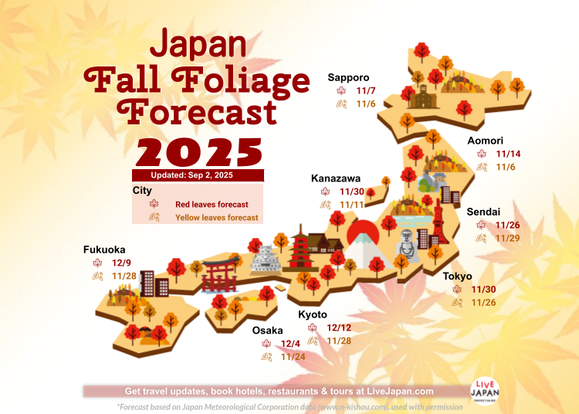
Autumn in Japan 2026: Fall Foliage Forecast & Where to Enjoy the Colorful Leaves (+Tour Info)
-

Haneda Airport Duty-Free Shopping Guide: What to Buy, How to Save & Where to Eat Before Your Flight
by: Guest Contributor
-
ANA’s Chiikawa Jet Is Taking Off—Here’s Everything You Need to Know About Exclusive Goods, In‑Flight Fun & Travel Tips
by: Guest Contributor
-

Daikoku PA Car Meet: What Is JDM, and Why Do Enthusiasts Flock Here?
-
Just 2 Hours from Tokyo! Escape to Yamanashi's NIPPONIA Kosuge, Where an Entire 700-Person Village Becomes Your Hotel
by: Alice Lee
-
2-Day Osaka Itinerary! Perfect for Seeing Major Spots During a Short Visit
-
Todai-ji Temple: Home to the Great Buddha of Nara - And a Nose Hole That Brings You Luck!?
by: WESTPLAN
-
Foreign Residents Tell All: 5 Hidden Gems in Hokkaido!
-

Get to Know Otaru, Japan's Fairytale City!
by: Steve Csorgo
-

Travel Guide to Hokkaido: Popular Destinations, Activities, Hotels & More
by: Masakazu Yoshida
-
Akita Bucket List: 20 Best Things to Do in Akita Prefecture For Tourists (Attractions, Local Foods & Activities)
- #best sushi japan
- #what to do in odaiba
- #what to bring to japan
- #new years in tokyo
- #best ramen japan
- #what to buy in ameyoko
- #japanese nail trends
- #things to do japan
- #onsen tattoo friendly tokyo
- #daiso
- #best coffee japan
- #best japanese soft drinks
- #best yakiniku japan
- #japanese fashion culture
- #japanese convenience store snacks